Leverage AI to Transform B2B Customer Insights for Success
The Role of AI in Transforming B2B Customer Insights Artificial Intelligence (AI) is revolutionizing the way businesses understand and interact with their...

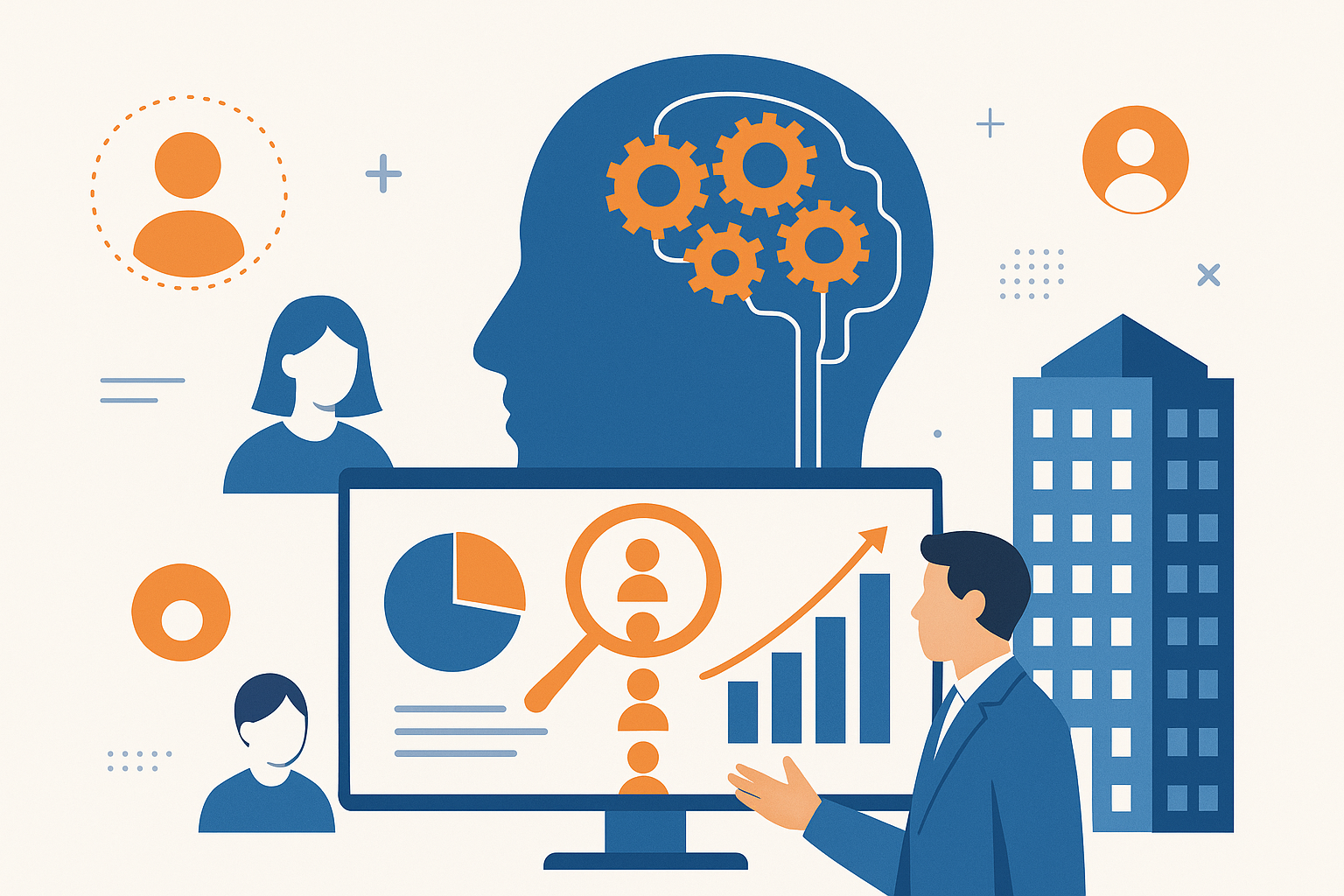
Discover how AI transforms B2B customer insights, enhancing data analysis and prediction accuracy. This article explores AI's role in deepening client understanding and driving tailored strategies for improved business outcomes.
📑 Table of Contents
- The Role ofAIin Transforming B2B Customer Insights
- Integrating AI into B2B Customer Data Analysis
- Enhancing Personalization with AI
- Predictive Analytics for Proactive Decision Making
- AI and the Enhancement of Customer Service
- Challenges and Ethical Considerations in AI Implementation
- Measuring the Impact of AI on Customer Insights
- Actionable Takeaways for B2B Marketers
The Role of AI in Transforming B2B Customer Insights
Artificial Intelligence (AI) is revolutionizing the way businesses understand and interact with their customers. In the B2B sector, where relationships and personalized service are paramount, AI offers an unprecedented opportunity to deepen customer insights. These enhanced insights help companies tailor their marketing strategies, improve customer experiences, and ultimately drive growth.
Integrating AI into B2B Customer Data Analysis
AI tools are adept at processing large volumes of data quickly and efficiently. By integrating AI into customer data analysis, B2B companies can identify patterns and trends that human analysts might miss. This integration involves several key steps: ### Collecting Comprehensive Data Collect data across various touchpoints in the customer journey, including website interactions, social media engagement, and customer service inquiries. The more data AI systems have access to, the more accurate their insights will be. ### Implementing Machine Learning Models Machine learning models can analyze data to predict customer behavior, preferences, and potential churn. These models learn and improve over time, providing increasingly accurate insights as more data is gathered. ### Visualizing Data Insights Data visualization tools powered by AI can help present complex data in an easily understandable format. This makes it easier for decision-makers to see patterns and make informed choices.
Enhancing Personalization with AI
Personalization is a key component of B2B marketing, and AI can take it to a new level. By utilizing AI-driven analytics, businesses can create highly personalized experiences that resonate with individual customers. ### Segmenting the Customer Base AI can segment customers more effectively by analyzing diverse data points such as purchase history, company size, and industry type. This segmentation allows for more targeted marketing efforts. ### Customizing Content and Communication AI-driven tools can help customize content and communication strategies for each segment, ensuring that messages are relevant and engaging. This can include personalized emails, customized product recommendations, and tailored content on websites.
Predictive Analytics for Proactive Decision Making
Predictive analytics is another area where AI excels, allowing B2B companies to anticipate future trends and customer needs. ### Forecasting Customer Behavior AI models can predict customer behavior, such as the likelihood of a purchase or renewal, based on past interactions. This enables companies to proactively address customer needs and preferences. ### Identifying At-Risk Customers AI can also help identify customers who may be at risk of churning. By detecting signs of dissatisfaction early, businesses can take steps to improve the customer relationship and retain the account.
AI and the Enhancement of Customer Service
Customer service is crucial in the B2B sector, and AI can significantly enhance this function by automating routine tasks and providing deeper customer insights to service representatives. ### Automating Routine Inquiries Chatbots and virtual assistants powered by AI can handle routine customer inquiries, freeing up human agents to tackle more complex issues. This leads to faster response times and higher customer satisfaction. ### Providing Agents with Enhanced Insights AI tools can provide customer service agents with real-time insights into customer history and preferences, enabling more personalized and effective interactions.
Challenges and Ethical Considerations in AI Implementation
While AI offers numerous benefits, it also presents challenges that B2B companies must navigate carefully. ### Data Privacy and Security Ensuring the privacy and security of customer data is paramount. Companies must adhere to relevant regulations and ethical standards when implementing AI solutions. ### Bias in AI Models AI systems are only as unbiased as the data they are trained on. It is crucial to use diverse data sets and continually monitor AI decisions for potential biases to ensure fair and equitable treatment of all customers.
Measuring the Impact of AI on Customer Insights
To truly understand the effectiveness of AI in enhancing customer insights, B2B companies need to measure its impact. ### Key Performance Indicators (KPIs) Identify and track KPIs that directly reflect the impact of AI on customer insights, such as customer satisfaction scores, retention rates, and the accuracy of predictive analytics. ### Continuous Improvement AI is not a set-it-and-forget-it solution. Regularly review the performance of AI tools and make adjustments as necessary to continually improve outcomes.
Actionable Takeaways for B2B Marketers
To leverage AI effectively in enhancing B2B customer insights, marketers should focus on integrating AI into their data analysis processes, use AI to personalize customer interactions, employ predictive analytics to anticipate customer needs, and continuously measure the impact of these technologies. Additionally, it's crucial to ensure ethical AI use and protect customer data privacy. By doing so, B2B companies can not only improve their customer understanding but also enhance overall business performance.
Frequently Asked Questions
How can AI enhance customer insights for B2B companies?
AI can enhance customer insights for B2B companies by analyzing large volumes of data to identify patterns, trends, and customer preferences that are not immediately apparent. This includes predictive analytics to forecast customer behaviors, personalized content delivery, and improved customer segmentation. By leveraging AI, companies can gain deeper and more actionable insights, leading to better decision-making and more effective strategies.
What types of data are crucial for generating B2B customer insights?
Crucial types of data for generating B2B customer insights include customer interaction data (e.g., emails, phone calls, meetings), transactional data, behavioral data (e.g., website visits, engagement with marketing materials), and demographic data. Additionally, integrating external market data and competitive analysis can provide a more comprehensive view, enabling businesses to tailor their strategies more effectively.
How do companies ensure the accuracy of AI-generated insights?
Companies can ensure the accuracy of AI-generated insights by maintaining high-quality data, regularly updating and training AI models with new data, and employing techniques to handle data biases and anomalies. It's also crucial to have a feedback mechanism in place to continuously refine and validate the insights generated by AI systems. Collaboration between domain experts and data scientists is essential to interpret the data correctly and implement actionable insights.
Sources and References
- The Promise and Challenge of the Age of Artificial Intelligence - This McKinsey report explores how AI is transforming various business functions with a focus on marketing and customer insights. It provides data and case studies that illustrate how AI tools can enhance understanding and engagement with B2B customers, supporting the article's discussion on integrating AI into B2B customer data analysis.
- How AI is Transforming Customer Service - This Harvard Business Review article discusses specific AI applications in customer service, detailing how predictive analytics and machine learning improve customer interactions and service delivery. It aligns with the article's section on AI's role in enhancing customer service in the B2B sector.
- Enhancing Personalization with AI in B2B Settings - An academic paper hosted on arXiv.org that provides empirical research on the use of AI for personalization in B2B environments. This source is critical for substantiating claims about the effectiveness of AI-driven personalization strategies discussed in the article.
- The Future of B2B Buying and How Sales Organizations Should Adapt - A Forrester report that provides insights into the evolving landscape of B2B buying and the role of AI in these transformations. This supports the article's narrative on predictive analytics for proactive decision-making in B2B sales.
- Machine Learning in B2B Customer Data Analysis - A Google research publication that delves into the application of machine learning techniques in analyzing B2B customer data. It offers a deep dive into methodologies and outcomes, reinforcing the article's section on AI-driven data analysis.
- Salesforce Einstein Key Insights - This page on Salesforce discusses Einstein AI, detailing how it leverages AI to provide customer insights and enhance CRM systems. It's particularly relevant for illustrating real-world applications of AI in managing and interpreting B2B customer data.