How to Build a Data-Driven B2B Marketing Strategy for Sustainable Growth
In the realm of business-to-business (B2B) marketing, understanding and leveraging data is crucial. Data-driven strategies enable marketers to make informed...

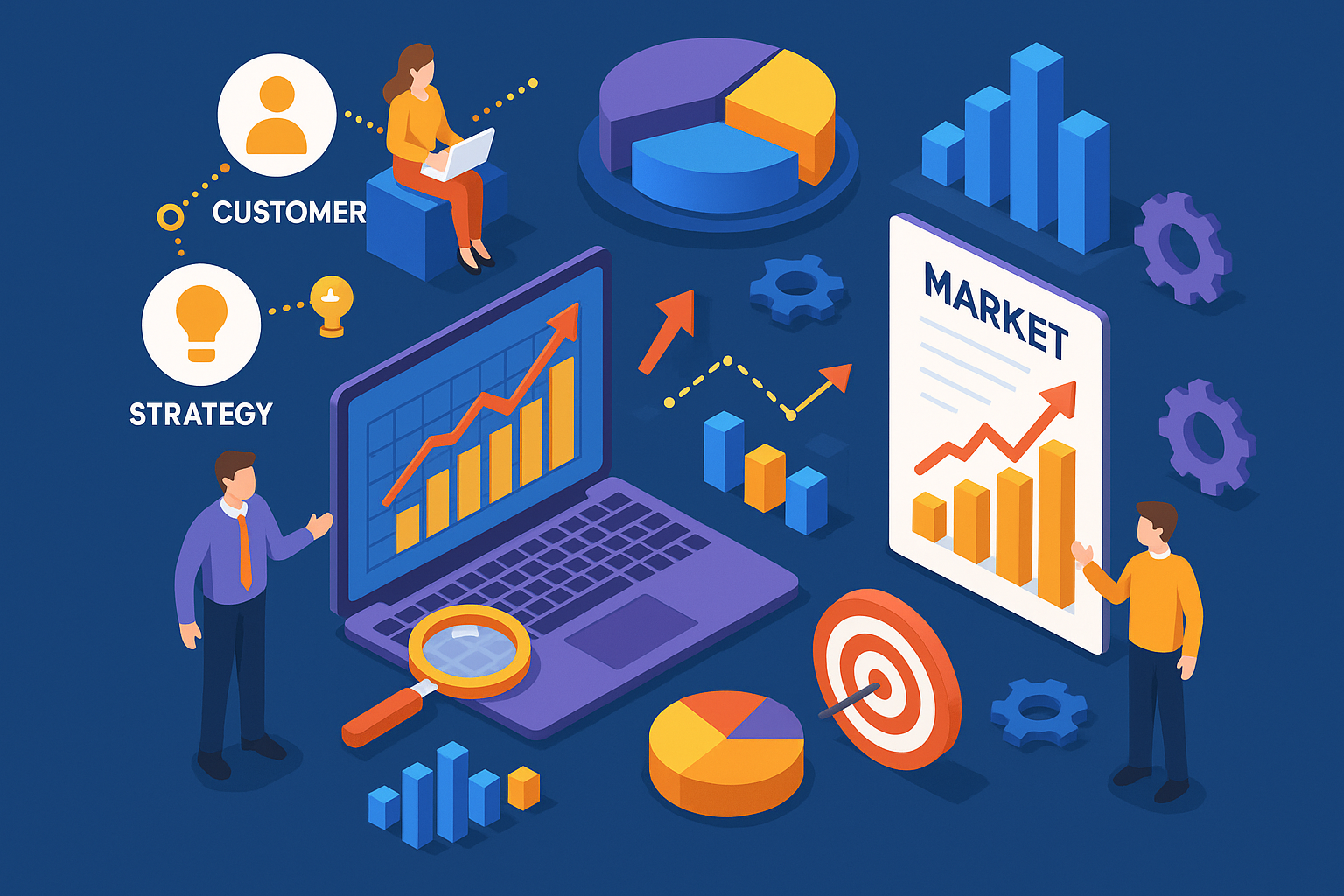
Discover how to craft a data-driven B2B marketing plan that propels growth. Learn to leverage analytics for target identification, content strategy refinement, and ROI enhancement. Gain insights on integrating technology to optimize your marketing efforts.
📑 Table of Contents
- Understanding the Role of Data in B2BMarketingStrategies
- Setting Objectives and Defining Key Performance Indicators (KPIs)
- Collecting and Managing Quality Data
- Segmenting the Market and Personalizing Campaigns
- Integrating Multi-channel Marketing Strategies
- Leveraging Automation and AI for Scalability
- Continuous Monitoring, Testing, and Refinement
- Practical Takeaway: Implementing a Successful Data-Driven B2B Marketing Plan
Understanding the Role of Data in B2B Marketing Strategies
In the realm of business-to-business (B2B) marketing, understanding and leveraging data is crucial. Data-driven strategies enable marketers to make informed decisions that enhance efficiency, effectiveness, and scalability. By analyzing customer data, market trends, and campaign performance, businesses can tailor their marketing efforts to better meet the needs of their target audience and achieve sustained growth.
Setting Objectives and Defining Key Performance Indicators (KPIs)
Before diving into data collection and analysis, it's essential to set clear, measurable objectives aligned with the overall business goals. Common objectives for B2B marketing include lead generation, brand awareness, customer acquisition, and customer retention. Once the objectives are set, defining relevant Key Performance Indicators (KPIs) is crucial. These might include metrics like lead conversion rates, cost per lead, customer lifetime value, and engagement rates on digital platforms. KPIs should provide a clear benchmark to measure the success of marketing initiatives and guide strategic adjustments.
Collecting and Managing Quality Data
The foundation of any data-driven marketing plan is high-quality data. B2B marketers must focus on both the breadth and accuracy of the data they collect. This includes demographic information, firmographic details, behavioral data, and transactional history. Employing tools like Customer Relationship Management (CRM) systems, marketing automation tools, and analytics platforms can help in collecting, storing, and analyzing data efficiently.
Additionally, ensuring data privacy and compliance with regulations such as the General Data Protection Regulation (GDPR) or the California Consumer Privacy Act (CCPA) is imperative to maintain trust and legal integrity.
Segmenting the Market and Personalizing Campaigns
With a robust database in place, the next step is to segment the market to tailor marketing strategies effectively. B2B market segmentation often involves criteria such as industry, company size, decision-maker roles, and previous interactions with the brand. Advanced data analytics can aid in identifying micro-segments that allow for even more personalized marketing efforts.
Personalization is particularly effective in B2B marketing, as it addresses specific business needs and pain points of potential clients. Personalized email campaigns, customized content marketing, and targeted advertising are examples of strategies that can significantly improve engagement and conversion rates.
Integrating Multi-channel Marketing Strategies
In today’s interconnected digital environment, integrating multi-channel marketing strategies is essential. B2B buyers often interact with a brand across various platforms before making a purchase decision. Coordinating marketing messages and campaigns across channels such as email, social media, the company's website, and offline events can create a seamless customer experience and strengthen brand presence.
Data plays a critical role in this integration, providing insights into which channels are most effective at different stages of the customer journey and helping to allocate resources more effectively.
Leveraging Automation and AI for Scalability
Automation and artificial intelligence (AI) are transforming B2B marketing by enabling businesses to scale their operations efficiently. Marketing automation tools can handle repetitive tasks such as email marketing, social media posting, and ad campaigns, freeing up human resources for more strategic activities that require creative and analytical thinking.
AI can further enhance a data-driven marketing strategy by predicting trends, personalizing content at scale, and optimizing campaigns in real-time based on performance data. This not only increases efficiency but also enhances the relevancy and effectiveness of marketing efforts.
Continuous Monitoring, Testing, and Refinement
The only constant in the market is change, and continuous monitoring is key to staying relevant. Regularly reviewing the performance data helps in understanding what works and what doesn’t. A/B testing different aspects of marketing campaigns can provide insights and guide data-driven decisions.
Moreover, as market conditions and technology evolve, it is crucial to revisit and refine the marketing strategy. This iterative process ensures that the marketing efforts remain aligned with business goals and market realities.
Practical Takeaway: Implementing a Successful Data-Driven B2B Marketing Plan
To implement a successful data-driven B2B marketing plan, start with clear objectives and robust data collection. Employ market segmentation and personalization to address specific customer needs. Integrate multi-channel strategies for a cohesive marketing approach and leverage technology like AI and automation for scalability. Always keep testing and refining based on performance data to stay ahead of market trends and technological advancements.
By focusing on these strategic pillars, B2B marketers can build a data-driven marketing plan that not only meets the current market demands but also adapts to future changes, driving sustained business growth.
Frequently Asked Questions
What are the key components of a data-driven B2B marketing plan?
A data-driven B2B marketing plan typically includes market research, identification of target customer segments, competitive analysis, marketing strategies based on data insights, setting measurable goals, and ongoing monitoring and optimization based on performance data. Effective use of CRM and marketing automation tools is also crucial to track customer interactions and outcomes.
How can data improve decision-making in B2B marketing?
Data enhances decision-making in B2B marketing by providing factual insights into customer behaviors, preferences, and trends. It allows marketers to identify effective strategies, optimize marketing campaigns, tailor content to specific segments, and allocate resources more efficiently. Ultimately, data-driven decisions help increase ROI and customer satisfaction by ensuring marketing efforts are relevant and targeted.
What are some effective data-driven marketing strategies for B2B companies?
Effective data-driven marketing strategies for B2B companies include account-based marketing (ABM), personalized email marketing campaigns, content marketing tailored to different stages of the buying cycle, and targeted advertising. Using data to segment the market and create buyer personas also helps in crafting more precise and effective marketing messages.
Sources and References
- The B2B digital inflection point: How sales have changed during COVID-19 - This McKinsey report provides insights into the evolving role of data in shaping B2B marketing strategies, particularly in response to changes brought by the COVID-19 pandemic. It supports the article's discussion on the necessity of data-driven decision-making in contemporary B2B environments.
- What Is Your Data Really Worth? - An article from Harvard Business Review that delves into the valuation of data, offering a framework that can help businesses set objectives and define KPIs based on the intrinsic value of their data assets. This source is pivotal for understanding how to measure and manage the effectiveness of data-driven marketing strategies.
- The Forrester Wave: B2B Marketing Data Providers, Q3 2021 - Forrester's comprehensive evaluation of B2B marketing data providers highlights the importance of collecting and managing quality data. This report supports the article's section on data management by showcasing how top providers handle data and the impact on marketing outcomes.
- Data-Driven Personalization in B2B Content - This article from Content Marketing Institute explores how data segmentation and personalization can significantly enhance B2B marketing campaigns. It provides practical examples and case studies that align with the article's discussion on market segmentation and personalized marketing tactics.
- State of the Connected Customer - Salesforce research that offers insights into customer expectations across multiple channels, supporting the article's section on integrating multi-channel marketing strategies. This source is crucial for understanding how data-driven insights can optimize customer engagement across various platforms.
- Machine Learning in B2B Marketing - A study published by Google Research that discusses the application of AI and machine learning in B2B marketing. This research supports the article's exploration of AI in enhancing data analytics and decision-making processes within B2B marketing strategies.