How Data Analytics Revolutionizes B2B Marketing Strategies
Data analytics plays a pivotal role in business-to-business (B2B) marketing by providing insights that support strategic decisions. In essence, it involves the...

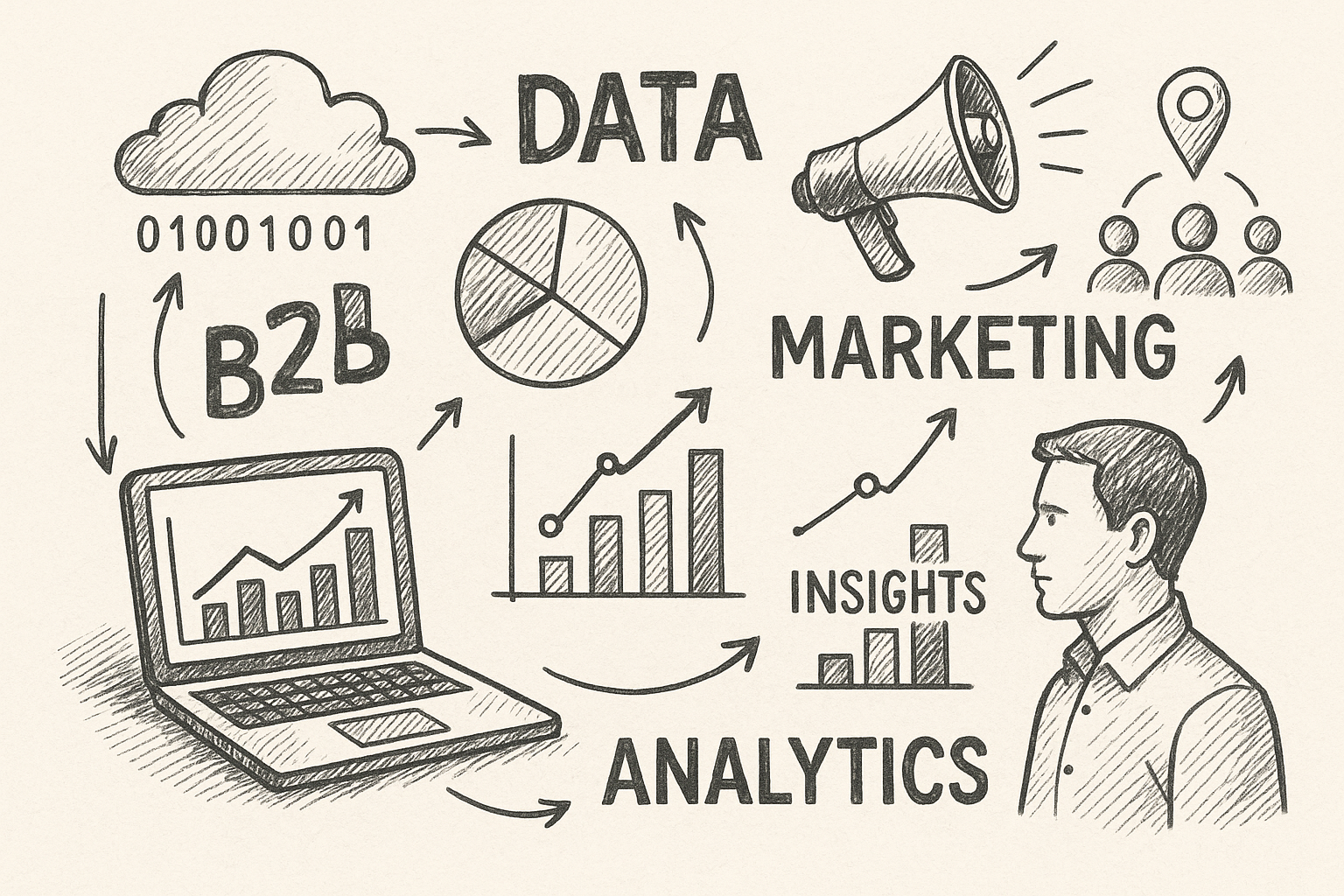
Discover how data analytics can transform B2B marketing strategies. This article explores techniques for harnessing data to gain deep market insights, optimize campaigns, and drive growth. Learn to make data-driven decisions that propel your business forward.
📑 Table of Contents
- Understanding the Role of Data Analytics in B2BMarketing
- Identifying Key Data Points in B2B Marketing
- Segmenting B2B Audiences Using Data Insights
- Optimizing Marketing Campaigns Through Analytics
- Integrating Sales and Marketing Data
- Utilizing Advanced Analytical Tools and Techniques
- Measuring the Success of Data-Driven Marketing Strategies
- Practical Takeaway for B2B Marketers
Understanding the Role of Data Analytics in B2B Marketing
Data analytics plays a pivotal role in business-to-business (B2B) marketing by providing insights that support strategic decisions. In essence, it involves the systematic computational analysis of data or statistics. For marketers, this means leveraging vast amounts of data to understand market trends, customer behavior, and the effectiveness of marketing campaigns. This foundation allows businesses to optimize their marketing strategies, improve customer engagement, and ultimately increase ROI.
Identifying Key Data Points in B2B Marketing
The first step in leveraging data analytics is identifying which data points are most valuable. In B2B marketing, critical data often includes customer interaction data, sales conversion data, lead generation details, and customer feedback. Each of these data types provides insights into different facets of the customer journey and marketing efficiency.
For example, analyzing lead generation data helps understand which channels bring the most valuable prospects. Conversely, customer feedback can offer direct insights into the perceptions and satisfaction levels regarding a product or service, guiding future improvements.
Segmenting B2B Audiences Using Data Insights
Effective segmentation is crucial in B2B marketing because it ensures that marketing efforts are targeted to the most receptive audiences. Data analytics aids in creating detailed customer profiles based on behavior, demographics, and purchasing patterns. These profiles help marketers to tailor their messaging and campaigns to meet the specific needs and pain points of each segment.
Advanced data techniques, such as predictive analytics, can further refine segmentation by forecasting future trends and behaviors, allowing marketers to anticipate market shifts and adjust their strategies accordingly.
Optimizing Marketing Campaigns Through Analytics
Once you have segmented your audience, the next step is to optimize your marketing campaigns. Data analytics offers the ability to test different approaches and measure their outcomes. A/B testing, for example, can be used to determine the most effective email subject line, content format, or call-to-action. This empirical approach to marketing ensures that decisions are based on data rather than intuition.
Furthermore, analytics can help track the customer journey across multiple touchpoints. By understanding the paths that lead to sales or high engagement, marketers can allocate resources more effectively and design more cohesive user experiences.
Integrating Sales and Marketing Data
Integration of sales and marketing data provides a comprehensive view of the customer journey, from initial contact through to sale completion. This holistic view enables more accurate forecasting, better alignment between sales and marketing teams, and improved customer relationship management.
Tools that facilitate this integration often include customer relationship management (CRM) systems and marketing automation platforms. These tools not only streamline data collection but also provide advanced analytics capabilities that can identify sales trends and pinpoint effective marketing strategies.
Utilizing Advanced Analytical Tools and Techniques
The choice of tools and techniques can significantly impact the effectiveness of data analytics in B2B marketing. Machine learning algorithms can analyze large data sets quickly and with high accuracy, providing insights that might be missed by human analysts. Similarly, natural language processing (NLP) can analyze customer feedback at scale to determine overall sentiment and emerging issues.
When selecting tools, consider factors such as integration capabilities, ease of use, and the specific analytical needs of your business. The goal is to choose a tool that not only provides deep insights but also aligns with your existing marketing technology stack.
Measuring the Success of Data-Driven Marketing Strategies
To truly understand the impact of data-driven marketing, it's crucial to measure the outcomes of your strategies. Key performance indicators (KPIs) such as lead conversion rates, customer acquisition costs, and customer lifetime value provide quantifiable measures of success. Regularly reviewing these KPIs helps ensure that your marketing efforts are delivering the desired results and allows for timely adjustments.
Moreover, continuous monitoring and analysis can reveal new opportunities and areas for improvement, ensuring that your marketing strategies remain effective and relevant over time.
Practical Takeaway for B2B Marketers
Leveraging data analytics in B2B marketing is not just about collecting data; it's about extracting actionable insights that can drive better business outcomes. Start by identifying the most critical data points and use them to segment your audience effectively. Optimize your marketing campaigns through continual testing and measurement. Integrate your sales and marketing data to gain a more comprehensive understanding of your customer journeys. Finally, continuously measure the impact of your strategies and be ready to adapt based on what the data tells you.
Embrace these practices, and you will not only see improved marketing performance but also build a more resilient and responsive marketing operation.
Frequently Asked Questions
What is the role of data analytics in B2B marketing?
Data analytics plays a crucial role in B2B marketing by enabling businesses to make informed decisions based on empirical evidence. It helps in understanding market trends, customer behavior, and the effectiveness of marketing campaigns, thereby allowing companies to optimize their strategies and improve ROI. Analytics can segment audiences, predict customer needs, and personalize communications, all of which are essential for effective B2B marketing.
How can B2B marketers use customer data to drive marketing insights?
B2B marketers can leverage customer data to drive insights by analyzing interaction data across touchpoints to identify patterns and preferences. Techniques such as customer segmentation, predictive analytics, and customer journey mapping can reveal opportunities for engagement and personalization. Additionally, analyzing customer feedback and behavior can help in refining product offerings and developing targeted marketing strategies that address the specific needs of business clients.
What are the best practices for ensuring data quality in B2B marketing analytics?
Ensuring data quality in B2B marketing analytics involves several best practices: 1. Regular data cleansing to remove inaccuracies and duplicates. 2. Implementing standardized data collection methods across channels. 3. Continuously updating data to reflect current client information and interactions. 4. Using robust data integration tools to consolidate data sources. 5. Validating and verifying data regularly to maintain its reliability and accuracy. These practices help in maintaining the integrity of data, which is crucial for deriving accurate insights.
What are the emerging trends in data analytics for B2B marketing?
Emerging trends in B2B marketing analytics include the increased use of artificial intelligence and machine learning to provide deeper insights and automate data-driven decisions. The rise of predictive analytics is also significant, allowing marketers to forecast future trends and customer behaviors more accurately. Additionally, there is a growing emphasis on real-time data analysis to provide immediate insights that can be acted upon quickly, enhancing the agility of B2B marketing strategies.
Sources and References
- The Power of Analytics in B2B Marketing - This McKinsey report provides a comprehensive overview of how data analytics is revolutionizing B2B marketing. It supports the article's discussion on the role of data analytics in enhancing marketing strategies and customer engagement, offering real-world examples and strategies.
- How B2B Sales Can Benefit from Social Selling - This Harvard Business Review article explores the integration of sales and marketing data, illustrating how B2B companies can leverage social platforms and data analytics to drive sales and improve customer relationships, directly aligning with the article's section on integrating sales and marketing data.
- Segmentation in B2B Marketing - Forrester's detailed report on segmentation strategies in B2B marketing provides empirical data and methodologies that reinforce the article's segment on using data insights for segmenting B2B audiences, offering a deep dive into effective segmentation techniques.
- Advanced Analytics Techniques for B2B Marketing - This research paper from arXiv presents advanced analytical techniques that can be applied in B2B marketing, supporting the article's discussion on optimizing marketing campaigns through analytics. It includes case studies and statistical methods that validate the effectiveness of these techniques.
- How to Use Data to Drive Customer Engagement - Salesforce's blog post offers insights into identifying key data points in B2B marketing, which supports the article's section on the same topic. It provides practical advice on data collection and analysis to enhance customer engagement and personalization.
- Using Data Analytics to Inform Content Strategy - This article from the Content Marketing Institute discusses how data analytics can inform content strategy in B2B marketing, aligning with the article's emphasis on leveraging analytics for strategic insights. It offers a perspective on how content can be tailored based on data-driven insights to better meet the needs of B2B audiences.