How B2B Marketing Teams Use Customer Journey Content Maps to Drive Sales
Understanding Customer Journey Content Maps in B2B Marketing A customer journey content map is a strategic tool used by B2B marketing teams to visualize and...

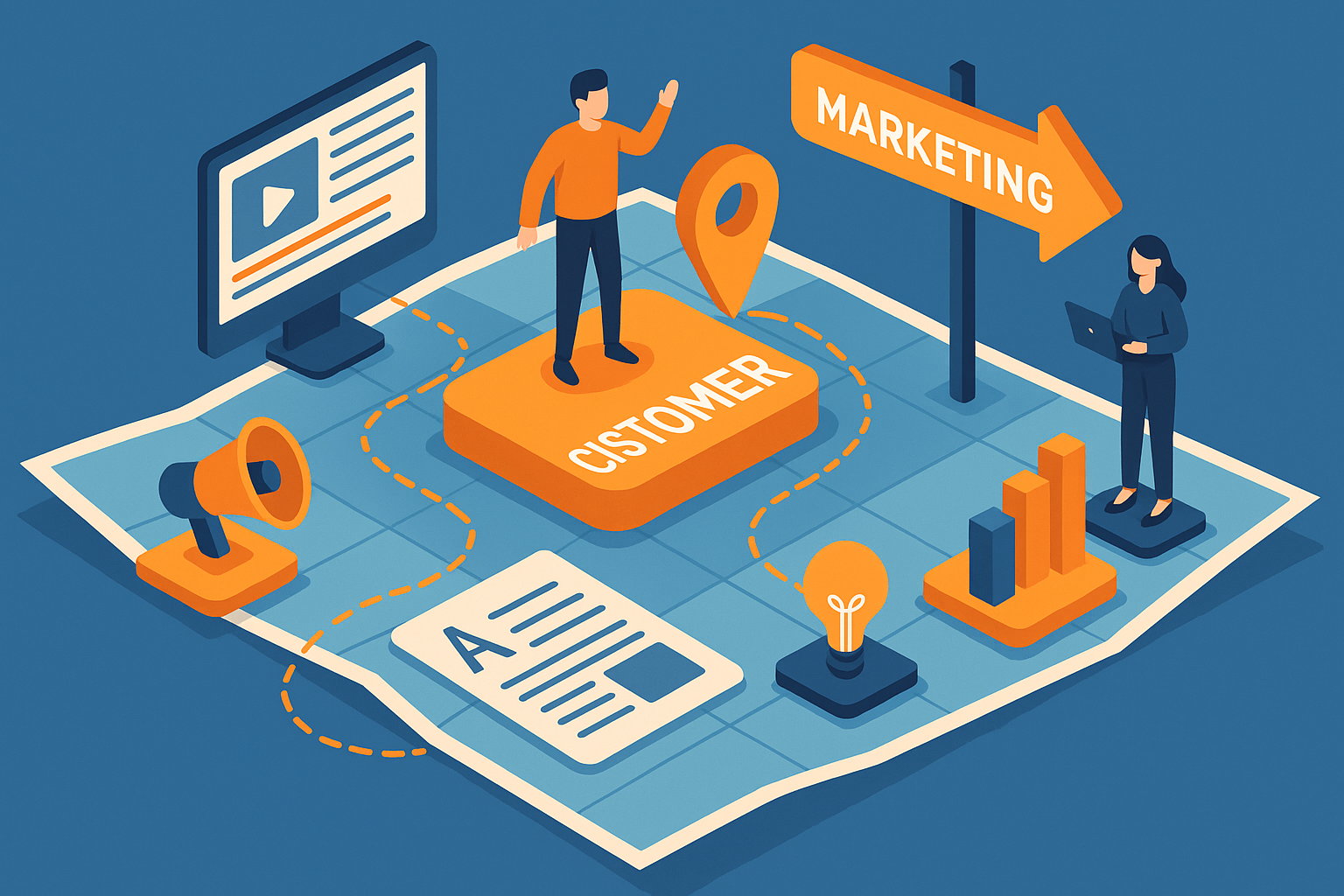
Discover how customer journey content maps can transform B2B marketing, enhancing lead nurturing and conversion. Learn to tailor content at each stage, from awareness to decision, for maximum impact.
📑 Table of Contents
- Understanding Customer Journey Content Maps in B2BMarketing
- The Importance of Aligning Content with the Buyer’s Journey
- Creating a Foundation: Gathering and Analyzing Data
- Segmenting Your Audience
- Designing the Content Map: Step-by-Step Process
- Utilizing Technology in Content Mapping
- Best Practices in Content Creation for the B2B Buyer’s Journey
- Focusing on Quality over Quantity
- Consistency Across Channels
- Measuring the Success of Your Content Strategy
- Optimizing and Updating Your Content Map
- Incorporating New Insights and Feedback
- Practical Takeaway: Implementing an Effective Customer Journey Content Map
Understanding Customer Journey Content Maps in B2B Marketing
A customer journey content map is a strategic tool used by B2B marketing teams to visualize and plan all touchpoints and content interactions a potential customer experiences through the sales funnel. The goal of this mapping is to create a seamless, personalized customer experience that enhances engagement and ultimately drives conversions.
The Importance of Aligning Content with the Buyer’s Journey
In B2B marketing, understanding the buyer’s journey is crucial because the purchasing process is typically longer and more complex than in B2C scenarios. Each stage of the buyer's journey—awareness, consideration, and decision—requires tailored content that addresses specific needs and questions of potential customers. Aligning content with these stages ensures that marketing efforts are relevant and timely, providing value to prospects at each point in their journey.
Creating a Foundation: Gathering and Analyzing Data
Before creating a content map, it's essential to gather and analyze data about your target audience. This includes demographic information, behavioral data, and insights into decision-making processes. Utilizing tools like customer relationship management (CRM) systems and analytics platforms helps in understanding patterns and preferences which are critical for creating effective content strategies.
Segmenting Your Audience
Effective content mapping requires segmenting your audience to tailor messages that resonate on a personal level. Segmentation can be based on industry, company size, role in the company, or even the specific challenges faced by the potential customer. This tailored approach not only improves engagement but also increases the likelihood of a prospect moving through the sales funnel.
Designing the Content Map: Step-by-Step Process
Creating a customer journey content map involves several steps: 1. Identify Key Stages of the Buyer’s Journey: Define the main stages your customers go through, from awareness to decision. 2. List Touchpoints: Identify all potential touchpoints where customers interact with your content, such as emails, blog posts, whitepapers, and social media. 3. Develop Content Assets: For each stage and touchpoint, create content that addresses the needs and questions of the prospects. 4. Integrate Feedback Loops: Set mechanisms to gather feedback from each touchpoint to refine and optimize the content strategy.
Utilizing Technology in Content Mapping
Leveraging technology is critical in designing and maintaining an effective content map. Use content management systems (CMS) and marketing automation tools to schedule and deploy content across different platforms seamlessly. These tools also provide valuable metrics that can help in evaluating the effectiveness of your content strategy.
Best Practices in Content Creation for the B2B Buyer’s Journey
Focusing on Quality over Quantity
It's essential to focus on creating high-quality, informative content rather than overwhelming prospects with volume. Quality content is likely to engage readers, establish your brand's authority, and encourage deeper interaction with your materials.
Consistency Across Channels
Ensure that your messaging is consistent across all channels. This consistency helps in building a cohesive brand image and reinforces your key messages across the buyer’s journey.
Measuring the Success of Your Content Strategy
To measure the effectiveness of your customer journey content map, focus on metrics that indicate engagement and progression through the sales funnel, such as: - Lead conversion rates - Time spent on content pages - Engagement rates on emails and social media posts - Feedback and surveys from prospects These metrics provide insights into how well your content resonates with the target audience and fulfills its intended purpose at each stage of the buyer's journey.
Optimizing and Updating Your Content Map
A customer journey content map is not a set-it-and-forget-it tool. It requires regular updates and optimizations based on performance data and evolving customer needs. This iterative process ensures that your content strategy remains relevant and effective over time.
Incorporating New Insights and Feedback
Regularly incorporate feedback from sales and customer service teams, as well as direct input from customers, to refine and improve your content strategy. This feedback is invaluable for making data-driven decisions that enhance content effectiveness and customer engagement.
Practical Takeaway: Implementing an Effective Customer Journey Content Map
Implementing an effective customer journey content map in your B2B marketing strategy involves understanding your audience deeply, creating high-quality, targeted content, and continuously measuring and optimizing based on performance data. By following these steps, you ensure that your marketing efforts are not only aligned with your customers' needs but also adaptable to changing market conditions and customer preferences. This strategic approach empowers B2B marketers to create impactful, engaging, and ultimately successful marketing campaigns.
Frequently Asked Questions
What is a customer journey content map in B2B marketing?
A customer journey content map in B2B marketing is a strategic framework that outlines the various stages a prospective customer goes through before making a purchase decision. It identifies key touchpoints and the type of content that can effectively guide the prospect from awareness, through consideration, and towards the decision-making phase. This map is crucial for marketers to deliver relevant content at each stage, ensuring a smoother transition towards conversion and enhancing customer experience.
How do you create an effective customer journey content map for a B2B audience?
Creating an effective customer journey content map for a B2B audience involves several key steps: 1. Define your target audience and their specific needs, challenges, and goals. 2. Segment your audience to cater to different industries, roles, or business sizes if necessary. 3. Identify the stages of your typical customer journey, which might include awareness, consideration, and decision. 4. Map out the key touchpoints where prospects interact with your brand during each stage. 5. Develop or align content that addresses the needs and questions of prospects at each stage, ensuring it is engaging and informative. 6. Continuously analyze and refine your content strategy based on feedback and performance metrics to improve engagement and conversion rates.
Why is aligning content with the customer journey important in B2B marketing?
Aligning content with the customer journey in B2B marketing is important because it ensures that the content delivered is highly relevant and useful to the prospective customers at each stage of their buying process. This relevance helps in building trust and authority, nurturing leads effectively, and moving them smoothly through the sales funnel. It also maximizes the impact of marketing efforts by targeting the right audience with the right message at the right time, ultimately leading to higher conversion rates and better ROI on marketing investments.
Sources and References
- The Consumer Decision Journey - This McKinsey & Company article provides a foundational view on how B2B customer journeys are structured, which is crucial for understanding how to align content with the buyer’s journey. It offers insights into the complexities of customer decisions in a business context, supporting the article's discussion on the importance of aligning content with these journeys.
- Defining and Documenting Content Marketing Strategy - This resource from the Content Marketing Institute outlines methods for gathering and analyzing data to inform content strategies, which directly supports the article's section on creating a foundation for customer journey content maps through data analysis.
- Designing a Better Customer Journey - Harvard Business Review provides a detailed exploration of customer journey design, including practical steps that can be adapted to the B2B context. This supports the article's section on designing the content map step-by-step, offering a high-level perspective on strategic design and implementation.
- Segmenting Your Customer Base To Drive Growth and Improve Efficiency - Forrester's report on customer segmentation offers detailed methodologies that can be applied to segmenting audiences in B2B marketing, underpinning the article's discussion on the importance and methods of audience segmentation.
- Advances in AI for B2B Marketing - This research paper from arXiv provides insights into how artificial intelligence can enhance customer journey mapping by predicting buyer behavior and personalizing content, directly supporting the article's integration of AI into the content mapping process.
- Ultimate Guide to Customer Journey Mapping - Salesforce offers a comprehensive guide that details the process of customer journey mapping in a B2B context, which complements the article's step-by-step guide to designing content maps and provides practical examples and templates.