Boost Your Conversion Rates by Auditing Your Content Funnel
Understanding the Content Funnel A content funnel is a strategic framework used to guide potential customers through different stages of engagement , from initial awareness to the final action, usually a purchase. At each stage, content should be tailored to the needs and behaviors of…

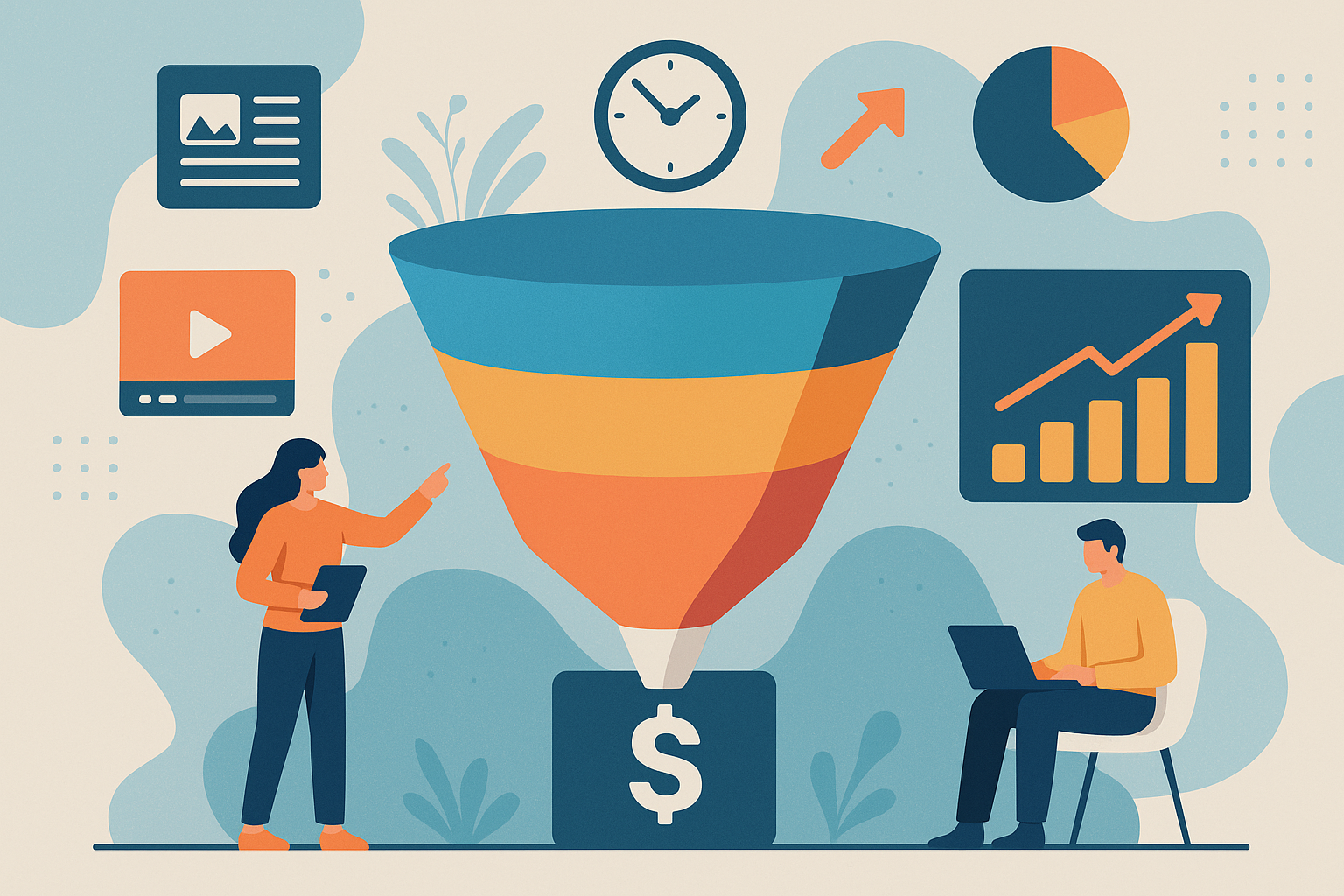
Table of contents
Understanding the Content Funnel
A content funnel is a strategic framework used to guide potential customers through different stages of engagement , from initial awareness to the final action, usually a purchase. At each stage, content should be tailored to the needs and behaviors of potential customers. Auditing this funnel helps in identifying conversion gaps where prospects may disengage or drop off. The goal is to enhance the effectiveness of your content at converting prospects into customers.
Identifying Conversion Goals
Before delving into the audit, clearly define what a "conversion" means for your organization. It could be a sale, a sign-up, or a download, depending on your business model. These goals should be specific, measurable, attainable, relevant, and time-bound (SMART). Understanding these goals helps in aligning your audit focus and measuring the efficacy of your content at each stage of the funnel.
Mapping and Assessing
Content at Each Funnel Stage
Awareness Stage
At this initial stage, your content should aim to attract attention and generate interest. Audit your blog posts, social media content, and infographics to ensure they're effectively raising awareness about your products or services. Look for gaps such as low engagement rates or poor SEO performance that could be hindering visibility.
Consideration Stage
Here, prospects evaluate your offerings against their needs or those of competitors. Content types like webinars, case studies, and detailed guides are crucial. Evaluate whether these materials are accessible, persuasive, and informative enough to move prospects to the next stage.
Decision Stage
At the decision point, content should encourage a conversion. Product demos, free trials, and persuasive sales pages play key roles. Audit these elements for clarity, call-to-action (CTA) effectiveness, and user experience. Ensure there are no technical or informational barriers that might prevent a conversion.
Analyzing User Interaction with Content
Utilize analytics tools to track how prospects interact with your content. Look at metrics like page views, average time on page, bounce rates, and CTA click-through rates. Low performance on these metrics at any funnel stage might indicate a content gap. Heatmaps and session recordings can also offer insights into user behavior and potential areas for improvement.
Evaluating Content Alignment and Consistency
Check that your content across the funnel is aligned in terms of message, style, and quality. Consistency helps in building trust and guiding prospects smoothly from one stage to the next. Discrepancies in tone or conflicting information can create confusion and increase dropout rates.
Leveraging Feedback and Insights
Collecting Direct Feedback Surveys,
feedback forms, and direct customer interactions are invaluable for understanding how your content is perceived and where gaps may exist. This direct line of communication can reveal issues that analytics tools cannot.
Benchmarking Against Competitors
Understanding how your content performs in comparison to your competitors can highlight strengths to build on and gaps to address. Tools like SEMrush or Ahrefs can provide competitive intelligence that informs your content strategy.
Optimizing and Testing for Improvement
Once gaps are identified, prioritize them based on their potential impact on conversion rates and begin optimization. A/B testing different versions of your content can reveal what resonates best with your audience. For example, test different headlines, images, or CTAs to see which variations drive the best engagement and conversion rates.
Regular Review and Adaptation
The digital landscape and consumer behaviors are always evolving. Regularly scheduled audits ensure your content remains effective and relevant. Set a routine, perhaps bi-annual, to review your content funnel and adapt to new trends, technologies, and customer expectations.
Tracking Progress and Success
Establish metrics for success early in your audit process. These could include increased engagement metrics, higher conversion rates, or more qualified leads entering the funnel. Use these metrics to track the effectiveness of your optimizations and continue refining your strategy.
Conclusion
Auditing your content funnel is a continuous process of alignment, assessment, optimization, and adaptation. By systematically examining each stage of the funnel and the transitions between them, you can identify and close conversion gaps, enhancing the overall effectiveness of your marketing efforts. Regular audits aligned with clear, data-backed strategies ensure your content remains a dynamic and powerful tool for driving business growth.
Frequently Asked Questions
What is a content funnel?
A content funnel refers to the strategic model used to guide potential customers through different stages of engagement with your content, from initial awareness to the final decision to purchase or convert. It's structured to nurture leads at each stage by providing relevant information and incentives that align with their interests and needs, ultimately guiding them toward conversion.
How can I identify conversion gaps in my content funnel?
To identify conversion gaps in your content funnel, start by analyzing each stage of the funnel for drop-offs in engagement or conversion rates. Look for stages where potential customers exit the funnel without progressing. Use analytics tools to track user behavior and conversion paths. Regularly gather and analyze data to pinpoint where losses occur, and test different strategies to address these gaps, such as improving content quality, adjusting messaging, or optimizing call-to-action placements.
What are the key stages of a content funnel?
The key stages of a content funnel typically include Awareness, Interest, Consideration, Intent, Evaluation, and Conversion. Each stage corresponds to a different level of customer engagement, starting from becoming aware of your brand or product, developing interest by seeking more information, considering the offerings in detail, showing intent to purchase, evaluating the options against competitors, and finally making the purchase or conversion decision.
Why is it important to audit your content funnel regularly?
Regularly auditing your content funnel is crucial because it helps ensure that your content strategy remains effective and aligned with your business goals. It allows you to adapt to changes in customer behavior, market dynamics, and technological advancements. Auditing helps identify areas for improvement, optimize resource allocation, and enhance overall conversion rates, keeping your marketing efforts efficient and competitive.
What metrics should I focus on when auditing my content funnel?
When auditing your content funnel, focus on metrics such as conversion rates at each funnel stage, time spent on each page, bounce rates, click-through rates, and social shares. These metrics provide insights into how effectively your content engages and converts potential customers. Additionally, track user feedback and interaction patterns to further refine and optimize your content strategy for better performance.
Sources and References
- A Comprehensive Guide to Content Audits for Better Conversions - This guide from the Content Marketing Institute provides a detailed methodology for conducting content audits specifically aimed at identifying conversion gaps in content funnels. It supports the article by offering a structured approach to analyze content at each stage of the funnel.
- The Ultimate List of Marketing Statistics currently - HubSpot's compilation of up-to-date marketing statistics includes data on conversion rates across different content types and marketing channels. This source is used to benchmark typical conversion rates mentioned in the article and to highlight the importance of auditing for discrepancies.
- Machine Learning in Automated Text Categorization - This research paper published by Google explores the use of AI and machine learning in categorizing and optimizing content for targeted outcomes, including conversion optimization. It provides a technical foundation for the discussion on using AI to identify and rectify conversion gaps in content funnels.
- The Path to 2023: The Future of Marketing and AI - Forrester's report delves into how AI is reshaping marketing strategies, including content funnel optimization. This supports the article's section on futuristic approaches to auditing content funnels using advanced technologies.
- Bridging the Digital Divide: How Businesses Are Amplifying Their Content Strategy - Deloitte's insights on enhancing content strategies provide a business perspective on the importance of auditing content funnels for improved conversion rates. This source is particularly relevant for understanding the business impact of optimized content funnels.
- SEO and Competitive Analysis for Business Growth - A scholarly article from Harvard that discusses the strategic role of SEO in business growth and competitive advantage. It supports the article by providing an academic perspective on the importance of SEO in auditing content funnels.