Boost Your B2B Marketing with Strategic User Experience Design
Understanding the Role of UX in B2B Marketing User Experience (UX) design is no longer just a buzzword in the business-to-business (B2B) sector. It's a...

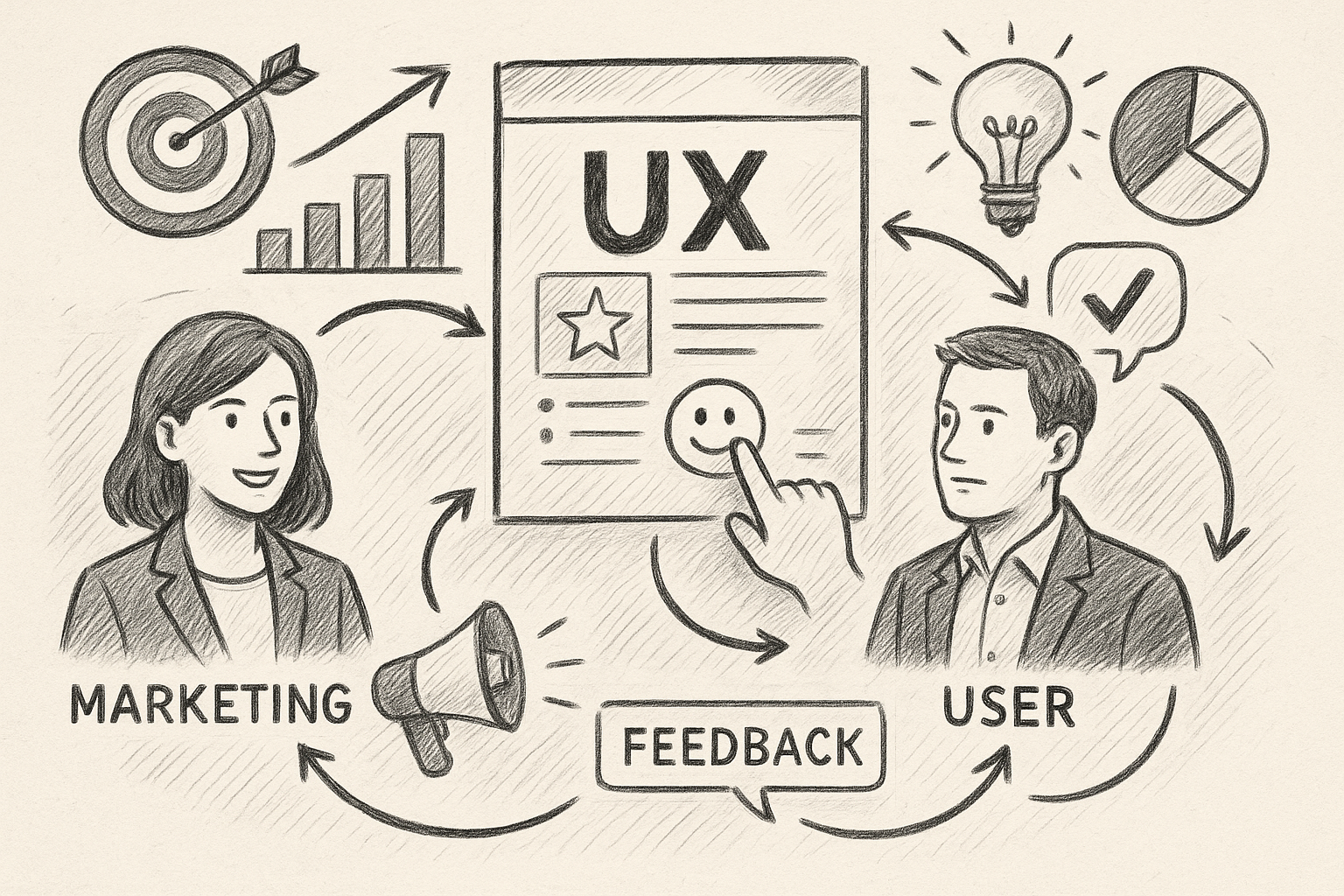
Discover how integrating User Experience Design into B2B marketing can enhance customer satisfaction and drive sales. Learn key strategies for aligning UX with your marketing goals to create a seamless buyer journey.
📑 Table of Contents
- Understanding the Role of UX in B2BMarketing
- Aligning UX withBusinessObjectives
- Actionable Steps for Alignment
- Optimizing Websites for B2B Interactions
- Leveraging Analytics to Enhance UX
- Implementing User Feedback Loops
- Integrating UX in Multi-Channel B2B Marketing
- Measuring UX Impact on B2B Marketing Success
- Common Obstacles and Trade-offs in UX Integration
Understanding the Role of UX in B2B Marketing
User Experience (UX) design is no longer just a buzzword in the business-to-business (B2B) sector. It's a strategic approach that plays a crucial role in how products and services are perceived by businesses. In B2B marketing, integrating UX means designing your marketing strategies around the needs, challenges, and goals of other businesses, which are your customers. This begins with recognizing that the decision-makers in these businesses are also users who appreciate a seamless, intuitive, and beneficial interaction with your marketing assets, from websites to apps and beyond.
Aligning UX with Business Objectives
Before diving into UX strategies, it’s critical to align these with your overarching business goals. Whether it’s increasing lead quality, improving customer retention, or driving brand awareness, each goal might demand a different UX approach. For instance, if the objective is to enhance lead quality, the focus should be on designing an engaging product demo that captures essential user information effectively.
Actionable Steps for Alignment
1. Define Clear Objectives: Outline what you are trying to achieve with your UX enhancements. 2. User Research: Conduct interviews, surveys, and observe how your B2B clients interact with your current tools. 3. Persona Development: Create detailed buyer personas that reflect the typical decision-makers and users in your target businesses. 4. Journey Mapping: Outline the customer journey to identify key touchpoints where UX can make a significant impact.
Optimizing Websites for B2B Interactions
Your website is often the first point of interaction between your business and a potential client. It's imperative that this platform is optimized not just for traffic, but for engagement and conversion. Key elements to focus on include: - Navigation: Ensure your site architecture is intuitive and logical. Complex products and services benefit immensely from a well-organized website where information is easily accessible. - Content: Tailor your content to address B2B pain points, demonstrating your understanding and solutions clearly. - Call-to-Action (CTA): These should be clear and compelling, guiding users towards taking the next step in their buyer’s journey.
Leveraging Analytics to Enhance UX
Data-driven insights are invaluable in refining UX. Utilize analytics tools to gather data on how users interact with your marketing platforms. Look at metrics like bounce rates, page views, average time on page, and conversion rates to understand what works and what doesn’t.
Implementing User Feedback Loops
Regularly gather feedback through surveys, user testing, and direct communication. This feedback is critical as it provides direct insights into the user's experience and expectations. Implement changes based on this feedback to continuously improve the user experience.
Integrating UX in Multi-Channel B2B Marketing
In B2B marketing, your audience often interacts with your brand across multiple channels. UX integration must be coherent and consistent across all platforms. - Email Marketing: Design emails that are informative and easy to navigate, with clear calls to action. - Social Media: Customize your UX for each platform, acknowledging that the way information is consumed on LinkedIn, for example, is different from Twitter or Facebook. - Digital Ads: Ensure that the UX of landing pages tied to ads is seamless and aligned with the expectations set by the ad content.
Measuring UX Impact on B2B Marketing Success
The true measure of successful UX integration in B2B marketing is reflected in the improvement of key performance indicators (KPIs) relevant to your business goals. These might include: - Lead Conversion Rates: An increase here can indicate that the UX improvements are effectively guiding potential clients through the buyer’s journey. - Customer Satisfaction Scores: Higher scores can be a direct outcome of improved user interactions and smoother touchpoints. - Engagement Metrics: Enhanced interaction with your platforms usually means your UX is resonating well with the target audience.
Common Obstacles and Trade-offs in UX Integration
While the benefits of integrating UX in B2B marketing are clear, challenges such as resource allocation, budget constraints, and resistance to change within the organization can impede implementation. Address these challenges head-on by: - Prioritizing UX Initiatives: Focus on changes that offer the most significant impact on user experience and business objectives. - Educating Stakeholders: Demonstrate the long-term benefits of UX investments through case studies and potential ROI analyses. - Iterative Implementation: Start small and scale gradually. This approach helps in managing resources better and tweaking strategies based on initial feedback. By focusing on these evergreen strategies and principles, B2B marketers can effectively integrate UX into their marketing efforts, leading to enhanced customer interactions, improved satisfaction, and ultimately, a stronger bottom line.
Frequently Asked Questions
Why is user experience design important in B2B marketing?
User experience (UX) design is crucial in B2B marketing because it directly influences the satisfaction and loyalty of business clients. By focusing on providing a seamless, intuitive user experience, businesses can enhance customer engagement, reduce frustration, and encourage longer-term business relationships. Effective UX design in B2B settings leads to improved usability of products and platforms, which can result in increased efficiency and productivity for users.
What are the key elements of integrating UX design in B2B marketing strategies?
Integrating UX design into B2B marketing involves several key elements: understanding the specific needs and workflows of business users, creating user personas, mapping the customer journey, and gathering continuous feedback. It's also important to align the UX design with the overall business objectives and ensure that every touchpoint meets the high standards expected by business clients. Regularly updating and refining UX based on user feedback and evolving business needs is also vital.
How can feedback be effectively incorporated into UX design for B2B marketing?
Effectively incorporating feedback into UX design requires a structured approach: collect feedback through diverse channels such as surveys, interviews, and usability tests. Analyze this feedback to identify common patterns and pain points. Prioritize changes based on their potential impact on user experience and business goals. Implement these changes in iterative cycles, continuously testing and refining the design. This approach ensures that the UX evolves in response to actual user needs and preferences, enhancing the overall effectiveness of B2B marketing efforts.
Can UX design impact the return on investment (ROI) in B2B marketing?
Yes, UX design can significantly impact the ROI in B2B marketing. A well-designed user experience can increase user satisfaction, which in turn can lead to higher retention rates, increased sales, and enhanced brand loyalty. By reducing the complexity and improving the efficiency of interactions, businesses can lower support costs and increase user productivity, further enhancing ROI. Additionally, a strong UX can serve as a differentiator in competitive markets, helping to attract new customers and grow market share.
Sources and References
- The Importance Of User Experience In B2B Marketing - This Forrester report details how enhancing user experience can significantly impact B2B marketing outcomes. It provides empirical evidence supporting the necessity of aligning UX with business objectives to improve customer satisfaction and conversion rates.
- The New Elements of Digital Transformation - Published by Harvard Business Review, this article explores how digital transformation, including UX design, is integral to modern B2B marketing strategies. It offers insights into integrating user experience with business processes to drive innovation and efficiency.
- Designing Digital Experience for B2B Customers - McKinsey & Company provides a comprehensive analysis of optimizing websites for B2B interactions. The document discusses practical steps for UX/UI enhancements that cater specifically to business clients, supporting the section on website optimization.
- Leveraging Analytics to Enhance User Experience - A research paper from Google that delves into the use of analytics to improve UX. This source is particularly relevant to the article's section on leveraging analytics, detailing methodologies to analyze user behavior and feedback effectively.
- How to Use Data-Driven Decisions to Improve Your Content Strategy - Content Marketing Institute discusses the role of data in crafting UX that meets user expectations in a B2B context. It provides case studies and examples that illustrate the practical application of analytics in enhancing user experience.
- B2B Marketing Automation - Salesforce offers insights into how automation tools can be utilized to refine user experience in B2B marketing. This source supports discussions on actionable steps for aligning UX with business objectives by automating repetitive tasks and personalizing user interactions.