Boost Your B2B Marketing Strategy with Customer Experience Insights
Creating a B2B Marketing Strategy Focused on Customer Experience Crafting a B2B marketing strategy that prioritizes customer experience is paramount for...

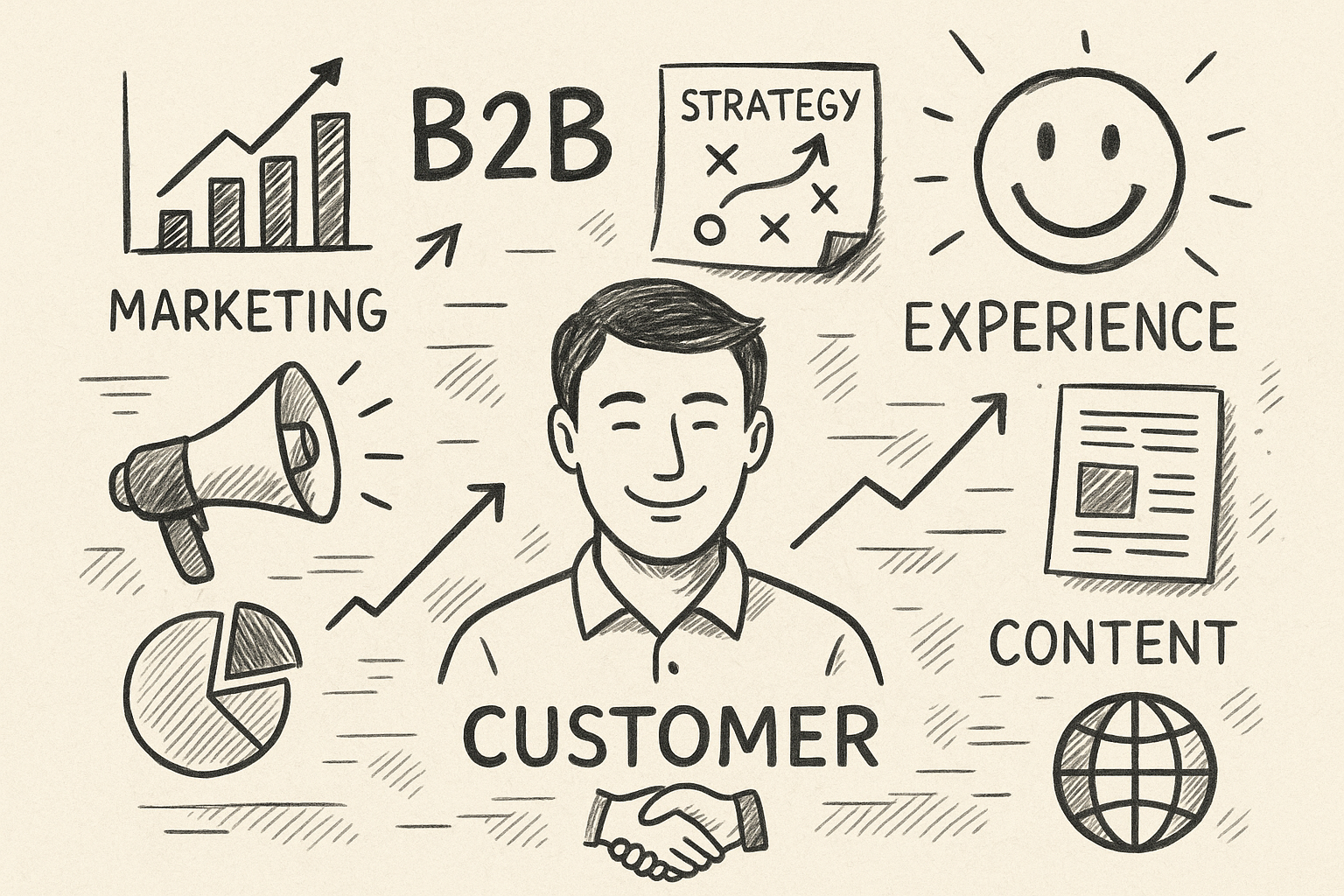
Discover how to craft a B2B marketing strategy centered on customer experience. Learn the essentials of understanding client needs, personalizing interactions, and leveraging feedback to enhance engagement and retention.
📑 Table of Contents
- Understanding Your B2B Audience
- Segment Your Market
- Conduct Persona Research
- Aligning Goals with Customer Needs
- Identify Customer Pain Points
- Set Customer-Centric Objectives
- Creating Engaging Content
- Develop Solutions-Based Content
- Utilize Various Formats
- Leveraging Technology for Personalization
- Implement CRM Systems
- Use MarketingAutomationTools
- Optimizing Customer Journeys
- Map Customer Touchpoints
- Enhance User Experience (UX)
- Building Strong Relationships Through Engagement
- Engage Through Multiple Channels
- Focus on Customer Service
- Measuring and Adapting Your Strategy
- Track Key Performance Indicators (KPIs)
- Adjust Based on Feedback
- Overcoming Common Challenges
- Integrating Siloed Data
- Balancing Personalization with Privacy
Creating a B2B Marketing Strategy Focused on Customer Experience Crafting a B2B marketing strategy that prioritizes customer experience is paramount for fostering long-term business relationships and achieving sustained growth. This tutorial provides a comprehensive roadmap for building a customer-centric B2B marketing strategy, covering everything from understanding your audience to measuring success.
Understanding Your B2B Audience
The foundation of any effective B2B marketing strategy focused on customer experience begins with a deep understanding of your audience.
Segment Your Market
Divide your market into manageable segments based on industries, company size, decision-making roles, and needs. This segmentation allows for more targeted and relevant marketing efforts.
Conduct Persona Research
Develop detailed personas for key decision-makers and influencers within the businesses you target. Include their pain points, goals, and buying behaviors. Use surveys, interviews, and sales data to inform these personas.
Aligning Goals with Customer Needs
A customer-centric strategy aligns your business goals with the needs of your customers, ensuring mutual benefits.
Identify Customer Pain Points
Use your understanding of customer personas to pinpoint specific challenges they face that your product or service can solve.
Set Customer-Centric Objectives
Define clear, measurable objectives that focus on solving these problems. For example, reduce customer effort score (CES) by a certain percentage or improve customer satisfaction (CSAT).
Creating Engaging Content
Content is a crucial tool in your B2B marketing arsenal, particularly when focused on enhancing customer experience.
Develop Solutions-Based Content
Create content that addresses the specific needs and pain points of your segments. Use formats like whitepapers, case studies, and how-to guides that provide real value.
Utilize Various Formats
Employ a mix of content formats including videos, podcasts, and webinars to cater to different learning preferences and stages of the buying cycle.
Leveraging Technology for Personalization
Technology plays a significant role in enabling personalized customer experiences at scale.
Implement CRM Systems
Customer relationship management (CRM) systems help track interactions with potential and existing customers, making it easier to tailor communications and offers.
Use Marketing Automation Tools
Marketing automation tools can help deliver personalized content and messages based on user behavior and data, enhancing the customer experience and increasing engagement.
Optimizing Customer Journeys
A seamless and intuitive customer journey is essential for a positive customer experience.
Map Customer Touchpoints
Identify all potential points of contact between the customer and your business. Analyze these touchpoints to ensure they are optimized for efficiency and satisfaction.
Enhance User Experience (UX)
Focus on the usability of your digital platforms. Ensure your websites and apps are easy to navigate, accessible, and fast.
Building Strong Relationships Through Engagement
Engagement is key to building lasting relationships that go beyond the initial sale.
Engage Through Multiple Channels
Utilize email, social media, and in-person events to maintain and strengthen relationships. Ensure your messaging is consistent across all channels.
Focus on Customer Service
Provide exemplary customer service. Quick response times and effective problem-solving can significantly enhance customer perception and loyalty.
Measuring and Adapting Your Strategy
Continuous improvement is vital in maintaining an effective customer-centric B2B marketing strategy.
Track Key Performance Indicators (KPIs)
Monitor metrics such as net promoter score (NPS), customer retention rates, and lifetime value (LTV). These indicators help gauge customer satisfaction and loyalty.
Adjust Based on Feedback
Regularly solicit feedback through surveys, interviews, and direct communications. Use this data to refine and improve your strategies and operations.
Overcoming Common Challenges
Developing a customer-focused B2B marketing strategy is not without challenges.
Integrating Siloed Data
Ensure that information across departments is integrated. This holistic view allows for more informed decision-making and a more cohesive customer experience.
Balancing Personalization with Privacy
Navigate the fine line between personalization and privacy. Be transparent about how you collect and use data, and always respect customer preferences and legal requirements. By following these steps and focusing on the customer experience, B2B marketers can build more meaningful relationships with their clients, leading to increased satisfaction and loyalty. This approach not only enhances the customer's journey but also drives sustainable business growth.
Frequently Asked Questions
What are the key components of a B2B marketing strategy focused on customer experience?
A B2B marketing strategy focused on customer experience should include several key components: identifying target customer profiles, mapping the customer journey, personalizing interactions, leveraging data for better insights, and continuously measuring and optimizing the experience. Effective communication and aligning your strategy with customer expectations are also crucial for fostering strong, lasting relationships.
How can content marketing enhance customer experience in B2B environments?
Content marketing can significantly enhance customer experience by providing valuable, relevant, and consistent content that addresses the specific needs and pain points of B2B customers. It helps in establishing thought leadership, building trust, and supporting customers through different stages of the buying process. Tailoring content to the various decision-makers within a business can also improve engagement and conversion rates.
What strategies can be used to measure the effectiveness of a customer-centric marketing strategy?
To measure the effectiveness of a customer-centric marketing strategy, businesses can use several metrics such as customer satisfaction scores (CSAT), Net Promoter Score (NPS), customer retention rates, and customer lifetime value (CLV). Additionally, analyzing engagement metrics across various touchpoints and channels can provide insights into how well the strategy is resonating with the target audience. Regular feedback collection and analysis are also vital to understand customer needs and refine the strategy accordingly.
Why is personalization important in B2B marketing strategies?
Personalization in B2B marketing is crucial as it helps in addressing the specific needs and challenges of business customers, which can vary greatly from one business to another. By personalizing marketing messages, content, and offers based on customer data and insights, businesses can enhance the customer experience, increase engagement, and improve conversion rates. Personalization also helps in building stronger relationships and loyalty by making customers feel understood and valued.
Sources and References
- The Business Impact Of Investing In Experience - This Forrester report provides empirical evidence on how enhancing customer experience leads to better business outcomes in B2B settings. It supports the article's discussion on aligning goals with customer needs and identifying customer pain points.
- Segmenting Your Market - Published by Harvard Business Review, this article discusses advanced techniques in market segmentation, supporting the article's section on understanding B2B audience and market segmentation strategies.
- Data-Driven Personas for B2B Content Strategy - This piece from the Content Marketing Institute elaborates on the creation and utilization of buyer personas in B2B marketing, which is crucial for the article's section on conducting persona research.
- The B2B digital inflection point: How sales have changed during COVID-19 - McKinsey's analysis provides insights into the recent shifts in B2B sales strategies and customer interactions, underpinning the article's emphasis on integrating customer experience into marketing strategies.
- Leveraging AI in the Optimization of B2B Marketing Strategies - This research paper from arXiv discusses the role of artificial intelligence in enhancing B2B marketing efforts, particularly in understanding and predicting customer behavior, which aligns with the article's discussion on AI's role in marketing.
- State of the Connected Customer - Salesforce's comprehensive report offers data and analysis on customer expectations and experiences in the B2B sector, supporting the article's focus on customer-centric marketing strategies.