Boost Your B2B Conversion Rates with Effective Landing Page Design
Landing pages are pivotal in the B2B sector, serving as the critical junction between initial interest and potential lead conversion. Unlike B2C landing pages...

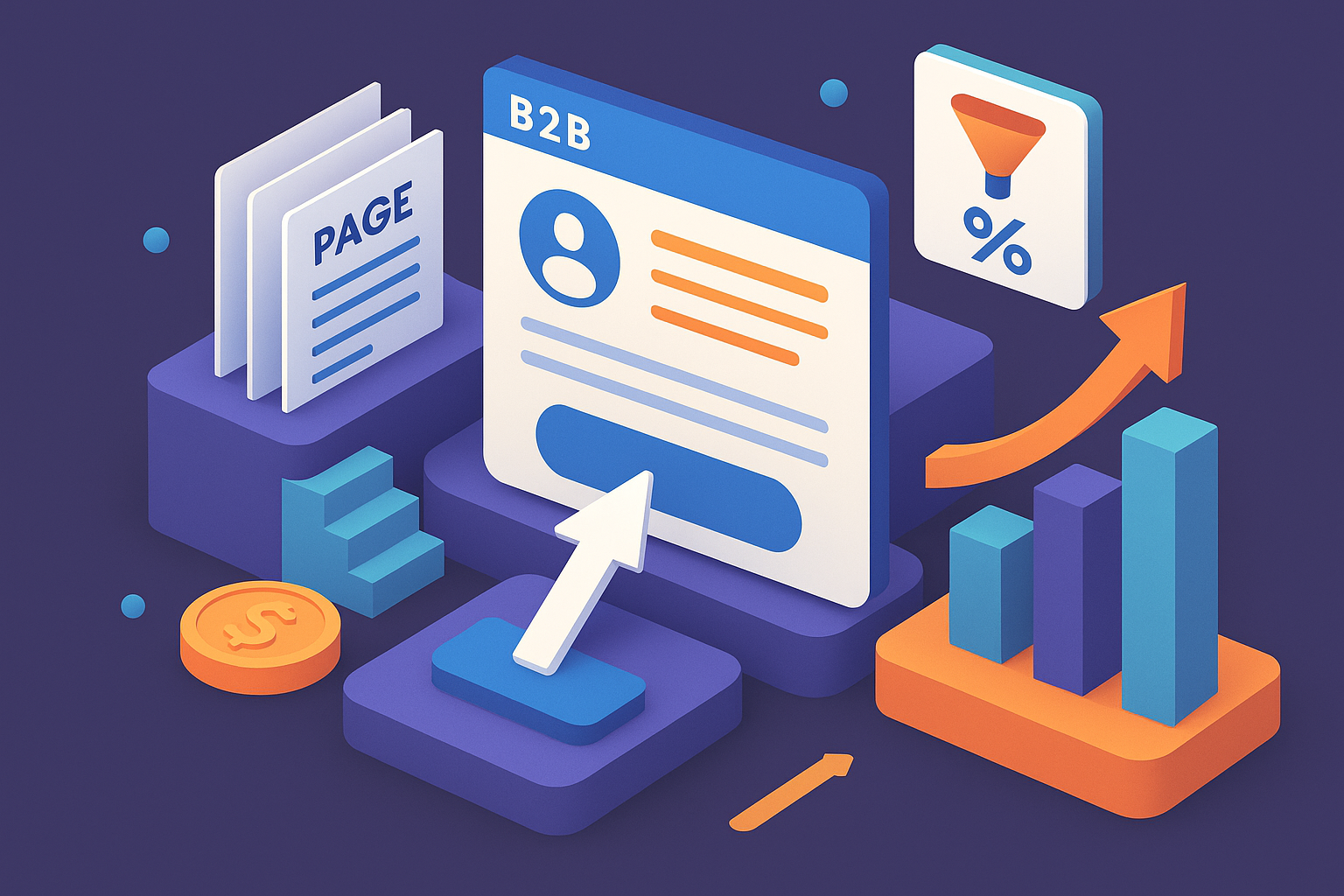
Discover key strategies for crafting B2B landing pages that convert. This article covers essential design elements, persuasive content, and user experience tips to turn visitors into leads. Learn how to optimize for maximum impact.
📑 Table of Contents
- Understanding the Role of B2B Landing Pages
- The Core Elements of a High-Converting B2B Landing Page
- Strategies to Enhance Credibility and Trust
- Optimizing Forms for User Engagement
- Leveraging A/B Testing to Refine Conversion Strategies
- Analytics and Continuous Improvement
- Practical Takeaway for B2B Marketers
Understanding the Role of B2B Landing Pages
Landing pages are pivotal in the B2B sector, serving as the critical junction between initial interest and potential lead conversion. Unlike B2C landing pages, which may aim for immediate sales, B2B landing pages need to nurture prospects through longer sales cycles and more complex decision-making processes. The primary goal is to generate leads by capturing contact information, which can then be used to develop relationships and close deals over time.
The Core Elements of a High-Converting B2B Landing Page
Effective B2B landing pages share common elements that are optimized for conversion. These include:
- Headline: Clear, compelling, and directly tied to the value proposition.
- Subheadline: Provides additional details and supports the main headline.
- Visuals: High-quality images or videos that relate directly to the product or service, enhancing the visitor's understanding and interest.
- Form: Designed to capture essential information without being overly intrusive. Typically, this includes name, email, and possibly company size or industry.
- Call-to-Action (CTA): Prominent, persuasive, and single-focused to guide users towards the next step.
- Social Proof: Testimonials, client logos, or case studies that build credibility and trust.
- Content: Concise, benefit-focused content that addresses the needs and pain points of the target audience.
Strategies to Enhance Credibility and Trust
Trust is a cornerstone in B2B relationships. Enhancing your landing page’s credibility can significantly affect conversion rates. Here are some strategies: Learn more at ads.tiktok.com social media platform
- Include Client Testimonials and Endorsements: Real accounts of customer satisfaction are persuasive, providing evidence of your business’s reliability and quality.
- Display Certifications and Awards: Professional accreditations or awards show your commitment to quality and industry standards.
- Offer a Clear Privacy Statement: This reassures visitors that their personal information is secure and will be handled with care.
Optimizing Forms for User Engagement
The form on your landing page can make or break the lead generation process. To optimize forms for higher engagement:
- Limit the Number of Fields: Request only essential information to minimize the hassle for potential leads.
- Use Smart Forms: Implement forms that dynamically adjust based on the user’s previous interactions with your site.
- Provide Value in Exchange for Information: Offer a free trial, demo, or valuable downloadable content as an incentive for filling out the form.
Leveraging A/B Testing to Refine Conversion Strategies
A/B testing is an invaluable tool in optimizing landing pages. By comparing two versions of a page, you can determine which elements most effectively drive conversions. Key areas to test include:
- Headlines and Subheadlines: Test different versions to see which more effectively captures attention and communicates value.
- CTAs: Experiment with different texts, colors, and placements to find the most effective CTA.
- Page Layout and Design: Minor changes in layout can significantly impact user engagement and conversion rates.
Track metrics such as click-through rates, conversion rates, and bounce rates to measure success and identify areas for improvement.
Analytics and Continuous Improvement
Continuous monitoring and analysis allow for the ongoing optimization of landing pages. Use analytics to track user behavior and conversion paths, identifying which elements of your landing page are performing well and which are not. This data-driven approach helps refine user experience and increase conversion rates over time. Key metrics to monitor include:
- Conversion Rate: The percentage of visitors who complete the desired action.
- User Engagement: Metrics like time on page and interactions per visit can indicate how engaging your content is.
- Source of Traffic: Understanding where your traffic comes from can help tailor your content to better suit these channels or focus on more profitable sources.
Practical Takeaway for B2B Marketers
To design an effective B2B landing page that consistently converts, focus on clear, concise messaging that communicates the value of your offer. Integrate elements that build trust and credibility, optimize forms to reduce friction in the lead generation process, and employ continuous testing and analytics to refine your approach. By adhering to these principles, you can create a powerful tool for driving B2B conversions and ultimately, fostering valuable business relationships.
Frequently Asked Questions
What are the key elements of an effective B2B landing page for high conversion rates?
An effective B2B landing page should clearly articulate the value proposition, include a strong and visible call-to-action (CTA), and ensure the content is tailored to the target audience. It's also crucial to optimize the page for usability and speed, integrate trust signals like testimonials and certifications, and use persuasive design elements such as contrasting colors for the CTA button. Additionally, the landing page should be aligned with the specific stage of the buyer's journey to address the audience's immediate needs and questions.
How can testing and optimization improve the conversion rates of B2B landing pages?
Regular testing and optimization are essential for improving conversion rates on B2B landing pages. Techniques such as A/B testing can help determine which elements of the page (e.g., headline, CTA, images, layout) most effectively engage visitors and drive conversions. Continuous analysis of user behavior and feedback also provides insights that can lead to incremental improvements in page performance. Optimizing for SEO, loading times, and mobile responsiveness further enhances the effectiveness of a landing page.
What role do visuals and media play in the effectiveness of B2B landing pages?
Visuals and media are crucial in capturing attention and conveying information efficiently on B2B landing pages. High-quality images, infographics, and videos can help explain complex products or services quickly and engagingly. They also aid in breaking up text, making the page easier to scan and reducing cognitive load. Proper use of visuals can lead to higher engagement and retention rates, thereby increasing the likelihood of conversion.
Sources and References
- The State of Marketing Report 2023 - HubSpot - This report provides comprehensive insights into the latest marketing trends, including the effectiveness of different types of B2B landing pages. It supports the article's discussion on the core elements of high-converting B2B landing pages by offering data-driven benchmarks and examples of successful strategies.
- How to Optimize Landing Pages for Conversion - Content Marketing Institute - Offers practical tips and case studies on optimizing B2B landing pages, directly supporting the article's section on enhancing credibility and trust, as well as optimizing forms for user engagement. The source provides examples of best practices in form design and content layout that can lead to increased conversion rates.
- Analysis of A/B Testing Techniques in E-commerce - arXiv - This academic paper discusses various A/B testing techniques and their effectiveness in an e-commerce setting, which can be directly applied to B2B landing pages. It supports the article's section on leveraging A/B testing to refine conversion strategies, providing a scientific basis for the methodologies discussed.
- The Importance of Trust in B2B Buying Decisions - Forrester - This report highlights how trust influences B2B purchasing decisions and the role of content and design in establishing credibility. It supports the article's focus on strategies to enhance credibility and trust, offering insights into the psychological aspects of buyer decision-making processes.
- Google Marketing Platform Developer Documentation - Provides technical guidelines and tools for digital marketers to effectively use Google's marketing platform, including features that can be utilized for optimizing B2B landing pages. This supports the article's discussion on the use of technology and tools in analyzing and enhancing landing page performance.
- How B2B Digital Leaders Drive Five Times More Revenue Growth Than Their Peers - Harvard Business Review - This article discusses the impact of effective digital strategies in B2B contexts, including the design and optimization of landing pages. It provides a broader business perspective on how effectively designed landing pages can significantly influence overall business growth and revenue.