How AI Transforms Customer Segmentation in E-Commerce
Artificial Intelligence (AI) has revolutionized the way e-commerce businesses understand and interact with their customers. By leveraging AI, companies can...

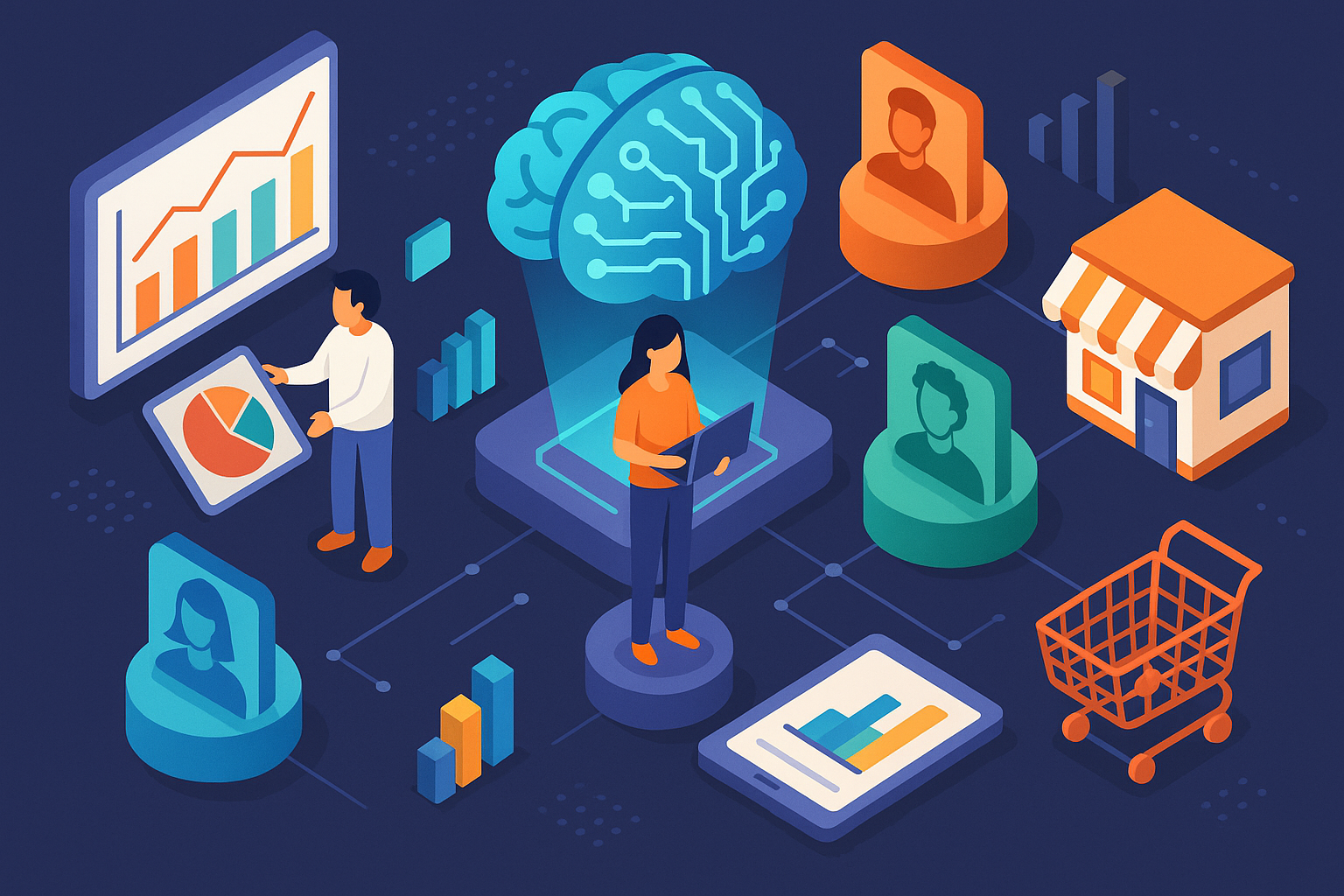
Discover how AI revolutionizes customer segmentation in e-commerce, enhancing personalization and boosting sales. Learn to leverage predictive analytics and machine learning to identify key customer groups and tailor marketing strategies effectively.
📑 Table of Contents
- Understanding the Role of AI in E-CommerceCustomer Segmentation
- Collecting and Preparing Data for AI-Driven Segmentation
- Implementing AI Models for Effective Segmentation
- Personalizing Marketing Strategies with AI-Driven Insights
- Optimizing and Iterating on AI Segmentation Strategies
- Ensuring Ethical Use of AI in Customer Segmentation
- Practical Takeaway: Leveraging AI for Long-Term Success in E-Commerce
Understanding the Role of AI in E-Commerce Customer Segmentation
Artificial Intelligence (AI) has revolutionized the way e-commerce businesses understand and interact with their customers. By leveraging AI, companies can segment their customer base more effectively, allowing for personalized marketing strategies and improved customer experiences. Customer segmentation involves dividing a customer base into groups of individuals that are similar in specific ways relevant to marketing, such as age, gender, interests, and spending habits.
AI enhances this process by analyzing large datasets to identify patterns and insights that human analysts might miss. This capability enables e-commerce companies to create highly accurate customer segments based on a wide range of criteria, including predictive behaviors.
Collecting and Preparing Data for AI-Driven Segmentation
The first step in utilizing AI for customer segmentation is data collection. E-commerce platforms must gather comprehensive data from various sources such as transaction histories, browsing behaviors, social media interactions, and customer feedback. The quality of AI outputs depends heavily on the quality of the input data, making this step crucial.
Data preparation follows, involving cleaning and structuring data to ensure that the AI tools can process it efficiently. This includes handling missing values, removing duplicates, and normalizing data formats. Data privacy must also be a priority, ensuring compliance with regulations such as GDPR or CCPA, which govern how personal data should be handled.
Implementing AI Models for Effective Segmentation
Once the data is ready, e-commerce businesses can implement AI models to perform segmentation. Machine learning algorithms such as k-means clustering, hierarchical clustering, and Gaussian mixture models are popular for segmenting customers. These models can identify naturally occurring clusters within data sets, helping businesses to understand different customer groups.
It's essential to choose the right model based on the specific needs and goals of the business. For example, k-means clustering is suitable for large datasets and provides clear segmentation, but it requires the number of clusters to be specified in advance. Hierarchical clustering, on the other hand, is better for smaller datasets and offers more detailed segmentation.
Personalizing Marketing Strategies with AI-Driven Insights
With AI-driven customer segments in hand, e-commerce businesses can tailor their marketing strategies to match the unique preferences and behaviors of each segment. Personalization can significantly enhance customer engagement and satisfaction, leading to higher conversion rates and customer loyalty.
For instance, AI can help identify which products and services are most appealing to different segments and predict what new products a segment might be interested in. Marketing messages can be customized to resonate with the specific interests and needs of each segment, delivered through the most effective channels.
Optimizing and Iterating on AI Segmentation Strategies
AI-driven customer segmentation is not a set-it-and-forget-it process. Continuous optimization and iteration are necessary to refine the segments and adapt to changing customer behaviors and market conditions. Regularly updating the AI models with new data helps maintain the accuracy and relevance of the segments.
A/B testing is a valuable method for optimizing segmentation strategies. By testing different approaches with various segments, businesses can learn what works best and continuously improve their marketing efforts. Additionally, it's important to monitor key performance indicators (KPIs) such as customer acquisition costs, conversion rates, and customer lifetime value to measure the effectiveness of segmentation strategies.
Ensuring Ethical Use of AI in Customer Segmentation
While AI offers powerful tools for customer segmentation, it's also important to consider the ethical implications. Issues such as data privacy, bias in AI algorithms, and transparency need to be addressed. Ensuring that AI models do not perpetuate biases or lead to discriminatory practices is crucial.
Businesses should implement rigorous testing of their AI systems to detect and mitigate biases. Transparency with customers about how their data is being used and allowing them to opt-out if desired helps build trust and ensures compliance with ethical standards.
Practical Takeaway: Leveraging AI for Long-Term Success in E-Commerce
Mastering AI-driven customer segmentation requires a combination of robust data management, careful model selection, personalized marketing strategies, and continuous optimization. By embracing these practices, e-commerce businesses can enhance their understanding of customer needs, tailor their offerings more effectively, and build lasting relationships with their customers.
To stay ahead, it's critical for businesses to keep abreast of advancements in AI technologies and continuously evaluate their segmentation strategies against new data and evolving market conditions. In doing so, they can ensure that their customer segmentation efforts remain relevant and effective, driving growth and success in the competitive e-commerce landscape.
Frequently Asked Questions
What is customer segmentation and why is it important for e-commerce?
Customer segmentation is the process of dividing customers into groups based on common characteristics, such as demographics, purchasing behaviors, and preferences, to tailor marketing strategies effectively. It is crucial for e-commerce because it allows businesses to target specific audiences with personalized campaigns, enhancing customer engagement, increasing sales, and improving overall customer satisfaction.
How can AI enhance customer segmentation in e-commerce?
AI can significantly enhance customer segmentation by analyzing large volumes of data to identify patterns and insights that human analysis might miss. It enables more accurate predictions about customer behavior and preferences. AI-driven tools can automate the segmentation process, create dynamic customer segments that adapt over time, and provide tailored recommendations to individual customers, thereby optimizing marketing efforts and improving the return on investment.
What types of data are crucial for effective customer segmentation in e-commerce?
Effective customer segmentation in e-commerce relies on diverse data types, including demographic data (age, gender, location), psychographic data (lifestyle, values, interests), behavioral data (purchase history, product preferences, website interactions), and transactional data (order frequency, average spend, loyalty). Collecting and integrating these data types help create a comprehensive view of customers, enabling more precise and actionable segments.
What are some best practices for implementing AI in customer segmentation?
Best practices for implementing AI in customer segmentation include ensuring data quality and completeness, choosing the right AI tools and technologies that align with business objectives, continuously training and refining AI models with new data, and maintaining ethical standards by safeguarding customer privacy and obtaining necessary consents for data usage. Additionally, integrating insights from AI into actionable marketing strategies is crucial for realizing the full potential of AI-driven customer segmentation.
Sources and References
- How retailers can keep up with consumers - This McKinsey report discusses the evolving landscape of consumer behavior in e-commerce and the critical role of AI in enabling effective customer segmentation. It provides insights into how AI-driven analytics can lead to more personalized marketing strategies, directly supporting the article's section on personalizing marketing strategies with AI-driven insights.
- AI Techniques for Customer Segmentation: A Comprehensive Review - This academic paper from arXiv provides a detailed review of various AI techniques used in customer segmentation. It supports the article's discussion on implementing AI models for effective segmentation by outlining specific algorithms and their applications in e-commerce.
- How Artificial Intelligence Is Transforming Customer Engagement - This Harvard Business Review article explores how AI transforms customer engagement and segmentation in e-commerce. It provides expert analysis and case studies, which enrich the article's sections on optimizing and iterating on AI segmentation strategies.
- The Future of Customer Segmentation - Forrester's report offers a forward-looking perspective on customer segmentation in e-commerce, emphasizing the integration of AI. This source supports the article's narrative on the evolving practices in AI-driven segmentation and the future implications for businesses.
- Using AI to Improve Customer Segmentation - This blog post on Salesforce's developer portal discusses practical ways AI can be leveraged to enhance customer segmentation processes. It provides technical insights and examples, supporting the article's discussion on collecting and preparing data for AI-driven segmentation.
- AI in Retail: Crafting Personalized Customer Experiences - Deloitte's insights discuss the use of AI in crafting personalized customer experiences in retail, which is directly relevant to the e-commerce sector. This supports the article's focus on using AI to personalize marketing strategies and enhance customer interactions.