Unlock the Power: Essential Strategies to Boost ROI Using AI Technologies

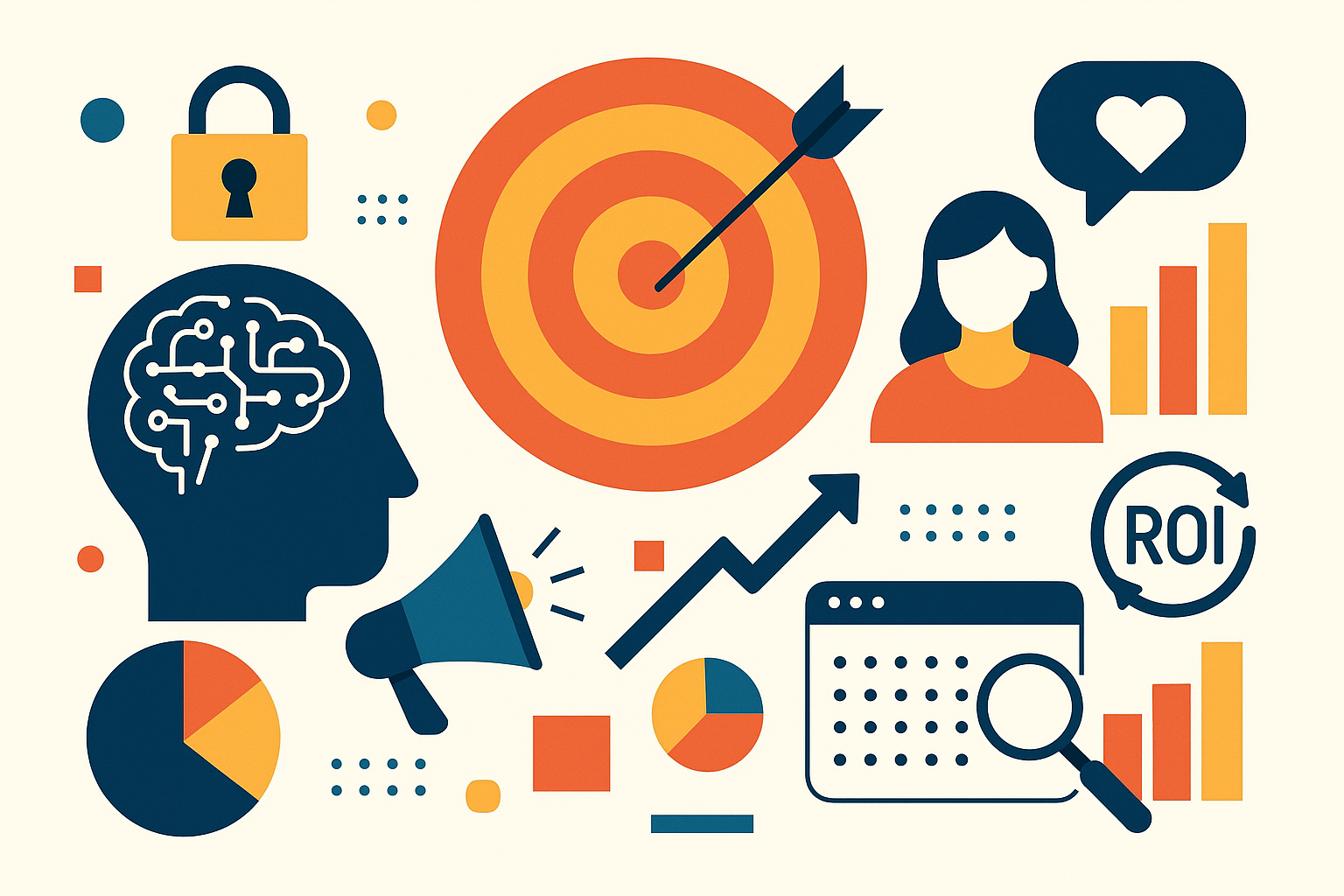
Discover how AI technologies can dramatically increase your ROI. This article outlines essential strategies, from data analysis to automation, that leverage AI to optimize business operations and boost profitability.
📑 Table of Contents
- Unlock the Power:Essential Strategiesto Boost ROI Using AI Technologies
- Introduction: Core Concepts and Value
- Fundamental Principles
- Strategic Implementation
- Practical Applications
- Common Pitfalls and How to Avoid Them
- Advanced Techniques
- Measuring Impact and Success
Unlock the Power: Essential Strategies to Boost ROI Using AI Technologies
Introduction: Core Concepts and Value
In the dynamic realm of digital marketing, Artificial Intelligence (AI) has emerged as a revolutionary force, transforming how businesses interact with customers, optimize processes, and enhance decision-making. At its core, AI enables the automation and personalization of marketing efforts at scale, which is crucial for improving the return on investment (ROI). By harnessing AI, marketers can uncover deep insights, predict customer behavior, and deliver more relevant, engaging content.
Fundamental Principles
Understanding the fundamental principles of AI is essential to leveraging its capabilities effectively. AI encompasses technologies that enable machines to learn from data, make decisions, and perform tasks that typically require human intelligence. These technologies include machine learning (ML), natural language processing (NLP), and predictive analytics. The key principles involve data quality, algorithm selection, and continuous learning. High-quality, diverse data sets train more effective AI models, while the right algorithms are critical to address specific business needs. Furthermore, AI systems must continually learn and adapt from new data to stay effective.
Strategic Implementation
The strategic implementation of AI in marketing starts with aligning AI initiatives with business objectives. Identify areas where AI can have the most significant impact, such as customer segmentation, lead scoring, or content optimization. Next, assemble a cross-functional team that includes data scientists, AI specialists, and marketing professionals to ensure a holistic approach to AI projects. It’s also vital to integrate AI smoothly with existing marketing technologies and workflows to enhance rather than disrupt processes.
Practical Applications
AI can be applied in several practical ways to boost marketing ROI:
- Customer Insights: AI-powered analytics tools can delve into vast amounts of data to extract actionable insights about customer preferences and behaviors. This enables marketers to craft more targeted strategies.
- Personalization: AI excels in personalizing customer interactions. By analyzing past behavior, AI can predict what content or products a customer will find appealing and present these at the optimal time.
- Chatbots: AI-driven chatbots provide 24/7 customer service, handling inquiries and resolving issues quickly. This not only improves customer satisfaction but also frees up human resources for more complex tasks.
- Content Generation: AI tools can help create data-driven content, ensuring it is optimized for SEO and engagement. These tools can suggest topics, draft content, and even test different versions to see which performs best.
Common Pitfalls and How to Avoid Them
While AI offers numerous benefits, there are common pitfalls to be aware of:
- Data Bias: AI systems are only as good as the data they learn from. Biased data can lead to skewed results. To avoid this, use diverse data sources and regularly review data sets for potential biases.
- Over-reliance on Automation: Over-automating can alienate customers who crave human interaction. Balance AI-driven activities with human touches, particularly in complex customer service scenarios.
- Lack of Expertise: Implementing AI without adequate expertise can result in poor outcomes. Invest in training for your team or partner with AI experts to ensure your AI initiatives are set up for success.
Advanced Techniques
For those ready to take their AI deployment to the next level, consider the following advanced techniques:
- Machine Learning Models: Develop proprietary ML models tailored to specific marketing tasks, such as predictive customer lifetime value models or attrition models, which can significantly refine your marketing strategies.
- AI-powered Optimization: Use AI to continuously test and optimize marketing campaigns. Algorithms can adjust campaign parameters in real-time based on performance data, maximizing efficiency and ROI.
- Integration with IoT: Combining AI with Internet of Things (IoT) data can provide unprecedented insights into how customers use products, leading to more effective marketing strategies and product improvements.
Measuring Impact and Success
Measuring the impact of AI on marketing ROI involves both qualitative and quantitative metrics. Key performance indicators (KPIs) such as conversion rates, customer engagement levels, and overall sales growth are essential. However, also consider customer satisfaction scores and brand perception changes, as these can also indicate the success of AI-driven initiatives. Use a dashboard to track these metrics regularly and adjust strategies as needed to ensure that AI implementations continue to deliver value.
In conclusion, AI technologies offer powerful tools for enhancing marketing strategies and boosting ROI. By understanding and applying the fundamental principles, strategically implementing AI, leveraging its practical applications, and avoiding common pitfalls, businesses can unlock significant competitive advantages. As AI continues to evolve, staying informed and adaptable will be crucial for ongoing success.
Frequently Asked Questions
How can AI technologies enhance data-driven marketing strategies?
AI technologies significantly enhance data-driven marketing strategies by automating data analysis, enabling real-time decision making, and providing deeper insights into customer behaviors and trends. By leveraging AI, marketers can more effectively segment audiences, personalize marketing campaigns, and optimize the customer journey, leading to improved customer engagement and increased ROI.
What are some key strategies for implementing AI to increase ROI?
Key strategies for utilizing AI to boost ROI include integrating AI with existing marketing tools to enhance automation, employing AI for predictive analytics to forecast customer behaviors, and using AI-driven insights to refine product offerings and pricing strategies. Additionally, continuously training and updating AI models with new data ensures the accuracy and relevance of insights, which is crucial for sustaining and improving ROI over time.
How does AI improve customer engagement?
AI improves customer engagement by enabling personalized interactions at scale. Through the analysis of large datasets, AI can identify patterns and preferences specific to individual customers. This allows businesses to tailor their communications and offerings to meet the unique needs of each customer, resulting in more relevant and engaging experiences. AI-driven chatbots and recommendation engines are examples of technologies that enhance engagement by providing timely and customized interactions.
Sources and References
- How AI Can Unlock Data for Marketing - This McKinsey report explores how AI technologies can be leveraged to enhance data analytics in marketing, directly supporting the discussion on using AI to improve ROI through strategic data utilization.
- Using AI to Improve Electronic Customer Relationship Management - An article from Harvard Business Review that provides insights into practical applications of AI in customer relationship management, reinforcing the article's section on practical AI applications to enhance customer interactions and ROI.
- Artificial Intelligence and Return on Investment - A comprehensive study available on arXiv that provides empirical data and analysis on the impact of AI technologies on ROI, offering academic validation for the strategies discussed in the article.
- The Future of AI and Analytics for Marketing - Forrester's research report that delves into future trends and current uses of AI in marketing, supporting the article's forward-looking strategies for integrating AI to boost ROI.
- Salesforce Einstein: AI for CRM - Official product documentation from Salesforce explaining how their AI platform, Einstein, enhances customer relationship management, providing a practical example of AI applied in marketing as discussed in the article.
- Machine Learning in Business Process Monitoring: A Comparison of Deep Learning and Classical Approaches - A Google Research paper that compares various AI methodologies in the context of business process monitoring, offering insights into strategic implementation of AI technologies for business analytics.
- How to Develop a Data-Driven Content Strategy - An article from Content Marketing Institute that discusses the importance of data in crafting marketing strategies, aligning with the article's emphasis on data-centric AI strategies to boost ROI.