Streamline Your SEO: Top AI Workflows for Efficient Marketing Teams
Understanding AI in SEO for Lean Marketing Teams AI-driven SEO is transforming how lean marketing teams optimize their digital presence. AI tools analyze data...

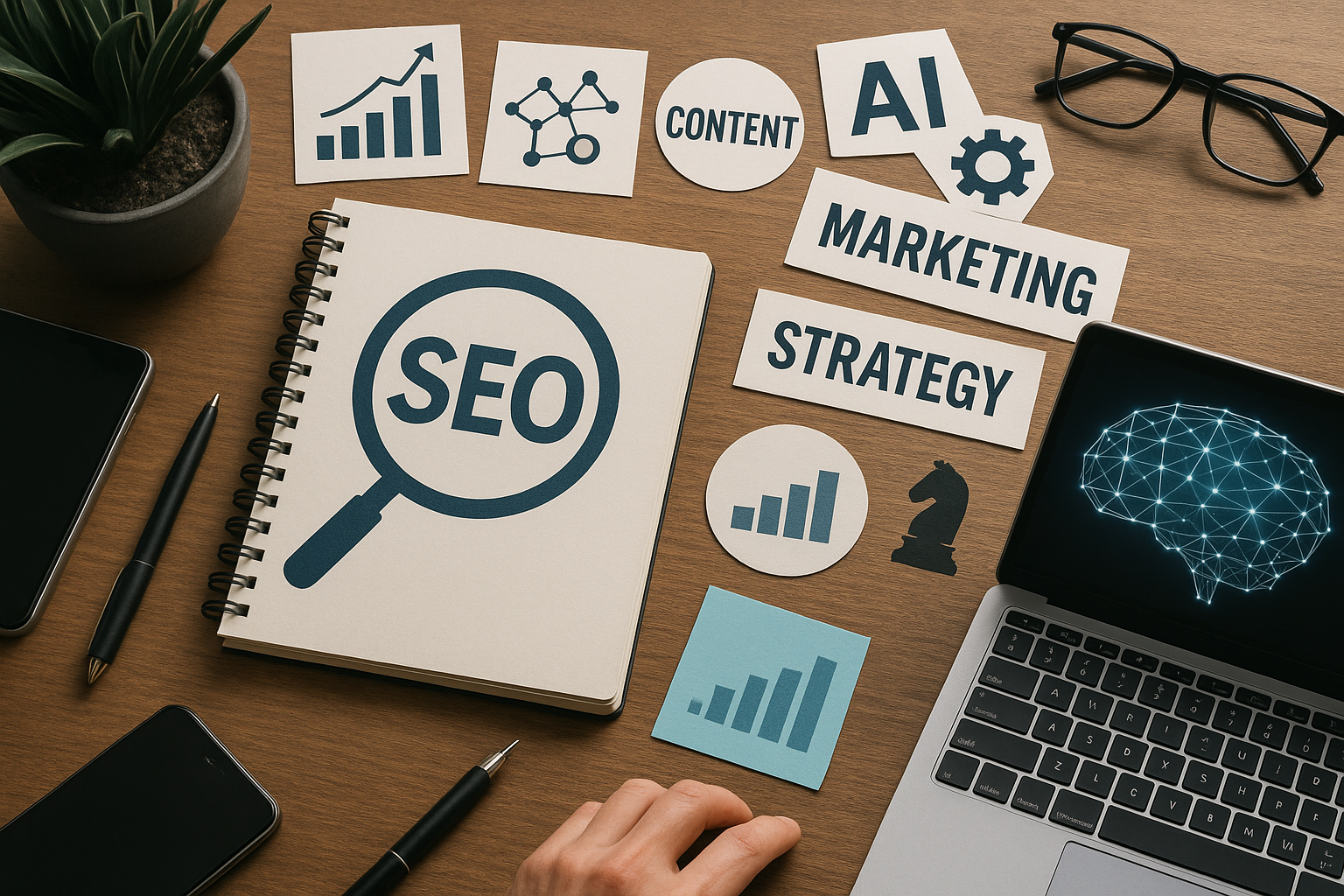
Discover efficient AI SEO workflows tailored for lean marketing teams. This article explores tools and strategies to boost your search rankings, enhance content creation, and automate analytics for optimal performance.
📑 Table of Contents
- Understanding AI inSEOfor Lean Marketing Teams
- Optimizing Keyword Research with AI
- Enhancing Content Strategy with AI Insights
- Streamlining On-Page SEO with Automation
- Utilizing AI for Technical SEO Audits
- Personalizing User Experience with AI
- Monitoring SEO Performance and Adjusting Strategies
- Integrating AI SEO into Overall Marketing Strategy
Understanding AI in SEO for Lean Marketing Teams
AI-driven SEO is transforming how lean marketing teams optimize their digital presence. AI tools analyze data more efficiently than traditional methods, allowing teams to make informed decisions quickly. This section explores the role of AI in automating tasks such as keyword research, content creation, and SEO audits, emphasizing the importance of integrating AI to streamline workflow and enhance productivity.
Optimizing Keyword Research with AI
Effective keyword research is foundational in SEO. AI tools revolutionize this process by predicting keyword trends, analyzing competitor keywords, and identifying long-tail phrases with high conversion potential. For practical implementation, lean teams should leverage AI tools that offer real-time keyword performance insights. This approach ensures that your SEO strategy aligns with current search trends, maximizing visibility and engagement.
Enhancing Content Strategy with AI Insights
Content is king in the digital marketing world. AI can help tailor your content strategy to meet the evolving needs of your target audience. Use AI to analyze user engagement and content performance across different platforms. This data informs your content creation, helping to produce material that resonates with your audience and adheres to SEO best practices. Additionally, AI-driven content tools can assist in generating topic ideas and even drafting preliminary content outlines, significantly speeding up the content creation process.
Streamlining On-Page SEO with Automation
On-page SEO, focusing on optimizing individual web pages to rank higher in search engines, can be labor-intensive. AI tools help automate many on-page SEO tasks, including meta tag creation, image optimization, and URL structuring. Implement tools that scan your pages to ensure SEO elements are not only present but also optimized for best performance. This automation helps maintain consistency across your site, crucial for both SEO and user experience.
Utilizing AI for Technical SEO Audits
Technical SEO, which includes the optimization of website architecture, is vital for search engine crawling and indexing. AI-driven SEO tools can perform comprehensive site audits to identify issues like broken links, slow loading speeds, and improper redirections. These tools provide detailed reports and actionable recommendations, allowing marketing teams to prioritize and address issues without needing deep technical expertise.
Personalizing User Experience with AI
AI's capability to analyze large data sets extends to personalizing user experience. By understanding user behavior patterns, AI can help customize website elements for different segments, increasing engagement and conversion rates. Implement AI tools that adapt content, product recommendations, and even call-to-action buttons based on user behavior. This not only improves user experience but also boosts the effectiveness of your SEO efforts by keeping users engaged and reducing bounce rates.
Monitoring SEO Performance and Adjusting Strategies
Continuous monitoring and tweaking of your SEO strategy are crucial for long-term success. AI tools provide ongoing analytics that help understand how different SEO tactics perform. This constant feedback allows teams to make data-driven adjustments to their strategies. Implement systems that offer comprehensive dashboards and real-time alerts to keep your team informed about SEO performance and market changes.
Integrating AI SEO into Overall Marketing Strategy
For AI-driven SEO efforts to be effective, they must align with the broader marketing strategy. Ensure that your AI SEO tools integrate well with other marketing technologies like CRM systems and email marketing platforms. This integration enables a unified approach to data and strategy, ensuring that SEO efforts support overall marketing goals and vice versa. By adopting AI-driven workflows, lean marketing teams can enhance their SEO efforts without the need for extensive resources. These tools not only automate mundane tasks but also provide deep insights that drive strategy, ultimately improving both search engine visibility and user engagement.
Frequently Asked Questions
What are the key components of an effective AI SEO workflow for lean marketing teams?
An effective AI SEO workflow for lean marketing teams should include keyword research automation, content optimization, competitive analysis, and performance tracking. Utilizing AI tools helps in identifying high-potential keywords, optimizing content for search engines, analyzing competitors’ strategies, and tracking the performance of SEO campaigns. Integrating these components ensures a comprehensive approach to SEO that can adapt and scale with minimal resources.
How can AI tools enhance content creation for SEO?
AI tools can significantly enhance content creation for SEO by providing insights into trending topics, suggesting relevant keywords, and optimizing content structure for better search engine visibility. AI-driven content tools can also generate content ideas at scale, ensure the use of SEO-friendly phrases, and maintain a consistent brand voice. This leads to the production of high-quality, SEO-optimized content that resonates with both search engines and target audiences.
What strategies should lean marketing teams use to prioritize SEO tasks effectively?
Lean marketing teams should prioritize SEO tasks based on potential impact and resource requirements. Start with quick wins like optimizing meta tags and content adjustments before moving to more resource-intensive tasks such as link building and comprehensive content campaigns. Utilizing AI to automate routine tasks such as keyword research and technical audits can free up time for strategic planning and creative endeavors. Regularly reviewing analytics to understand what works best can also help in prioritizing SEO tasks effectively.
How can lean marketing teams measure the success of their SEO strategies?
Success in SEO can be measured by tracking key performance indicators (KPIs) such as organic traffic, search engine rankings, click-through rates, and conversion rates. Lean marketing teams should also monitor the health of their website through metrics like page load time and mobile responsiveness. Utilizing analytics tools powered by AI can provide deeper insights into user behavior and campaign performance, allowing teams to make data-driven adjustments to their SEO strategies.
Sources and References
- The Role of Artificial Intelligence in Digital Marketing - This research paper from Google explores how AI technologies are transforming digital marketing strategies, including SEO. It provides foundational knowledge that supports the article's discussion on how lean marketing teams can leverage AI for SEO.
- HubSpot's State of Marketing Report - This annual report includes data and trends in AI adoption in marketing, specifically highlighting tools and strategies for SEO optimization. It is a practical resource for understanding how AI can streamline keyword research and content strategy as discussed in the article.
- Enhancing Content Strategies with AI: A Research Overview - This paper from arXiv provides an in-depth analysis of using AI for content creation and strategy optimization, directly supporting the article's section on enhancing content strategy with AI insights.
- Google Developers SEO Guidelines - Official documentation from Google that outlines best practices for on-page SEO. This source is crucial for understanding the technical aspects of SEO that can be automated with AI, as discussed in the article.
- Forrester Report on the Future of SEO and Content AI Tools - This report provides expert analysis and forecasts on the integration of AI tools in SEO and content strategies, validating the article's points on streamlining SEO processes for efficiency in lean marketing teams.
- How AI is Revolutionizing Content Strategy - An article from the Content Marketing Institute discussing specific AI tools that enhance content strategy, supporting the article's section on using AI to refine and optimize content development.
- McKinsey Insights on AI in Document Analysis - This McKinsey article discusses how AI can be used to analyze and extract insights from documents, relevant to the article's discussion on AI-driven technical SEO audits and the extraction of actionable insights from web pages.