Streamline Your B2B Marketing: Top Automation Workflow Strategies
Marketing automation workflows are sequences designed to engage business-to-business (B2B) customers effectively, nurturing leads through customized paths...

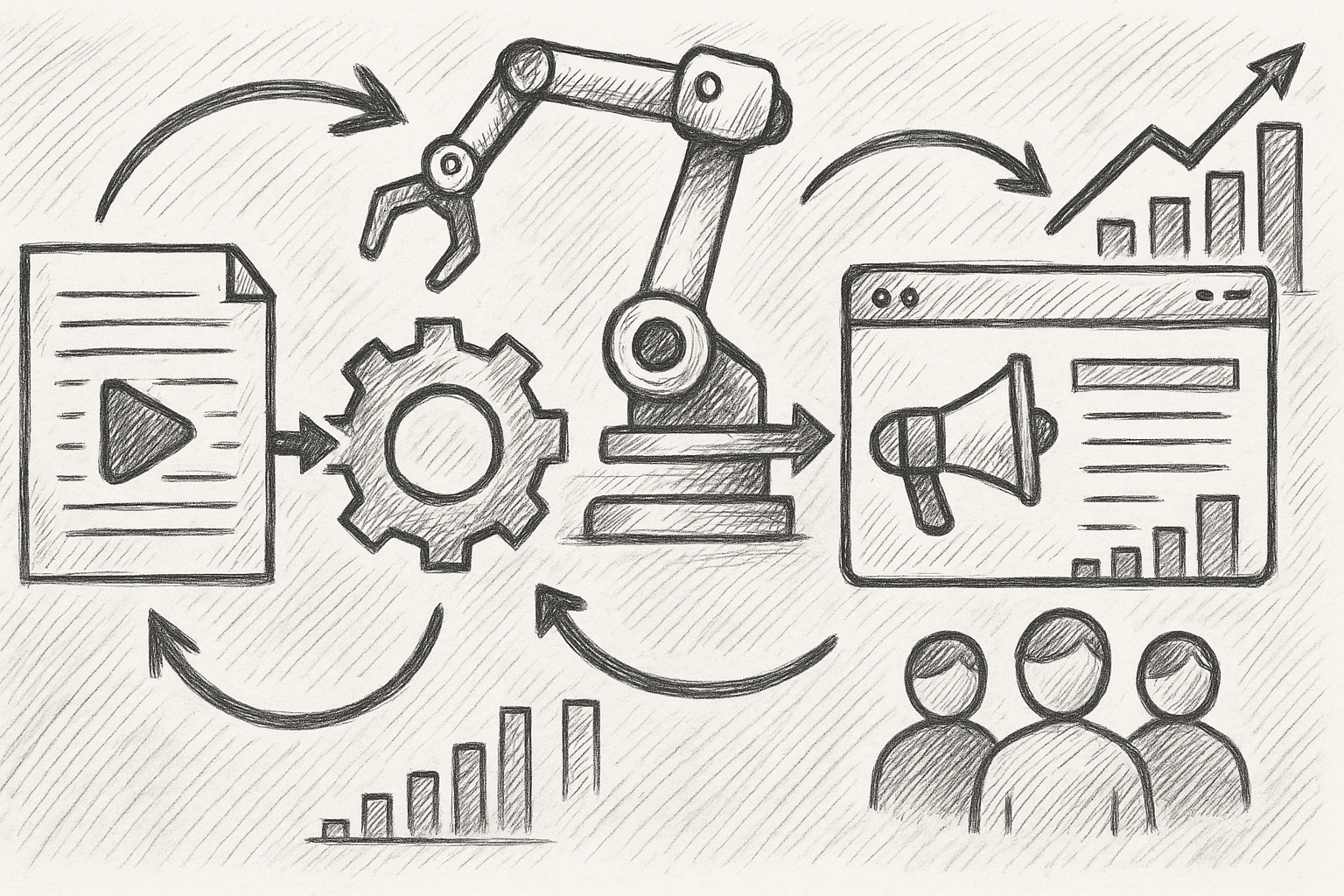
Discover how to streamline your B2B marketing efforts using automation workflows. This article covers essential strategies for lead nurturing, scoring, and content delivery to enhance efficiency and ROI. Learn to implement these best practices effectively.
📑 Table of Contents
- UnderstandingMarketingAutomation Workflows in B2B Contexts
- Establishing Goals and Objectives for Automation
- Segmenting Your Audience for Targeted Campaigns
- Designing Effective Workflows
- Integrating ContentStrategyinto Workflows
- Leveraging Multi-Channel Approaches
- Testing and Optimizing Workflows
- Implementing Marketing Automation Tools
Understanding Marketing Automation Workflows in B2B Contexts
Marketing automation workflows are sequences designed to engage business-to-business (B2B) customers effectively, nurturing leads through customized paths based on interactions with your company. At the heart of successful automation are strategies that align with business goals, providing relevant content and interactions to prospects at optimal times. The foundation of these workflows is to understand your audience deeply, segment them accurately, and automate tasks to increase efficiency and personalization.
Establishing Goals and Objectives for Automation
Before diving into specific workflows, it's crucial to define what you aim to achieve with marketing automation. Common goals include lead generation, lead nurturing, customer engagement, and post-sale customer retention. Clear objectives not only guide the design of your workflows but also help in measuring their effectiveness. For instance, if lead nurturing is a goal, your workflow should focus on delivering content and interactions that educate and build trust with your prospects.
Segmenting Your Audience for Targeted Campaigns
Effective B2B marketing automation relies on understanding and segmenting your audience based on various criteria such as industry, company size, role in the purchasing process, and previous interactions with your brand. This segmentation allows for more personalized and relevant communication. Data-driven insights from CRM and other analytics tools can aid in creating segments that respond best to different types of messaging and content, thus optimizing the outcomes of your workflows.
Designing Effective Workflows
Once your goals are set and your audience segmented, the next step is to design the workflows. A well-crafted workflow should:
- Start with a trigger: an action taken by a prospect, such as filling out a form or visiting a specific webpage.
- Follow with a series of steps that might include sending emails, scheduling calls, or updating lead scores based on the prospect's behavior.
- End with a goal achievement, which might be booking a demo, a direct purchase, or another conversion event.
Each step should be logically connected to the previous one, smoothly guiding the prospect towards the desired action.
Integrating Content Strategy into Workflows
Content is a critical component of any marketing automation workflow. The type of content, from educational articles and whitepapers to webinars and case studies, should align with the stage of the buyer’s journey. For instance, early-stage leads might receive more informational content to build awareness, while deeper in the funnel, more product-specific content can help in decision making. It’s essential to map content to different segments and stages accurately, ensuring it addresses the needs and interests of each segment.
Leveraging Multi-Channel Approaches
While email is often the backbone of automation workflows, incorporating multiple channels can enhance effectiveness. Social media, SMS, personal calls, and retargeting ads can all play a role in a comprehensive workflow. The key is to maintain a consistent message across all channels while leveraging the unique capabilities of each. For example, SMS might be used for urgent updates or reminders, while detailed content might be better suited for email or downloadable formats.
Testing and Optimizing Workflows
Establishing workflows is just the beginning. Continuous testing and optimization are necessary to ensure they perform well. A/B testing can be used to test different emails, subject lines, and calls to action to see what resonates best with your audience. Analytics play a crucial role in this phase, providing insights into open rates, click-through rates, conversion rates, and more, which help in fine-tuning the workflows for better performance.
Regularly revisiting your segmentations, triggers, and content can also lead to improvements. Market conditions change, new trends emerge, and customer behaviors evolve, so your workflows should adapt to these changes to remain effective.
Implementing Marketing Automation Tools
Choosing the right tools is critical for implementing effective marketing automation workflows. The ideal tool should be robust enough to handle complex workflows and integrate seamlessly with other systems such as CRM software, analytics tools, and content management systems. Key features to look for include ease of use, customization capabilities, scalability, and strong technical support. It’s also beneficial if the tool offers advanced features like artificial intelligence (AI) and machine learning (ML) for better prediction of customer behaviors and workflow optimization.
In conclusion, B2B marketing automation workflows are about more than just automating marketing tasks; they're about creating smarter, more personalized customer journeys. By setting clear goals, understanding and segmenting your audience, designing thoughtful workflows, integrating a multi-channel approach, continuously testing and optimizing, and choosing the right tools, you can significantly enhance your B2B marketing efforts and ultimately drive more conversions and revenue for your business.
Frequently Asked Questions
What are the key components of an effective B2B marketing automation workflow?
An effective B2B marketing automation workflow typically includes audience segmentation, personalized content delivery, lead scoring, and feedback mechanisms. Integrating these components ensures that the right content reaches the right audience at the optimal time, enhancing engagement and conversion rates. Continuous analysis and refinement based on performance metrics are also crucial to adapt and improve the workflows over time.
How can B2B marketers effectively segment their audience for automation workflows?
Effective audience segmentation in B2B marketing automation can be achieved by analyzing both demographic and behavioral data. Key factors include industry, company size, role in the company, past interactions with the brand, and content engagement levels. Segmenting the audience based on these factors allows marketers to tailor their campaigns more specifically, which can lead to higher engagement and conversion rates.
What role does content play in marketing automation workflows?
Content is a fundamental element in marketing automation workflows as it drives engagement and nurtures leads through the sales funnel. Effective content should be relevant, valuable, and tailored to the specific needs and stages of the target audience. This can include educational articles, case studies, product demos, and more. Consistently delivering high-quality content helps build trust and authority, ultimately influencing purchasing decisions.
How can marketers measure the success of their automation workflows?
The success of marketing automation workflows can be measured through various metrics such as engagement rates, conversion rates, lead quality, and overall ROI. It's important to set clear objectives and KPIs at the beginning of a campaign and use analytics tools to track these metrics continuously. Regularly reviewing these outcomes helps marketers adjust their strategies and optimize their workflows for better results.
Sources and References
- The Forrester Wave™: B2B Marketing Automation Platforms, Q4 2020 - This Forrester report evaluates top marketing automation platforms and discusses how they can enhance workflow efficiency in B2B contexts. It provides insights into how automation tools can be tailored to meet specific business objectives, supporting the section on establishing goals and objectives for automation.
- How to Segment Your Audience for Targeted Marketing - An article from Harvard Business Review that outlines effective strategies for audience segmentation. This source is particularly relevant to the article's discussion on segmenting your audience for targeted campaigns, offering real-world examples and expert advice.
- How Content Strategy Supports Marketing Automation - This piece from the Content Marketing Institute explores the integration of content strategies into marketing automation workflows. It provides a detailed analysis that complements the article's section on integrating content strategy into workflows, highlighting best practices and common pitfalls.
- Artificial Intelligence and Machine Learning in Business Contexts - A comprehensive study available on arXiv that discusses the application of AI and machine learning in various business scenarios, including marketing automation. This research supports the article's exploration of AI in designing effective B2B marketing workflows.
- Ultimate Guide to Automation Workflow - Salesforce offers an in-depth guide that outlines the creation and management of marketing automation workflows. This resource is crucial for understanding the practical aspects of designing effective workflows as discussed in the article.
- McKinsey Insights on Marketing and Sales - A collection of articles and reports by McKinsey providing expert analysis on the latest trends and best practices in marketing and sales, including automation strategies. This source offers a broad industry perspective that enriches the article's discussion on B2B marketing automation workflows.