Maximize Your ROI with B2B Email Marketing Automation Best Practices
Email marketing automation stands as a pivotal strategy for B2B companies, offering a way to nurture leads and maintain relationships with minimal manual...

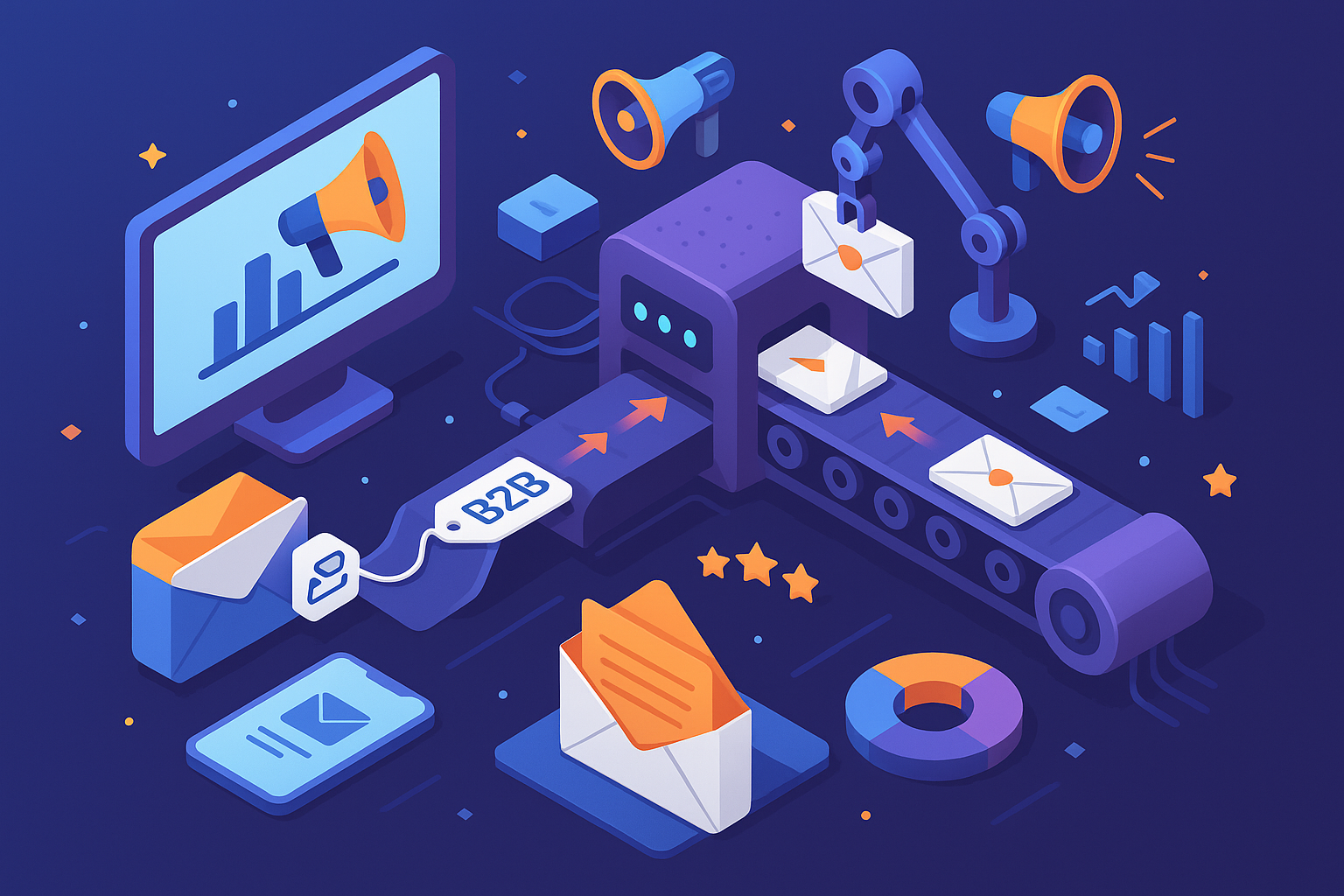
Discover essential strategies for B2B email marketing automation. This article covers crafting personalized content, optimizing send times, and leveraging analytics to enhance your campaigns. Learn to streamline communication and boost your ROI effectively.
📑 Table of Contents
- Understanding the Role ofAutomationin B2B Email Marketing
- Developing Your B2B Email AutomationStrategy
- Segmentation and Personalization Techniques
- Choosing the Right Automation Tools
- Crafting Effective Automated Email Campaigns
- Integrating Automation with Other Marketing Channels
- Measuring Success and Optimizing Campaigns
- Staying Compliant with Email Regulations
Understanding the Role of Automation in B2B Email Marketing
Email marketing automation stands as a pivotal strategy for B2B companies, offering a way to nurture leads and maintain relationships with minimal manual effort. Automation works by triggering emails based on specific actions taken by your prospects. This can range from a simple welcome email to complex sequences that respond to user behavior such as website engagement or previous email interactions.
Developing Your B2B Email Automation Strategy
To start, define clear objectives for what you want your email campaigns to achieve. Common goals include lead nurturing, customer onboarding, re-engagement, and transactional updates. Once goals are set, map out the customer journey and identify key touchpoints where automated emails can enhance the interaction. Think about the information or support customers need at each stage, and how automated emails can deliver this effectively.
Segmentation and Personalization Techniques
Effective segmentation and personalization are crucial for increasing the relevance and effectiveness of automated emails. Begin by segmenting your email list based on demographic data, behavioral data, and engagement levels. This allows for more targeted and personalized email campaigns. Personalization goes beyond using the recipient’s name; it involves tailoring content to meet the unique needs and interests of each segment. For instance, sending different content to decision-makers versus end-users based on their roles. Learn more at Mailchimp resources
Choosing the Right Automation Tools
Selecting the right email marketing automation tool is vital. Consider factors like integration capabilities with your existing CRM and other tools, ease of use, scalability, price, and the level of customer support provided. Look for tools that offer advanced analytics, A/B testing capabilities, and customizable templates to enhance your marketing efforts.
Crafting Effective Automated Email Campaigns
The success of your email automation lies in the quality and relevance of the content you send. Each email should have a clear purpose and call to action. Use engaging subject lines to boost open rates and concise, clear messaging that reflects your brand’s voice. Ensure all emails are optimized for mobile devices, as many professionals access their emails on the go. Additionally, consider the timing and frequency of the emails to avoid overwhelming your recipients.
Integrating Automation with Other Marketing Channels
Email should not exist in a silo. Integrate your email marketing automation with other marketing channels like social media, your website, and digital advertising. This creates a cohesive marketing strategy that provides multiple touchpoints for customer interaction. For example, use insights from email interactions to refine your social media campaigns, or use email to follow up on actions that customers take on your website.
Measuring Success and Optimizing Campaigns
Track key performance indicators (KPIs) such as open rates, click-through rates, conversion rates, and ROI to measure the effectiveness of your email automation campaigns. Use these insights to continually refine and optimize your strategy. A/B testing can be particularly effective in determining what works best for your audience. Test different elements like subject lines, email content, and send times to see what yields the best results. Also, keep an eye on industry benchmarks to understand where you stand and where there is room for improvement.
Staying Compliant with Email Regulations
Lastly, ensure that your email marketing practices comply with regulations such as the General Data Protection Regulation (GDPR) and the CAN-SPAM Act. These regulations dictate how businesses should handle personal data and communication, including requirements for obtaining consent and providing opt-out options. Non-compliance can result in hefty fines and damage to your brand’s reputation.
By following these best practices, B2B companies can leverage email marketing automation not just to enhance their marketing strategy but to build lasting relationships with their customers. The key is to continually adapt and refine your approach based on both analytical insights and evolving customer expectations.
Frequently Asked Questions
What are the core elements of a successful B2B email marketing automation campaign?
The core elements of a successful B2B email marketing automation campaign include a clear understanding of your target audience, personalized content tailored to the needs and stages of the customer journey, timely and relevant triggers for sending emails, consistent testing and optimization of campaigns, and compliance with email regulations. Integrating these elements effectively can help in maximizing engagement, conversion rates, and ROI from your email marketing efforts.
How can personalization improve the effectiveness of B2B email campaigns?
Personalization can significantly enhance the effectiveness of B2B email campaigns by making the content more relevant and engaging to the recipient. This can include using the recipient's name, company details, or past interactions with the brand to tailor the email content. Personalization helps in building stronger relationships with prospects and customers, increasing open rates, click-through rates, and ultimately driving more conversions. It also helps in standing out in a crowded inbox by addressing the specific needs and interests of the recipient.
What role does segmentation play in B2B email marketing automation?
Segmentation plays a critical role in B2B email marketing automation by dividing a business’s email list into smaller, more focused groups based on specific criteria such as industry, company size, role in the company, or behavior. This allows marketers to send more targeted and relevant emails to each group, increasing the effectiveness of the campaigns. Effective segmentation can lead to improved engagement rates, higher conversion rates, and a better overall customer experience.
What best practices should be followed to ensure compliance with email marketing laws and regulations?
To ensure compliance with email marketing laws and regulations, businesses should follow best practices such as obtaining explicit consent from recipients before sending marketing emails, providing a clear and easy way for recipients to opt-out of future communications, and ensuring transparency about the sender's identity and purpose of the communication. Additionally, keeping up-to-date with changes in email marketing laws and regulations in different regions is crucial to avoid legal issues and maintain trust with your audience.
Sources and References
- The State Of Marketing Automation Platforms 2023 - Forrester - This Forrester report provides an in-depth analysis of current marketing automation technologies and trends, supporting the article's discussion on choosing the right automation tools for B2B email marketing. It includes data-driven insights into how automation enhances marketing efficiency and effectiveness.
- The Power of Personalization in B2B Marketing - Harvard Business Review - This article from Harvard Business Review explores the impact of personalization in B2B settings, reinforcing the article's section on segmentation and personalization techniques. It provides examples and strategies that have proven successful, illustrating the practical application of these concepts.
- Understanding the Impact of Automation on Email Marketing - Google Research - Google's research paper offers a scientific approach to measuring the effectiveness of email marketing automation. This supports the article's premise on the role of automation in enhancing email campaign outcomes, providing empirical evidence and statistical analysis.
- Developing a Data-Driven Email Marketing Strategy - Content Marketing Institute - This guide discusses the importance of data in crafting email marketing strategies, aligning with the article's focus on developing a robust B2B email automation strategy. It offers practical tips and case studies, making it a valuable resource for marketers looking to enhance their approach.
- AI in Email Marketing - Salesforce - Salesforce provides a comprehensive overview of how AI can be leveraged in email marketing to automate and personalize campaigns at scale. This source is particularly relevant to the article's discussion on integrating AI with email marketing automation to drive better engagement and results.
- Email Marketing: Think Beyond the Blast - McKinsey & Company - McKinsey's analysis offers strategies for moving beyond basic email blasts, emphasizing the creation of effective automated email campaigns. This supports the article's section on crafting effective campaigns by providing insights into advanced tactics and measurement techniques.