How AI Automation Elevates Customer Service to New Heights
Artificial Intelligence (AI) automation is transforming customer service by enabling businesses to deliver personalized, efficient, and accessible support. At...

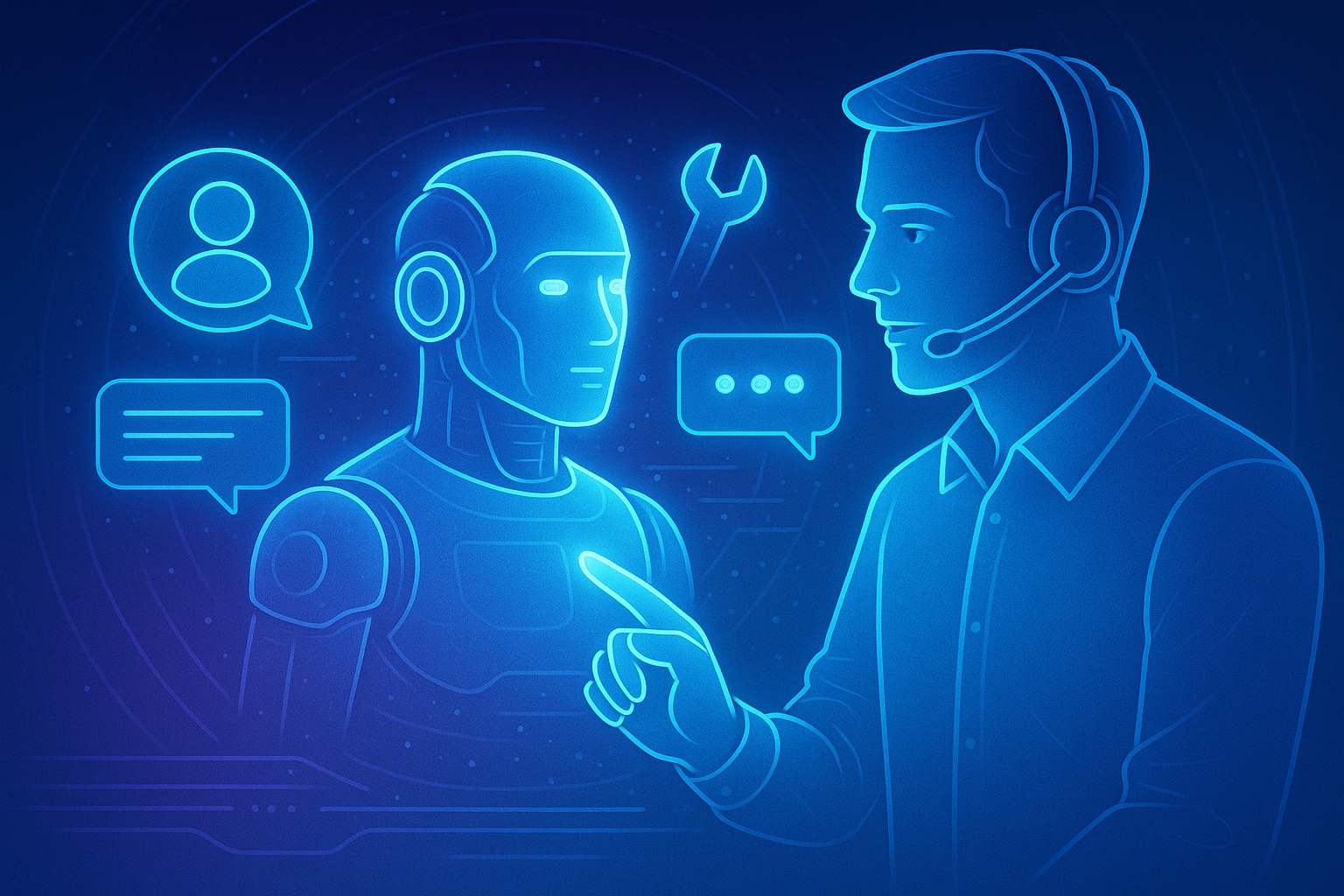
Discover the transformative power of AI automation in customer service. This article explores how leveraging AI tools enhances efficiency, personalization, and satisfaction, providing practical strategies to integrate AI seamlessly into your service operations.
📑 Table of Contents
- UnderstandingAIAutomation in Customer Service
- Key Components of AI Automation for Customer Service
- Integrating AI Automation intoYour CustomerService Strategy
- Optimizing Human-Agent Collaboration with AI
- Measuring the Impact of AI on Customer Service
- Addressing Challenges in AI Automation
- Future-Proofing Your Customer Service with AI
Understanding AI Automation in Customer Service
Artificial Intelligence (AI) automation is transforming customer service by enabling businesses to deliver personalized, efficient, and accessible support. At its core, AI automation involves using advanced algorithms and machine learning technologies to automate responses and actions based on customer interactions. This not only enhances customer satisfaction but also optimizes resource allocation, reducing the workload on human agents.
Key Components of AI Automation for Customer Service
To effectively implement AI in customer service, it's essential to understand its key components:
- Chatbots and Virtual Assistants: These AI tools handle inquiries and provide instant responses to customers, covering basic questions to complex queries.
- Machine Learning Models: They analyze data from customer interactions to continuously improve and provide more accurate responses over time.
- Natural Language Processing (NLP): This technology helps AI understand and generate human-like responses, making interactions more natural and effective.
Integrating AI Automation into Your Customer Service Strategy
For successful integration, follow these strategic steps:
- Define Objectives: Clearly outline what you aim to achieve with AI, such as reducing response times or increasing customer satisfaction scores.
- Select the Right Technology: Choose AI solutions that align with your customer service goals and can integrate seamlessly with your existing systems.
- Pilot Testing: Start with a pilot program to test the effectiveness of AI in a controlled environment before a full-scale rollout.
- Training and Support: Train your staff to work alongside AI tools and provide ongoing support to adapt to AI-driven processes.
Optimizing Human-Agent Collaboration with AI
AI should not replace human agents but rather enhance their capabilities. Here’s how you can optimize this collaboration:
- Task Allocation: Use AI for handling routine inquiries and escalate complex or sensitive issues to human agents.
- Feedback Mechanisms: Implement systems where human agents can provide feedback on AI performance, helping to refine AI responses and actions.
- Continuous Learning: Both AI systems and human agents should engage in continuous learning from each other’s interactions and outcomes to improve overall service quality.
Measuring the Impact of AI on Customer Service
To assess the effectiveness of AI in customer service, focus on these key metrics:
- Customer Satisfaction: Use surveys and feedback tools to measure how AI impacts the overall customer experience.
- Response Time: Track changes in response times before and after AI implementation to evaluate efficiency improvements.
- Resolution Rate: Monitor the percentage of queries resolved by AI without human intervention, which can indicate the effectiveness of AI automation.
Addressing Challenges in AI Automation
While AI can greatly enhance customer service, it comes with its set of challenges:
- Data Privacy: Ensure compliance with data protection regulations to safeguard customer information processed by AI.
- Overdependence: Avoid over-reliance on AI by maintaining an effective balance between automated and human-handled services.
- Technological Limitations: Regularly update and maintain AI systems to cope with complex customer demands and avoid technological obsolescence.
Future-Proofing Your Customer Service with AI
To maintain a competitive edge, it’s crucial to stay ahead of AI trends and continuously evolve your customer service strategies:
- Adapt to New Technologies: Keep abreast of advancements in AI and related technologies to continuously enhance your customer service tools.
- Personalization: Leverage AI to offer more personalized experiences based on customer data and interaction history, which can significantly boost loyalty and satisfaction.
- Scalability: Design your AI systems to scale seamlessly as your business grows and as customer demands change over time.
By embracing AI automation in customer service, businesses not only streamline operations but also create a more engaging, personalized, and responsive customer experience. This strategic approach ensures that your customer service remains top-tier, driving satisfaction and loyalty in an increasingly digital world.
Frequently Asked Questions
How does AI automation enhance customer service?
AI automation enhances customer service by providing quick and accurate responses to customer inquiries, reducing wait times, and allowing human agents to focus on more complex issues. Automation tools can analyze large volumes of data to identify patterns and predict customer needs, leading to more personalized service experiences. Additionally, AI can operate 24/7, ensuring customers receive assistance at any time without delay.
What are the best practices for integrating human and AI interactions in customer service?
Integrating human and AI interactions effectively involves several best practices: Firstly, use AI for handling routine inquiries and tasks, freeing up human agents for complex and sensitive issues. Ensure a seamless handoff between AI and human agents by establishing clear protocols for escalation. Train customer service representatives to work alongside AI tools, including understanding their capabilities and limitations. Lastly, continuously monitor and refine AI interactions based on customer feedback and performance metrics to ensure a harmonious integration that enhances the customer experience.
Can AI automation personalize customer interactions?
Yes, AI automation can significantly personalize customer interactions by analyzing customer data, previous interactions, and preferences to tailor responses and recommendations. AI systems can use machine learning algorithms to adapt and improve personalization over time, ensuring that each customer interaction becomes more relevant and engaging. This ability to personalize at scale can enhance customer satisfaction and loyalty.
How does AI automation maintain consistency in customer service responses?
AI automation maintains consistency in customer service by adhering to predefined guidelines and responses. Unlike human agents who may vary in their responses due to fatigue or subjective interpretation, AI systems provide uniform answers based on the information and training they receive. This ensures that all customers receive reliable and standard responses to their queries, enhancing the overall quality and reliability of the customer service provided.
Sources and References
- McKinsey & Company: The next acronym you need to know about: RPA - This source provides an in-depth analysis of robotic process automation (RPA), a key component of AI automation in customer service. It discusses how RPA can streamline customer interactions and backend processes to enhance service delivery.
- Harvard Business Review: How AI Is Transforming Customer Service - This article explores various AI technologies being integrated into customer service strategies, including chatbots and AI-driven analytics. It offers insights into how these technologies improve customer satisfaction and operational efficiency.
- Forrester Research: The Future of Customer Service - Forrester's report provides a comprehensive look at how AI automation is being used to optimize human-agent collaboration in customer service environments. It includes case studies and metrics that measure the impact of AI tools on service quality and employee performance.
- arXiv: Customer Service Automation Using Deep Learning - This academic paper discusses the technical underpinnings of AI models that automate customer service tasks. It provides a detailed analysis of how deep learning can be applied to understand and respond to customer queries effectively.
- Salesforce: What is Customer Service Automation? - Salesforce offers a practitioner’s guide to implementing AI automation within customer service systems. It outlines the tools and processes involved, and how these contribute to a seamless customer experience.
- Gartner: Impact of Artificial Intelligence on Customer Service - Gartner's research document assesses the long-term effects of AI integration in customer service settings. It provides forecasts and recommendations for businesses looking to enhance their customer service through AI technologies.