Master the Art of Using AI for Effective Customer Segmentation

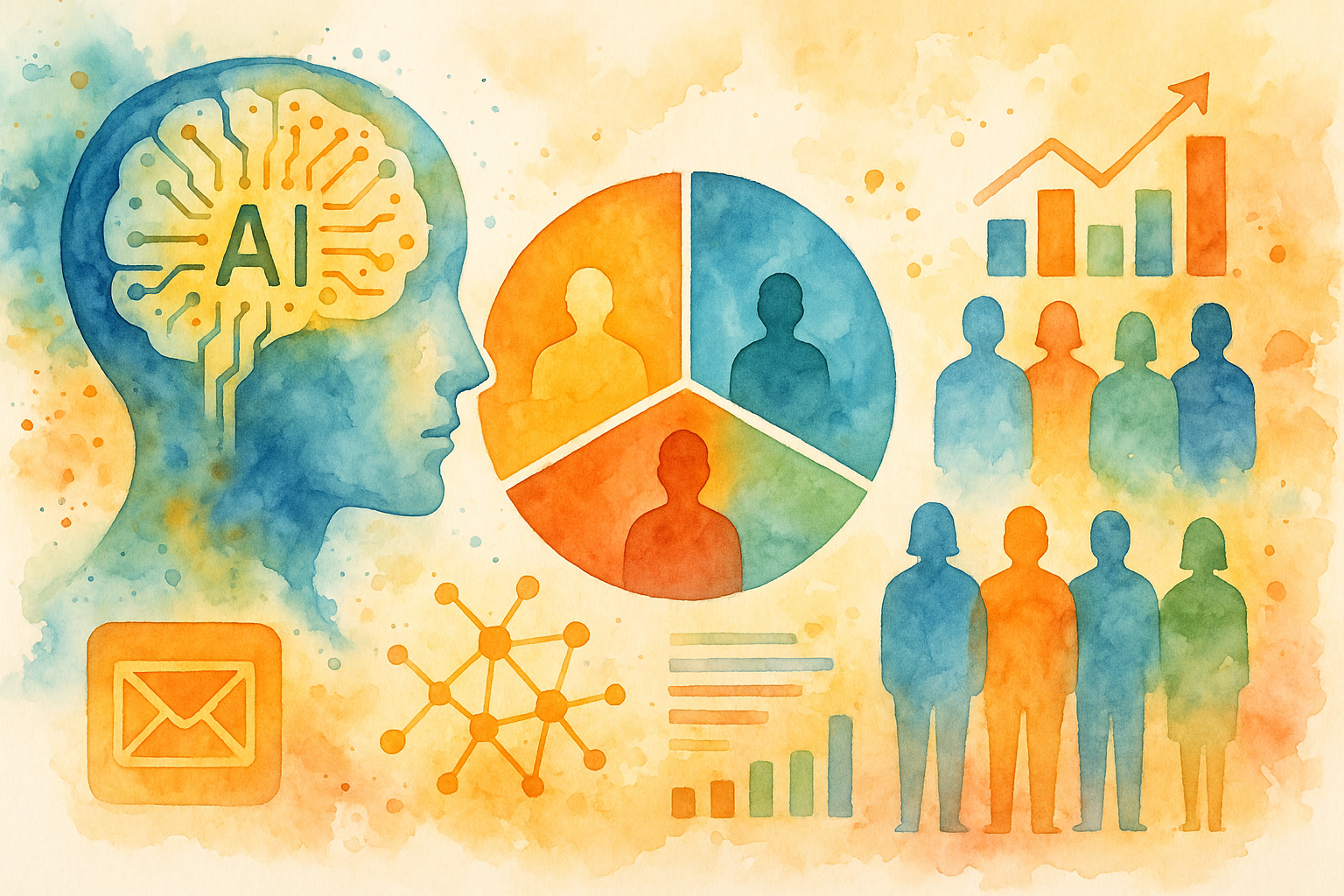
Discover how AI transforms customer segmentation, enhancing precision and efficiency. This article explores AI tools and techniques for insightful data analysis, strategies for targeted marketing, and ways to boost customer engagement. Dive in to refine your approach and achieve better outcomes.
📑 Table of Contents
- Master the Art of Using AI for Effective Customer Segmentation
- Introduction: Core Concepts and Value
- Fundamental Principles
- What is Customer Segmentation?
- The Role of AI in Customer Segmentation
- Strategic Implementation
- Integrating AI into Your Marketing Strategy
- Choosing the Right AI Tools
- Practical Applications
- Segmenting for Personalized Marketing
- Enhancing Customer Experience
- Common Pitfalls and How to Avoid Them
- Over-Segmentation
- Data Privacy Concerns
- Advanced Techniques
- Predictive Customer Behavior Modeling
- Real-Time Segmentation
- Measuring Impact and Success
- Key Performance Indicators (KPIs)
- Continuous Learning and Adaptation
Master the Art of Using AI for Effective Customer Segmentation
Introduction: Core Concepts and Value
In the dynamic world of marketing, understanding your customer base through effective segmentation is paramount. Artificial Intelligence (AI) is revolutionizing this aspect by enabling businesses to analyze vast amounts of data with precision and speed. This technique not only enhances the accuracy of customer segmentation but also allows marketers to tailor their strategies to meet the specific needs and preferences of different customer groups. Leveraging AI for customer segmentation provides a competitive edge by facilitating personalized marketing, improving customer retention, and increasing overall business efficiency.
Fundamental Principles
What is Customer Segmentation?
Customer segmentation is the process of dividing a customer base into groups of individuals that are similar in specific ways relevant to marketing, such as age, gender, interests, and spending habits. The objective is to identify high-yield segments — those most likely to respond to offers and products — thereby increasing the efficiency of marketing efforts.
The Role of AI in Customer Segmentation
AI enhances traditional customer segmentation methods by incorporating complex algorithms and machine learning techniques to process and analyze data more deeply. This includes unstructured data types like social media content, emails, and even voice recordings from customer service interactions. AI systems can identify patterns and trends that may not be visible to human analysts, providing a more comprehensive understanding of customer behaviors and preferences.
Strategic Implementation
Integrating AI into Your Marketing Strategy
To effectively integrate AI into your customer segmentation strategy, start by defining clear objectives. What specific outcomes do you expect from AI-driven segmentation? Whether it's increasing conversion rates, enhancing customer satisfaction, or driving personalized marketing campaigns, having a clear set of goals will guide your AI implementation process.
Choosing the Right AI Tools
Select AI tools that align with your business needs and data capabilities. Tools vary widely in their complexity, scalability, and the types of data they can process. It's important to choose software that not only fits your current needs but also has the potential to scale as your business grows.
Practical Applications
Segmenting for Personalized Marketing
Use AI to create detailed customer profiles based on their purchasing behavior, online activity, and engagement levels. This allows for highly targeted marketing campaigns that speak directly to the interests and needs of each segment, potentially increasing the effectiveness of your marketing efforts significantly.
Enhancing Customer Experience
AI-driven insights can help you predict what customers might need even before they realize it themselves. For instance, by analyzing customer interaction data, AI can help you identify the optimal times for sending marketing messages, the most effective content formats, and even suggest product recommendations personalized to individual customer preferences.
Common Pitfalls and How to Avoid Them
Over-Segmentation
While segmentation aims to personalize marketing efforts, overdoing it can lead to overly narrow segments, which might be counterproductive. Ensure the segments are meaningful and actionable. Balancing granularity with practicality is key to effective segmentation.
Data Privacy Concerns
With the increased use of AI and data analytics, respecting customer privacy becomes even more crucial. Always comply with data protection regulations and be transparent with customers about how their data is being used. This not only helps in building trust but also protects your company from legal repercussions.
Advanced Techniques
Predictive Customer Behavior Modeling
Advanced AI models can predict future customer behaviors by analyzing past data. This can include predicting customer churn or foreseeing future buying patterns, which can be incredibly valuable for planning retention strategies or new product launches.
Real-Time Segmentation
AI enables real-time data processing, allowing businesses to update their customer segments instantly as new data comes in. This is particularly useful in dynamic industries where customer preferences and behaviors change rapidly.
Measuring Impact and Success
Key Performance Indicators (KPIs)
Identify specific KPIs to measure the effectiveness of your AI-driven segmentation. Common metrics include conversion rates, customer lifetime value, and retention rates. Monitoring these indicators will help you understand the impact of your segmentation efforts and guide future optimizations.
Continuous Learning and Adaptation
AI systems thrive on data and continuous learning. Regularly update your AI models with new data and refine your strategies based on measurable outcomes. This not only improves the accuracy of your customer segments but also adapts your marketing efforts to evolving customer behaviors.
In conclusion, mastering AI for effective customer segmentation requires a blend of strategic planning, choosing the right tools, and ongoing management. By leveraging AI's power to analyze data and identify meaningful patterns, businesses can significantly enhance their marketing strategies, providing personalized experiences that meet the ever-changing expectations of their customers.
Frequently Asked Questions
What is customer segmentation and why is it important in marketing?
Customer segmentation is the process of dividing customers into groups based on common characteristics, such as demographics, buying behavior, and engagement levels. This practice is crucial for creating more targeted marketing strategies, improving customer service, enhancing customer retention, and increasing overall sales efficiency. Effective segmentation allows businesses to tailor their offerings and communications to meet the specific needs and preferences of each segment, leading to a more personalized customer experience.
How does AI enhance customer segmentation?
AI enhances customer segmentation by leveraging complex algorithms and machine learning techniques to analyze large datasets more accurately and efficiently than traditional methods. AI can identify patterns and insights that may not be visible to human analysts. This includes predicting customer behavior, personalizing marketing efforts, and identifying the most profitable customer segments. AI-driven segmentation helps businesses to dynamically adapt their strategies and improve decision-making processes based on real-time data insights.
What types of data are essential for effective customer segmentation using AI?
Effective customer segmentation using AI requires a variety of data types, including demographic data (age, gender, income), behavioral data (purchase history, website interactions), psychographic data (lifestyle, values, interests), and geographical data (location, region). Collecting and integrating these data types allows AI systems to create a comprehensive view of each customer, facilitating more precise and meaningful segmentation.These questions and answers are designed to be relevant and useful regardless of changes in specific technologies or market conditions, focusing on the fundamental concepts of customer segmentation and AI.
Sources and References
- A technology blueprint for personalization at scale - This McKinsey report discusses the integration of AI technologies in personalizing customer experiences, including segmentation strategies. It provides insights on how AI can analyze large datasets to deliver tailored marketing solutions, directly supporting the article's discussion on the role of AI in customer segmentation.
- Machine Learning for Customer Segmentation: Recent Developments and Future Trends - This research paper from arXiv provides a comprehensive overview of machine learning techniques used in customer segmentation. It offers a deep dive into various algorithms that can enhance segmentation effectiveness, which is crucial for understanding the AI methodologies discussed in the article.
- Using Machine Learning to Transform Target Marketing - Harvard Business Review article that explores how machine learning transforms target marketing, including segmentation. It explains the significance of predictive analytics in marketing strategies, aligning with the article's focus on AI-driven customer segmentation.
- The Future of Customer Segmentation - Forrester research that projects the evolution of customer segmentation with the adoption of AI and big data. This source supports the article's exploration of how AI reshapes traditional segmentation practices in marketing.
- Deep Learning for Customer Segmentation in E-commerce - A Google research publication that details the application of deep learning models in e-commerce segmentation. This source is particularly relevant to understanding the technical depth of AI applications in segmenting online customer bases as discussed in the article.
- AI Marketing: Enhancing Customer Segmentation - Salesforce provides a practical guide on how AI can be leveraged in marketing for better customer segmentation. This source is instrumental in linking AI capabilities with real-world marketing practices, reinforcing the article's practical application section.
- How AI is Transforming Customer Segmentation - CMSWire article that discusses the impact of AI on customer segmentation in the digital marketing industry. It provides industry-specific examples and case studies, making it a valuable resource for understanding the application of AI in current marketing practices.