How AI Transforms Your Data-Driven Marketing Strategy
Data-driven marketing leverages data to optimize strategies and improve outcomes. The integration of Artificial Intelligence (AI) in this field enhances the...

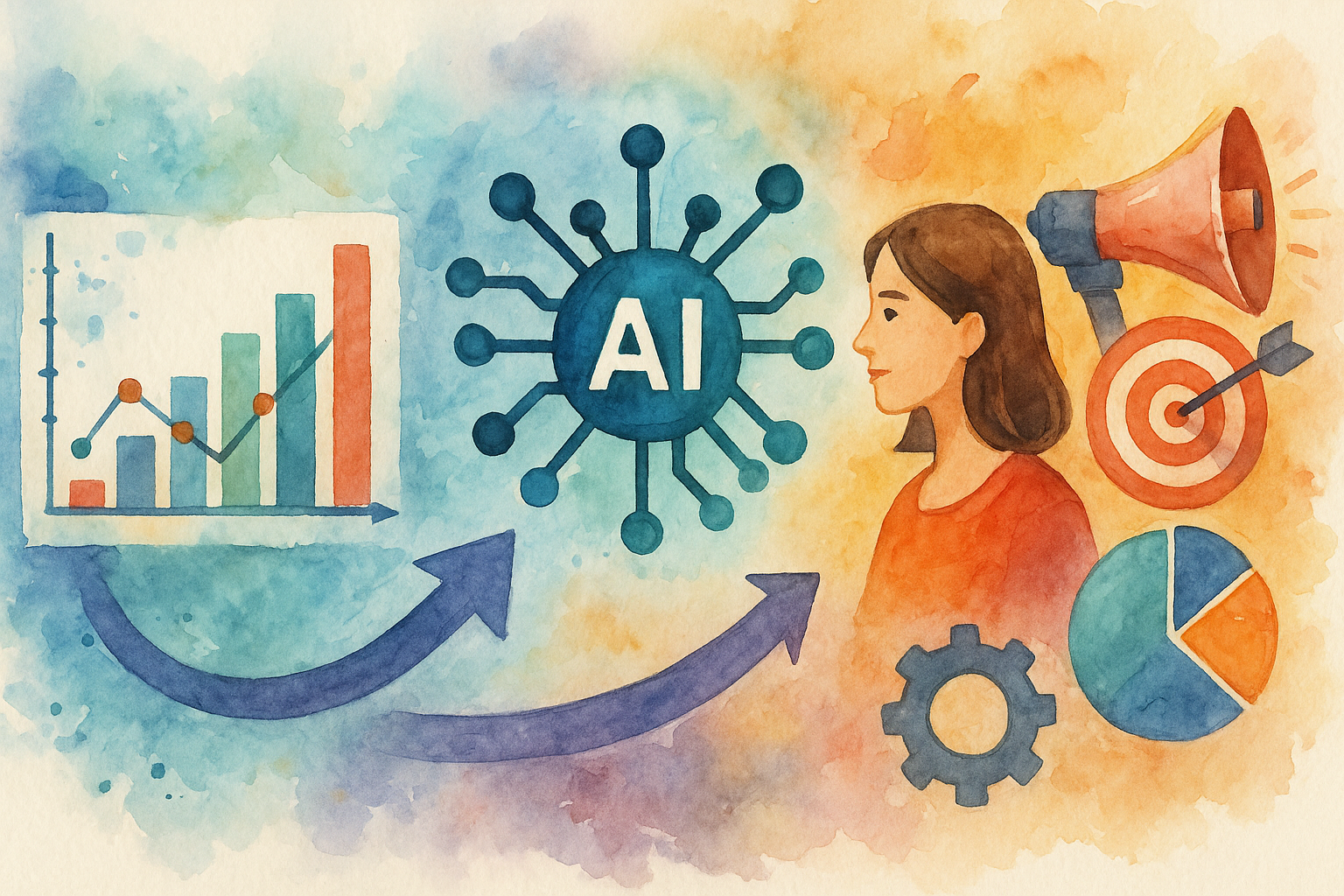
Explore how AI transforms data-driven marketing, enhancing precision and ROI. This guide covers AI techniques for predictive analytics, customer segmentation, and real-time decision-making, empowering marketers to craft strategic, impactful campaigns.
📑 Table of Contents
- Understanding Data-DrivenMarketingin the Age of AI
- Setting Up Your Data Infrastructure for AI-Enabled Marketing
- Choosing the Right AI Tools for Marketing
- Implementing AI for Enhanced Customer Insights and Personalization
- Optimizing Marketing Campaigns in Real-Time
- Measuring the Impact of AI on Marketing Strategies
- Addressing Ethical Considerations and Data Privacy
- Practical Takeaways for AI-Driven Data Marketing
Understanding Data-Driven Marketing in the Age of AI
Data-driven marketing leverages data to optimize strategies and improve outcomes. The integration of Artificial Intelligence (AI) in this field enhances the ability to analyze vast amounts of data with greater accuracy and speed. AI tools can predict consumer behavior, personalize marketing efforts, and ultimately increase efficiency and ROI. Embracing AI in marketing involves not just adopting new technologies but also a fundamental shift in approach, focusing on data quality, integration, and continuous learning.
Setting Up Your Data Infrastructure for AI-Enabled Marketing
Before leveraging AI in marketing strategies, it's crucial to establish a robust data infrastructure. This infrastructure should be capable of handling large volumes of data from diverse sources, ensuring data is clean, accurate, and accessible. Implementing a centralized data management platform, where data from CRM systems, social media, and other digital interactions can be integrated, provides a holistic view of customer behaviors and preferences. Additionally, investing in secure and scalable cloud storage solutions facilitates the efficient processing and analysis of data.
Choosing the Right AI Tools for Marketing
Selecting appropriate AI tools is critical to the success of data-driven marketing strategies. Tools for predictive analytics, customer segmentation, and personalized recommendations are particularly valuable. Predictive analytics tools use historical data to forecast trends and consumer behaviors, while segmentation tools help in categorizing customers based on their characteristics and behaviors. Personalization engines utilize AI to craft individualized marketing messages and offers. When choosing these tools, consider factors such as compatibility with existing systems, ease of use, support and training, and scalability.
Implementing AI for Enhanced Customer Insights and Personalization
AI excels in providing deep insights into customer preferences and behaviors. By analyzing data from various touchpoints, AI can identify patterns and trends that might not be obvious through traditional analysis methods. This information can be used to create highly personalized marketing campaigns that resonate with individual customers. For instance, AI-driven content recommendation systems can tailor the browsing experience on a retail site to each visitor, suggesting products based on past interactions and preferences.
Optimizing Marketing Campaigns in Real-Time
One of the most significant advantages of AI in marketing is the ability to optimize campaigns in real-time. AI algorithms can continuously analyze the performance of various campaign elements, such as email open rates, click-through rates, and conversion rates, making adjustments on the fly to improve outcomes. This real-time optimization not only enhances campaign effectiveness but also increases the agility of marketing efforts, allowing teams to respond quickly to changing market conditions or customer feedback.
Measuring the Impact of AI on Marketing Strategies
To truly understand the effectiveness of AI-driven marketing, it's essential to measure its impact meticulously. Key performance indicators (KPIs) such as customer acquisition cost, customer lifetime value, conversion rates, and ROI should be monitored closely. Advanced AI tools can also help track less tangible metrics like customer engagement and brand sentiment. Regularly assessing these metrics provides insights into how well AI tools are performing and whether they are delivering the expected value.
Addressing Ethical Considerations and Data Privacy
As marketers harness the power of AI and data, ethical considerations and data privacy become increasingly important. It's essential to adhere to ethical guidelines and regulations, such as GDPR, when using AI in marketing. Transparently communicating how customer data is used, ensuring data accuracy, and protecting customer privacy are all critical aspects of ethical AI implementation. Additionally, marketing professionals should consider the implications of AI decisions and strive to eliminate biases in AI algorithms.
Practical Takeaways for AI-Driven Data Marketing
To effectively integrate AI into data-driven marketing strategies, start by building a solid data infrastructure that supports AI integration. Select AI tools that align with specific marketing goals and ensure they integrate seamlessly with existing systems. Utilize AI for gaining deeper customer insights and enhancing personalization in marketing efforts. Continuously measure the impact of AI on key marketing metrics and make adjustments as needed. Finally, always prioritize ethical considerations and data privacy in all AI implementations.
By following these guidelines, marketers can harness the full potential of AI to enhance their data-driven marketing strategies, resulting in more effective and efficient marketing campaigns that drive better business outcomes.
Frequently Asked Questions
What is data-driven marketing?
Data-driven marketing refers to the strategy of using customer information and data analytics to guide marketing decisions and strategies. It involves collecting, analyzing, and applying information about customer behaviors, preferences, and trends to optimize marketing efforts, improve customer experiences, and enhance return on investment. This approach enables marketers to tailor their communications and offerings to better meet the needs of their target audience.
How does AI enhance data-driven marketing?
AI enhances data-driven marketing by providing advanced tools and technologies that automate data analysis, predict customer behaviors, and personalize marketing messages at scale. AI algorithms can process vast amounts of data much faster and more accurately than humanly possible, uncovering insights that drive more effective marketing strategies. Additionally, AI can help in segmenting audiences, optimizing marketing campaigns in real-time, and providing predictive analytics to foresee future trends, thereby making marketing efforts more efficient and targeted.
What are some essential tools for implementing data-driven marketing?
Essential tools for implementing data-driven marketing include customer relationship management (CRM) systems, data analytics platforms, marketing automation software, and AI-powered tools for predictive analytics and customer segmentation. These tools help collect and analyze customer data, automate marketing processes, and provide valuable insights that inform strategic decisions. Integrating these tools into your marketing strategy allows for a more cohesive and informed approach to engaging with customers.
Sources and References
- Marketing in the Digital Age: How Data-Driven Strategies Propel Businesses - This McKinsey report provides a comprehensive overview of data-driven marketing strategies and their effectiveness in the current business landscape. It supports the article's discussion on the importance of data-driven decision-making in marketing and highlights best practices for integrating AI tools.
- Machine Learning in Marketing: Opportunities and Challenges - A detailed research paper from Google that explores the application of machine learning in marketing. This source is crucial for understanding the technical foundations of AI in marketing, supporting the article’s section on choosing the right AI tools for marketing.
- Building a Data Culture - An insightful article from Harvard Business Review that discusses the organizational aspects of setting up a data infrastructure. It provides foundational knowledge that complements the article's section on setting up data infrastructure for AI-enabled marketing.
- What is Marketing Automation? - Salesforce provides a detailed explanation of marketing automation tools, which are essential for implementing AI in marketing. This supports the article's discussion on optimizing marketing campaigns in real-time using AI.
- The Future of Personalization - A Forrester report that delves into how AI is transforming customer insights and personalization in marketing. This source is particularly relevant to the article's section on enhancing customer insights and personalization through AI.
- Real-Time Campaign Optimization with AI - An academic paper available on arXiv that discusses the methodologies and impacts of real-time campaign optimization using AI. This research supports the article's claims about the benefits and techniques of real-time optimizations in data-driven marketing.