Leverage AI for Strategic Content Analysis to Outperform Competitors
Understanding the Role of AI in Competitive Content Analysis Competitive content analysis involves examining the content strategies of competitors to refine...

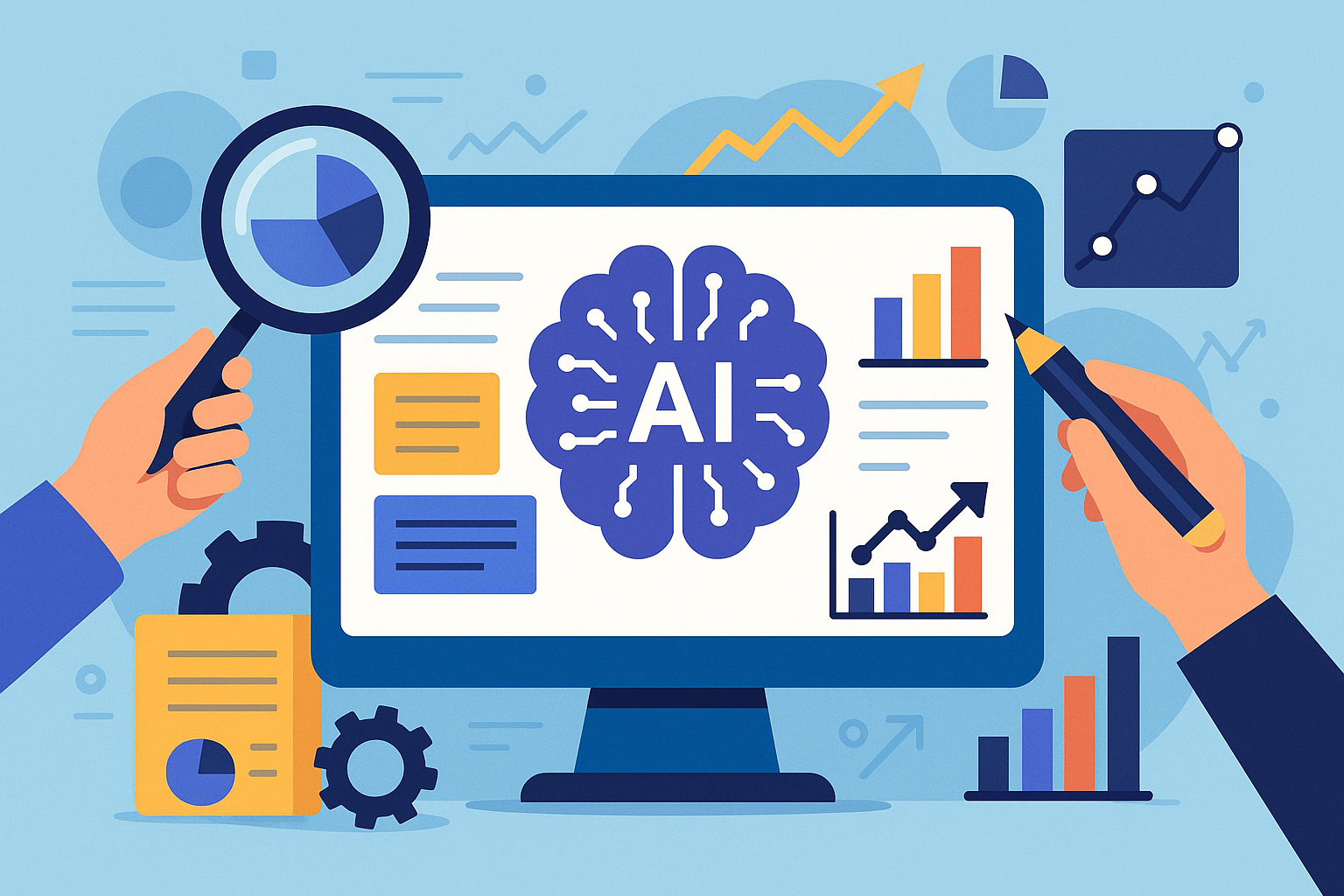
Learn how to leverage AI for content analysis to outshine competitors. This article covers techniques for mining data, identifying trends, and crafting strategies that resonate with audiences, boosting your content's impact and reach.
📑 Table of Contents
- Understanding the Role ofAIin Competitive Content Analysis
- Selecting the Right AI Tools for Content Analysis
- Evaluating AI Tool Effectiveness
- Setting Up Your AI-Driven Content Analysis
- Integrating AI Tools with Existing Data
- Conducting Real-Time Content Analysis
- Adapting to Emerging Trends
- Deep Diving into Content Effectiveness
- ContentOptimizationStrategies
- Learning from Competitive Insights
- Refining Content Distribution
- Measuring the Impact of AI-Enhanced Content Strategies
- Continuous Improvement and AI Feedback Loops
- Overcoming Common Challenges in AI Content Analysis
Understanding the Role of AI in Competitive Content Analysis
Competitive content analysis involves examining the content strategies of competitors to refine your own content marketing efforts. AI tools elevate this process by providing insights that are fast, scalable, and data-driven. These tools analyze vast amounts of online content to identify trends, gaps, and opportunities that might otherwise go unnoticed.
Selecting the Right AI Tools for Content Analysis
The first step in leveraging AI for content analysis is selecting the right tools. Essential features to look for include sentiment analysis, keyword extraction, trend detection, and competitive benchmarking. Tools that integrate with existing content management systems or analytics platforms can provide additional convenience and deeper insights.
Evaluating AI Tool Effectiveness
When evaluating potential AI tools, consider their ability to integrate seamlessly with your current stack, the quality of their data sources, and the granularity of their analytics. It is also important to assess the tool's user interface and support services to ensure it meets your team's needs.
Setting Up Your AI-Driven Content Analysis
Once the appropriate tool is selected, set up your analysis by defining the competitors and key metrics you want to track. Common metrics include engagement rates, keyword rankings, and content output frequency. Ensure your AI tool is configured to track these metrics across various content types and platforms used by your competitors.
Integrating AI Tools with Existing Data
For a holistic view, integrate your AI tools with existing data sources such as social media analytics, website traffic data, and customer feedback. This integration allows for a comprehensive analysis that considers various aspects of content performance.
Conducting Real-Time Content Analysis
AI tools excel in processing and analyzing data in real-time. This capability allows you to monitor ongoing competitor activities and adjust your content strategy dynamically. Real-time analysis helps identify quick shifts in content trends or sudden changes in audience behavior, providing a strategic advantage.
Adapting to Emerging Trends
Utilize AI's predictive capabilities to forecast future trends based on current data. This foresight can be crucial for staying ahead in highly competitive or rapidly evolving industries.
Deep Diving into Content Effectiveness
With AI, you can go beyond surface-level metrics and delve into the effectiveness of specific content elements. AI can help analyze factors like the emotional impact of content, the complexity of language used, and the alignment with audience preferences.
Content Optimization Strategies
Use insights from AI to optimize your content. For example, if AI identifies that competitor videos under two minutes drive higher engagement, consider adopting this format. Similarly, if certain topics or keywords are resonating with your audience, prioritize them in your content planning.
Learning from Competitive Insights
AI-driven analysis provides a wealth of data that can inform not only what content to create but also how to distribute and promote it. For example, if AI reveals that competitors are successfully using specific platforms or times for posting, these insights can guide your content scheduling strategy.
Refining Content Distribution
Leverage AI insights to refine where and when you publish content. If data shows that your target audience engages more during certain hours, adjust your publishing schedule accordingly to maximize visibility and engagement.
Measuring the Impact of AI-Enhanced Content Strategies
To measure the effectiveness of your AI-enhanced content strategy, track key performance indicators (KPIs) over time. These might include website traffic, lead generation, and conversion rates. Comparing these metrics before and after implementing AI insights will highlight the tool's value.
Continuous Improvement and AI Feedback Loops
Establish a feedback loop where AI not only informs content strategies but also learns from implemented changes. This continuous learning process allows your AI tools to become more accurate and helpful over time, ensuring that your content strategy remains cutting-edge.
Overcoming Common Challenges in AI Content Analysis
Despite its benefits, AI-driven content analysis can present challenges such as data privacy concerns and the potential for data overload. To mitigate these issues, ensure compliance with data protection regulations and select AI tools that offer customizable data filtering options to manage the scope of data analysis. Incorporating AI into your competitive content analysis can transform your content strategy by providing deeper, actionable insights that are difficult to achieve through human analysis alone. By carefully selecting tools, integrating AI with existing data, and continuously refining the approach based on AI insights, you can maintain a competitive edge in your content marketing efforts.
Frequently Asked Questions
What is competitive content analysis using AI?
Competitive content analysis using AI involves leveraging artificial intelligence tools to evaluate and compare the content strategies of your competitors. This analysis can help identify trends, gaps, and opportunities in your industry's content landscape. By analyzing large datasets, AI tools provide actionable insights that can enhance your content strategy and improve overall engagement and performance.
Which AI tools are commonly used for content analysis?
Various AI tools can be used for content analysis, including natural language processing (NLP) platforms, data visualization software, and content management systems that incorporate AI-driven analytics. These tools assist in understanding content effectiveness, sentiment analysis, keyword extraction, and predictive content performance. Choosing the right tool depends on your specific needs, such as the scale of analysis, type of content, and depth of insights required.
How can AI enhance content strategy development?
AI can significantly enhance content strategy by providing data-driven insights that inform content creation, distribution, and optimization. AI tools analyze user engagement and content performance, predict trends, and suggest content adjustments. This allows content creators to tailor their strategies based on predictive analytics and historical data, leading to more targeted and effective content that resonates with the audience.
What are the best practices for using AI in competitive content analysis?
Best practices for using AI in competitive content analysis include maintaining a clear focus on your strategic goals, consistently updating your data sources, and continuously training your AI models with new data. It is also crucial to integrate qualitative insights with quantitative data to ensure a holistic understanding of content performance. Ethically using data and respecting privacy standards are also essential practices to adhere to during analysis.
How do you ensure the accuracy of AI-driven content analysis?
Ensuring the accuracy of AI-driven content analysis involves several steps, including the validation of data sources, the use of advanced algorithms for error reduction, and regular updates to the AI models to adapt to changing content trends and market dynamics. Additionally, combining AI insights with human expertise can help validate findings and refine analysis techniques, leading to more reliable and effective content strategies.
Sources and References
- The Forrester Wave™: AI For Content Intelligence, Q3 2021 - This Forrester report evaluates top AI tools in the market used for content analysis, providing insights into their effectiveness and capabilities. It supports the article's section on selecting the right AI tools for competitive content analysis by offering an authoritative comparison and ranking of these tools.
- Recent Advances in Natural Language Processing for Content Analysis - This research paper from arXiv provides a comprehensive overview of the latest AI technologies used in natural language processing, which is crucial for analyzing textual content in competitive content analysis. It supports the article's discussion on the role of AI in understanding and processing complex content structures.
- Developing a Content Intelligence Framework - This article from the Content Marketing Institute discusses how businesses can integrate AI tools with existing data to enhance content strategy. It complements the article's section on integrating AI tools with existing data, providing practical steps and strategies.
- How AI is Transforming the Marketing Industry - This Harvard Business Review article explores the impact of AI on marketing, with a focus on competitive analysis and SEO. It provides expert analysis and examples that reinforce the article's discussion on the application of AI in marketing and SEO for competitive content analysis.
- Text Classification Guide - This guide from Google Developers provides detailed documentation on using AI for text classification, which is a key component in content analysis. It supports the article's section on setting up your AI-driven content analysis by offering technical guidance and best practices.
- Global Survey: The State of AI today - This industry report by McKinsey provides data and insights on how AI tools are being used across different industries, including their effectiveness and business impact. It validates the article's points on evaluating AI tool effectiveness in the realm of competitive content analysis.