How to Create a Seamless B2B Customer Journey Through Strategic Content
The B2B customer journey is more complex than ever, involving multiple stakeholders and lengthy decision-making processes. To navigate this complexity, it's...

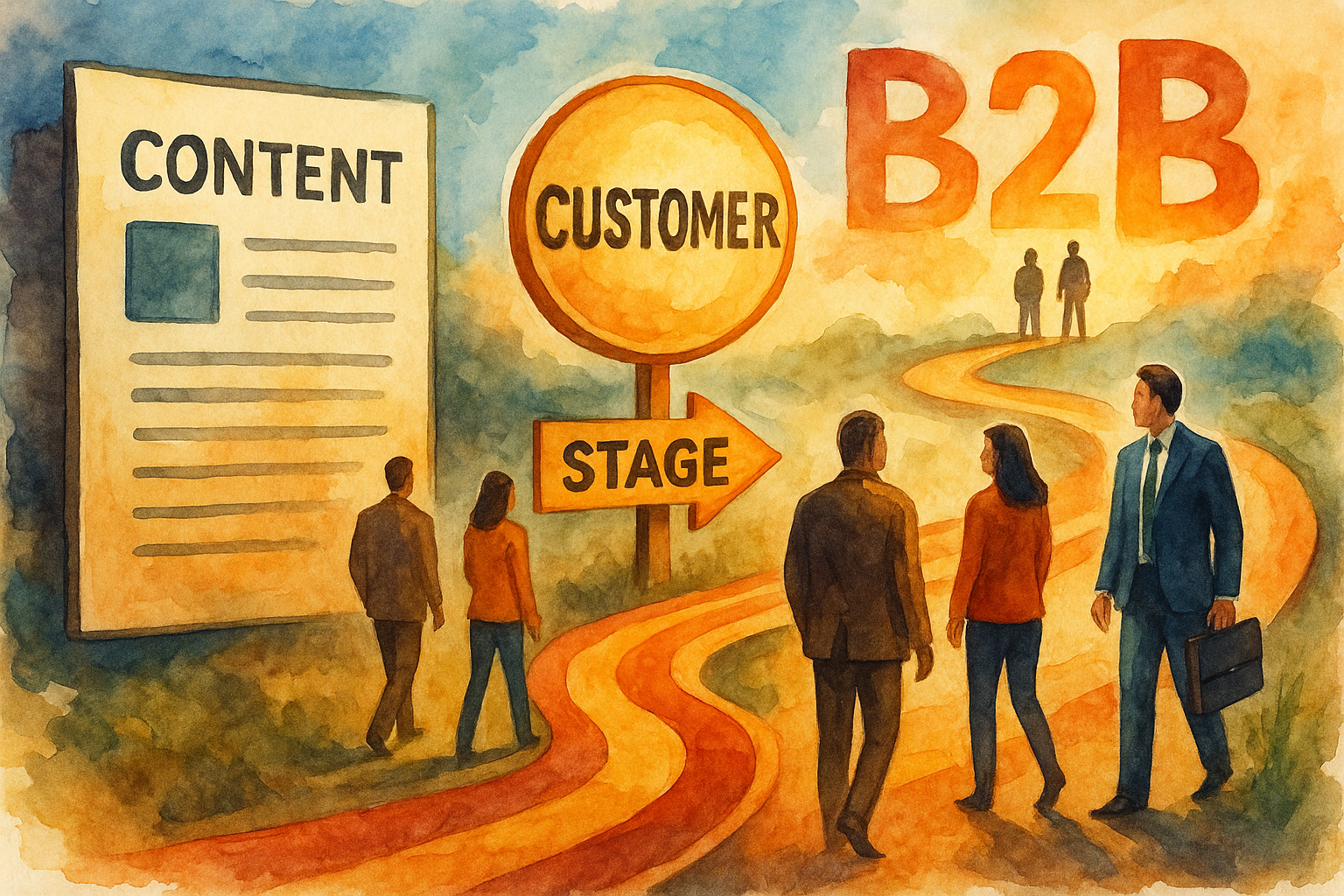
Discover how to craft a B2B customer journey using effective content strategies. Learn to align content with customer stages, personalize experiences, and measure impact to enhance engagement and conversion.
📑 Table of Contents
- Understanding the B2BCustomerJourney
- Strategizing Content for Each Stage of the Journey
- Content for Awareness
- Content for Consideration
- Content for Decision
- Content for Retention
- Integrating Personalization into B2B Content
- Leveraging Technology for Content Delivery
- Measuring the Impact of Your Content
- Continuous Improvement and Adaptation
- Practical Takeaway
Understanding the B2B Customer Journey
The B2B customer journey is more complex than ever, involving multiple stakeholders and lengthy decision-making processes. To navigate this complexity, it's essential to understand the typical stages a B2B buyer goes through: awareness, consideration, decision, and retention. Each stage requires tailored content that addresses the unique needs and questions of potential customers. By mapping out these stages, businesses can create targeted strategies that move prospects smoothly towards a purchase and beyond.
Strategizing Content for Each Stage of the Journey
Content for Awareness
At the awareness stage, potential customers are just beginning to recognize their challenges or needs. Content here should focus on educating the audience about these challenges and introducing your industry's solutions. Blog posts, infographics, and educational videos that explain key concepts or industry trends are effective in grabbing attention and setting the stage for engagement.
Content for Consideration
During the consideration stage, prospects are evaluating different solutions to their problems. This is where more detailed content such as case studies, e-books, and whitepapers play a critical role. These materials should provide in-depth information that showcases the benefits of your solutions, ideally positioning your products or services as the best option.
Content for Decision
As prospects enter the decision stage, they are close to making a purchase but might need a final nudge. Content that can help includes detailed product comparisons, testimonials, and trial offers. This content should be direct and highly persuasive, providing all the necessary details that confirm the superiority of your solution.
Content for Retention
Post-purchase, the focus shifts to retaining customers and encouraging loyalty. Here, content should aim to enhance customer satisfaction and stimulate repeat business. Regular updates, newsletters, and exclusive offers keep your brand top-of-mind, while training materials and user guides ensure customers get the most out of your products or services.
Integrating Personalization into B2B Content
Personalization is key in making content resonate with B2B buyers. Utilizing data analytics to understand individual customer behaviors and preferences allows businesses to tailor their content accordingly. Whether it's customizing email communications based on user activity or suggesting relevant articles and solutions on your website, personalization can significantly enhance the effectiveness of your content strategy.
Leveraging Technology for Content Delivery
Technology plays a crucial role in distributing and optimizing content across various channels. Content management systems (CMS) and customer relationship management (CRM) tools help streamline content creation and distribution, ensuring that the right content reaches the right audience at the right time. Additionally, automation tools can help in scheduling and analyzing the performance of content across different platforms, making the content strategy more efficient and responsive to customer needs.
Measuring the Impact of Your Content
Without measuring the effectiveness of your content, it's difficult to understand whether your content strategy is working. Key performance indicators (KPIs) like engagement rates, conversion rates, and customer retention rates are essential metrics. Tools like Google Analytics and CRM software provide deep insights into how your content is performing and how it influences the buyer's journey. Regularly reviewing these metrics allows you to refine and optimize your strategy for better results.
Continuous Improvement and Adaptation
The only constant in the B2B market is change. As such, continuously updating and adapting your content strategy in response to market trends, customer feedback, and technological advancements is crucial. Stay informed about industry changes, solicit feedback from customers, and keep an eye on what competitors are doing. This proactive approach ensures your content remains relevant and effective, keeping you ahead in the competitive B2B landscape.
Practical Takeaway
To create a seamless B2B customer journey with content, begin by deeply understanding the buyer's journey and strategizing content that addresses each stage. Leverage personalization to enhance engagement, utilize technology for efficient content delivery, and consistently measure and refine your strategy based on performance data. By staying adaptable and customer-focused, your content can effectively convert prospects into loyal customers, driving growth and success in the B2B sector.
Frequently Asked Questions
What is a B2B customer journey?
A B2B customer journey refers to the complete experience that a business customer goes through when interacting with another business, from initial awareness through to post-purchase engagement. This journey includes multiple stages such as discovery, consideration, decision, and loyalty, each requiring tailored content strategies to effectively move the customer toward a purchase and beyond.
How can content improve the B2B customer journey?
Content can significantly enhance the B2B customer journey by providing relevant and valuable information at each stage of the customer's path. At the awareness stage, informative content like blog posts and whitepapers can help attract potential customers. During the consideration phase, case studies and webinars can address specific customer needs and concerns. For the decision stage, detailed product comparisons and demos can aid in the purchasing decision. Finally, continued support through educational content and updates can foster long-term loyalty and customer retention.
What types of content are most effective at each stage of the B2B customer journey?
Different types of content are effective at different stages of the B2B customer journey. During the awareness stage, blogs, infographics, and social media posts are useful for generating interest. In the consideration phase, more in-depth content such as whitepapers, e-books, and webinars are preferable to educate and engage potential customers. For the decision-making stage, case studies, testimonials, and product demos can provide the necessary proof and reassurance to facilitate a purchase. Post-purchase, newsletters, user guides, and support materials help maintain a relationship and encourage repeat business.
How do you measure the success of content at different stages of the B2B customer journey?
Measuring the success of content in a B2B customer journey involves tracking various metrics specific to each stage. For the awareness stage, metrics like traffic volume, page views, and social shares indicate content reach. During consideration, engagement metrics such as time on page, download rates, and webinar attendance are crucial. At the decision stage, conversion rates, lead quality, and customer feedback highlight content effectiveness. Post-purchase, customer retention rates, repeat purchase rates, and customer satisfaction scores help assess the ongoing value of the content.
Sources and References
- The B2B Customer Journey Mapping Basics - Forrester - This report from Forrester provides a foundational understanding of the B2B customer journey, emphasizing the importance of mapping to enhance customer experience. It supports the article's discussion on strategizing content for each stage of the journey by offering data-driven insights and case studies.
- Content Ideas for the B2B Awareness Stage - Content Marketing Institute - This article offers practical content strategies specifically tailored for the awareness stage of the B2B customer journey. It aligns with the article's section on creating impactful content to generate awareness among potential B2B customers.
- Making the Consensus Sale - Harvard Business Review - This publication discusses the complexities of B2B decision-making processes and supports the article's section on content for consideration and decision stages, providing insights into how content can influence multiple stakeholders within a buying organization.
- A Better Way to Map Brand Strategy - McKinsey & Company - McKinsey's analysis on brand strategy mapping offers methodologies that can be applied to content strategizing in B2B contexts, supporting the article's premise on aligning content with business goals at each journey stage.
- Impact of AI on Consumer Behavior in B2B Marketing - arXiv - This academic paper explores how AI technologies influence B2B marketing strategies and consumer behavior, providing a research-backed perspective that enriches the article's discussion on leveraging AI in content creation for each stage of the customer journey.
- State of the Connected Customer - Salesforce - Salesforce's comprehensive report offers data and insights on modern B2B customer expectations and behaviors, supporting the article's sections on tailoring content to meet evolving customer needs throughout the journey.