How to Build a Robust AI-Driven Marketing Automation Ecosystem
Marketing automation powered by Artificial Intelligence (AI) transforms how brands interact with potential customers by personalizing experiences at scale. AI...

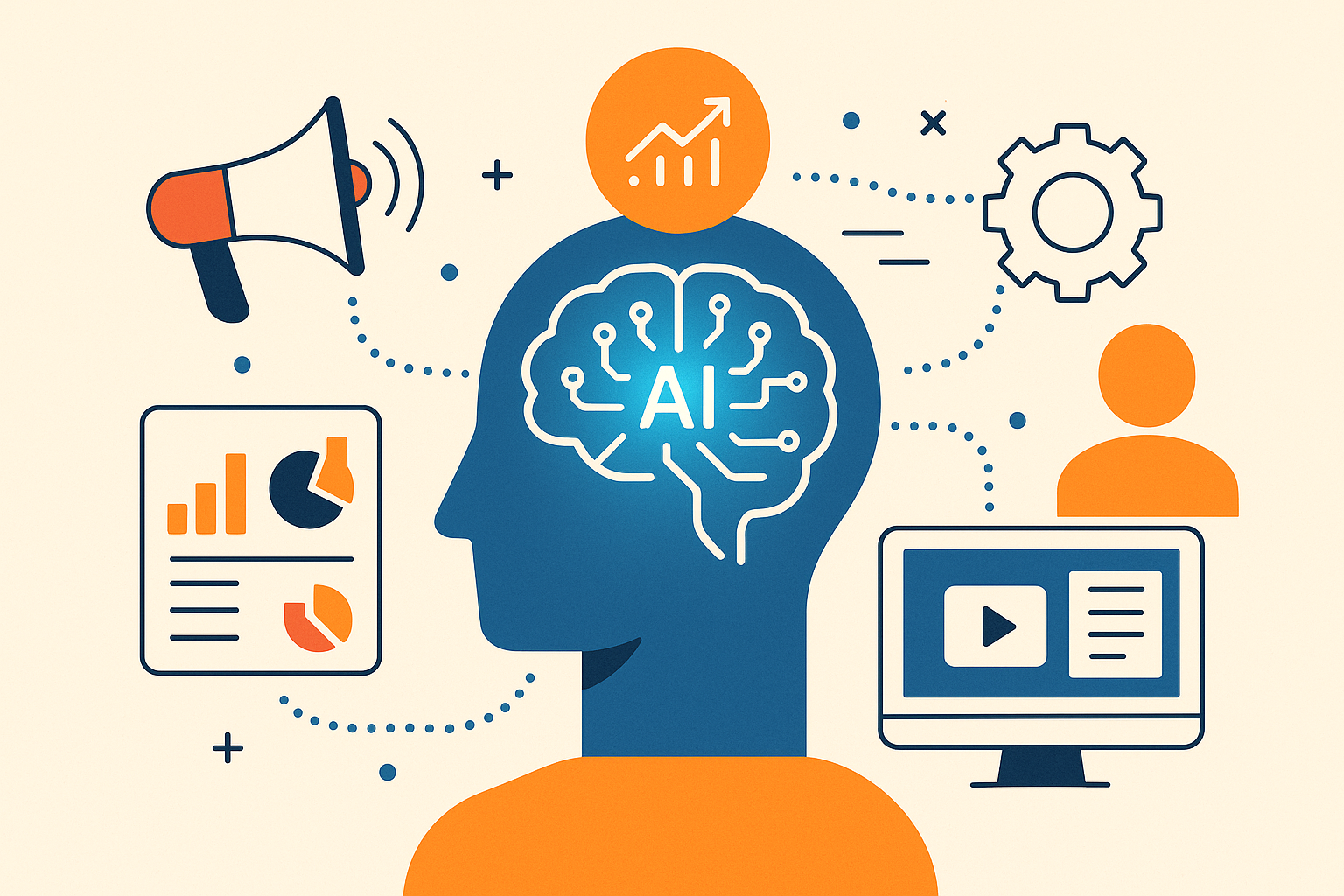
Discover how to build a robust AI-driven marketing automation ecosystem, enhancing customer engagement and ROI. Learn to integrate AI tools, streamline workflows, and leverage data analytics for impactful, personalized marketing strategies.
📑 Table of Contents
- Understanding the Role ofAIin Marketing Automation
- Selecting AI-Integrated Marketing Automation Tools
- Evaluating Vendor Solutions
- Integrating AI Tools with Existing Marketing Technologies
- Ensuring Data Quality
- Setting Up AI-Driven Marketing Campaigns
- Personalization at Scale
- Monitoring and Optimizing AI-Driven Strategies
- Adapting to User Feedback and Behavior
- Ensuring Compliance and Ethical Use of AI
- Privacy and Data Security
- Measuring the Success of Your AI Marketing Automation
- Leveraging AI for Predictive Analytics
Understanding the Role of AI in Marketing Automation
Marketing automation powered by Artificial Intelligence (AI) transforms how brands interact with potential customers by personalizing experiences at scale. AI enhances marketing automation by analyzing large datasets to predict user behavior, personalize content, and optimize marketing strategies. The integration of AI into marketing automation systems allows businesses to deliver more relevant content, achieve higher engagement rates, and increase conversions.
Selecting AI-Integrated Marketing Automation Tools
Choosing the right Scale Your Business with AI-Driven Marketing Automation">AI-driven marketing automation tools is foundational. Look for platforms that offer robust AI capabilities such as predictive analytics, natural language processing, and machine learning. Key features should include customer segmentation, campaign management, lead scoring, and analytics. Evaluate tools based on their integration capabilities with your existing tech stack, scalability, user-friendliness, and support services.
Evaluating Vendor Solutions
When assessing vendors, consider not only the features but also the support and training they offer. A good relationship with a vendor can facilitate smoother integration and quicker resolution of potential issues.
Integrating AI Tools with Existing Marketing Technologies
Seamless integration of AI tools into your existing marketing technology stack is crucial. Ensure compatibility with your Customer Relationship Management (CRM) systems, email platforms, content management systems (CMS), and analytics tools. Use APIs for custom integrations if necessary, ensuring data flows smoothly across all platforms without silos, which could impede the AI’s learning capabilities.
Ensuring Data Quality
The effectiveness of AI-driven marketing automation is heavily dependent on the quality of data. Regularly clean and update your data to avoid 'garbage in, garbage out' scenarios. Implement routines for data validation and handle data discrepancies promptly.
Setting Up AI-Driven Marketing Campaigns
With your AI tools integrated, begin setting up automated marketing campaigns. Use AI to segment your audience based on behavior, demographics, and engagement. Personalize messages using AI to analyze past interactions and predict preferences. Design multi-channel campaigns that adapt to user responses in real time, optimizing the customer journey.
Personalization at Scale
AI excels in personalizing experiences at scale, adjusting content, recommendations, and offers based on individual user behavior. This not only enhances the user experience but also increases the likelihood of conversion.
Monitoring and Optimizing AI-Driven Strategies
Continuous monitoring and optimization are key to leveraging AI in marketing automation. Set clear metrics for campaign performance, such as conversion rates, click-through rates, and engagement levels. Use AI-driven analytics to gain insights into campaign performance and user behavior. Regularly adjust your strategies based on these insights to improve outcomes.
Adapting to User Feedback and Behavior
AI systems learn and adapt over time. Monitor user feedback and behavior to refine AI models and ensure they remain effective. This adaptive approach helps in maintaining relevance and efficiency in your marketing strategies.
Ensuring Compliance and Ethical Use of AI
As you implement AI in your marketing efforts, adhere to ethical standards and compliance requirements. Be transparent about AI use in your marketing processes, especially in how data is collected, used, and stored. Regularly review and update your practices to comply with evolving regulations like GDPR and CCPA.
Privacy and Data Security
Implement stringent security measures to protect customer data. Secure your data environments, and ensure that all AI interactions comply with privacy laws. Educating your team about data ethics and legal standards is also crucial in maintaining trust and integrity in your AI-driven processes.
Measuring the Success of Your AI Marketing Automation
Develop a framework for measuring the effectiveness of your AI-driven marketing automation. Use metrics that reflect business objectives, such as ROI, customer lifetime value, and acquisition costs. Regularly review these metrics to assess the impact of AI on your marketing goals and adjust strategies accordingly.
Leveraging AI for Predictive Analytics
Beyond reactive analytics, use AI for predictive insights that can forecast future trends and customer behaviors. This proactive approach allows for better resource allocation, more targeted marketing strategies, and improved anticipation of market changes.
Implementing a powerful AI-driven marketing automation ecosystem involves selecting the right tools, integrating them seamlessly with your existing technologies, and continuously optimizing your strategies based on data-driven insights. By adhering to these practices, you can enhance customer engagement, increase efficiency, and drive significant growth for your business, ensuring that your marketing efforts are not only effective but also scalable and future-proof.
Frequently Asked Questions
What is AI-driven marketing automation?
AI-driven marketing automation refers to the use of artificial intelligence technologies to enhance and automate marketing tasks and decisions. This involves leveraging AI tools to analyze data, predict customer behavior, personalize marketing messages, and optimize marketing campaigns without substantial human intervention. The goal is to increase efficiency, improve customer experiences, and achieve better marketing outcomes.
How can data be utilized effectively in an AI-driven marketing automation ecosystem?
Effective utilization of data in an AI-driven marketing automation ecosystem involves collecting diverse data types from various sources, ensuring data quality and accuracy, and using advanced analytics and machine learning algorithms to derive actionable insights. Key practices include segmenting customers based on their behavior, predicting future actions, personalizing marketing efforts, and continuously refining strategies based on data-driven feedback to enhance performance and customer engagement.
What are the essential components of a powerful AI-driven marketing automation ecosystem?
A powerful AI-driven marketing automation ecosystem typically comprises several key components: a robust data infrastructure, advanced AI and machine learning models, personalized content delivery systems, and integration capabilities with various marketing channels and tools. Additionally, it includes mechanisms for continuous learning and adaptation to new data and changing market conditions, ensuring that the marketing efforts remain relevant and effective.
What are the challenges of implementing AI in marketing automation?
Implementing AI in marketing automation presents several challenges, including data privacy and security issues, the need for high-quality and comprehensive data, the complexity of integrating AI with existing marketing systems, and the requirement for skilled personnel to manage and interpret AI outputs. Additionally, maintaining transparency and ethical standards in AI-driven decisions is crucial to building trust and ensuring compliance with relevant regulations.
How does AI-driven marketing automation impact customer experiences?
AI-driven marketing automation significantly enhances customer experiences by enabling more personalized, timely, and relevant interactions. By analyzing customer data and behavior patterns, AI can help predict customer needs and preferences, allowing for the delivery of customized messages and offers. This not only improves customer engagement and satisfaction but also helps in building long-term relationships and loyalty.
Sources and References
- The Forrester Wave™: AI Marketing Platforms, Q3 2021 - This Forrester report evaluates the top AI marketing platforms, providing insights on how to select AI-integrated tools and the capabilities of each platform, directly supporting the section on selecting AI-integrated marketing automation tools.
- Machine Learning: The High-Interest Credit Card of Technical Debt - This research paper from Google discusses the challenges and considerations in integrating AI technologies with existing systems, supporting the article's section on integrating AI tools with existing marketing technologies.
- Using AI to Enhance Business Operations - Harvard Business Review article that explores practical examples and strategies for deploying AI in business operations, including marketing automation, aligning with the general discussion on the role of AI in marketing automation.
- What is Marketing Automation? - Salesforce provides a foundational overview and benefits of marketing automation, reinforcing the article's discussion on understanding the role of AI in marketing automation.
- Developing a Data-Driven Content Strategy - This article from Content Marketing Institute discusses the importance of data quality in content strategy, which supports the article's section on ensuring data quality in AI-driven marketing automation ecosystems.
- Challenges and Opportunities with Big Data for AI in Marketing - This academic paper provides an in-depth analysis of the use of big data in AI-driven marketing, supporting the article's focus on data's role in enhancing marketing automation through AI.
- A Technology Blueprint for Personalization at Scale - McKinsey & Company's report discusses how AI can be leveraged for personalized marketing at scale, offering insights that support the article's discussion on evaluating vendor solutions for AI-driven marketing automation.