How to Build a Robust B2B Marketing Funnel That Boosts Lead Generation
The B2B marketing funnel is a framework that illustrates the journey a potential customer goes through, from first learning about a service or product to...

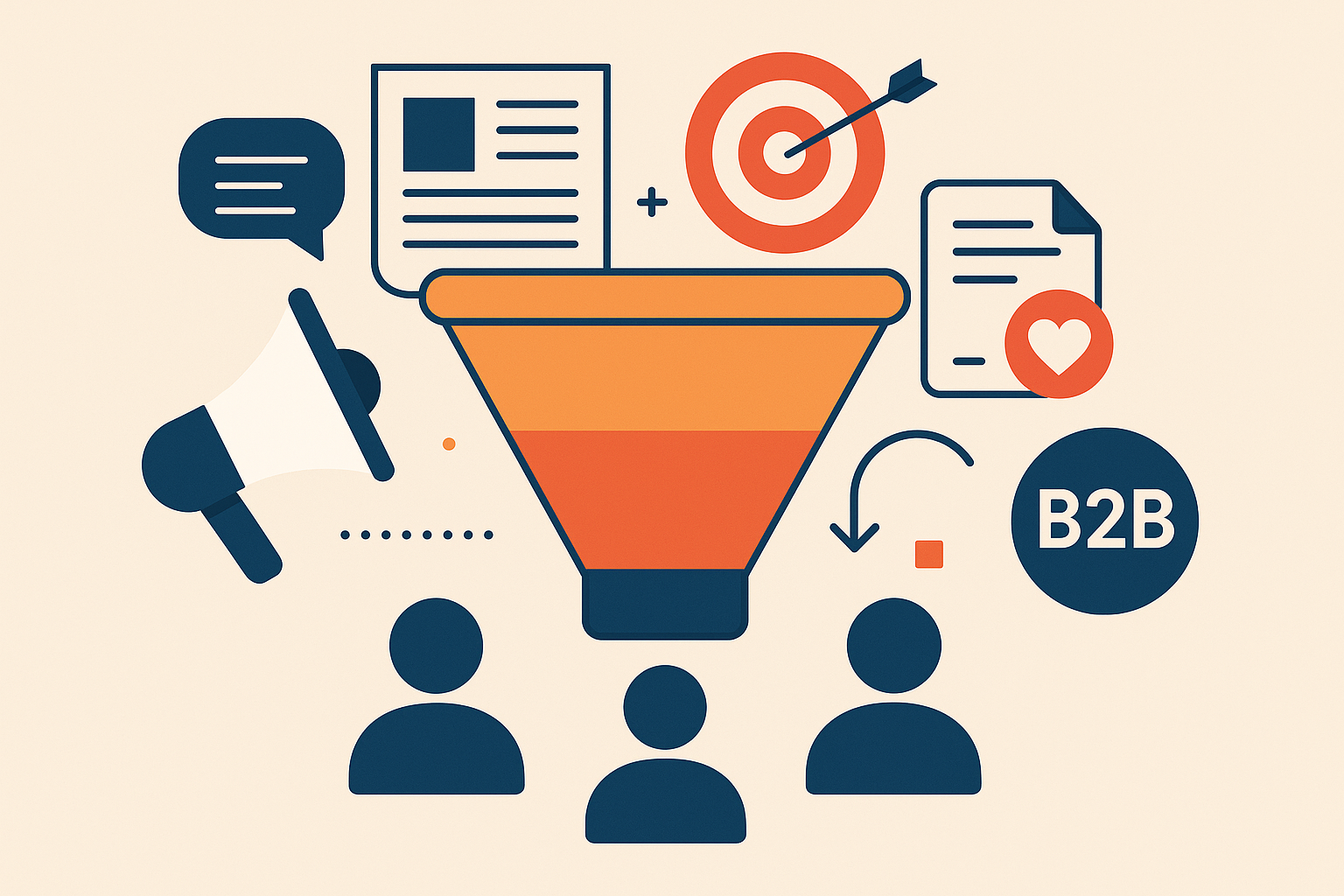
Discover how to craft a powerful B2B marketing funnel that boosts lead generation. This article explores strategies for attracting prospects, nurturing leads, and converting them into loyal customers, ensuring a steady growth in your business pipeline.
📑 Table of Contents
- Understanding the B2BMarketingFunnel
- Building Awareness: The Top of the Funnel
- Content Strategies for Awareness
- Leveraging Social Media
- Nurturing Leads in the Consideration Stage
- Email Campaign Optimization
- Developing Targeted Content
- Converting Leads at the Decision Stage
- Sales Enablement Tools
- Creating Urgency and Incentives
- Integrating Advanced Technologies
- AI in Lead Scoring
- Chatbots for Instant Engagement
- Measuring Success and Optimizing the Funnel
- Key Performance Indicators (KPIs)
- A/B Testing
- Practical Takeaway
Understanding the B2B Marketing Funnel
The B2B marketing funnel is a framework that illustrates the journey a potential customer goes through, from first learning about a service or product to making a purchase decision. This funnel assists marketers in creating more targeted, efficient strategies that lead to higher conversion rates and better sales. The funnel is typically divided into three main stages: Awareness, Consideration, and Decision.
Building Awareness: The Top of the Funnel
At the top of the funnel, the goal is to generate awareness about your brand and solutions. This stage is crucial as it sets the foundation for future engagement. Content marketing plays a vital role here, with an emphasis on educating potential customers rather than selling.
Content Strategies for Awareness
Developing insightful blog posts, informative eBooks, and engaging videos are effective ways to attract attention. These resources should focus on industry insights, challenges, and solutions, rather than explicit promotion of your products.
Leveraging Social Media
Social media platforms are invaluable at this stage for spreading the word and engaging in conversations. LinkedIn, in particular, is a powerhouse for B2B marketers, offering opportunities to connect with industry leaders and potential clients through thought leadership and content sharing.
Nurturing Leads in the Consideration Stage
Once awareness is established, the next step is to nurture these leads into considering your product or service as a viable solution. Email marketing campaigns and targeted content can be particularly effective in this phase.
Email Campaign Optimization
Segment your email list based on the lead’s behavior and interactions with your content. Personalized emails with relevant content based on the segment can significantly increase engagement rates.
Developing Targeted Content
Case studies, product webinars, and detailed guides that address specific industry problems can help sway potential customers to consider your offerings seriously.
Converting Leads at the Decision Stage
At the decision stage, your leads are considering whether to proceed with your product or service. Here, your marketing efforts need to be highly personalized and focused on closing the sale.
Sales Enablement Tools
Provide your sales team with detailed lead information, including engagement history and content interactions. Tools like CRM systems can offer invaluable insights that help tailor the sales pitch to meet the specific needs and interests of each prospect.
Creating Urgency and Incentives
Limited-time offers, exclusive discounts, and free trials are effective tactics to encourage prospects to make a decision. Ensure these offers are well-timed and relevant to the lead’s engagement level and interest.
Integrating Advanced Technologies
Modern B2B marketing funnels benefit significantly from advanced technologies like AI and machine learning, which can automate processes and personalize interactions at scale.
AI in Lead Scoring
AI can analyze vast amounts of data to identify the most promising leads based on their behavior, significantly improving the efficiency of the funnel.
Chatbots for Instant Engagement
Deploying AI-driven chatbots on your website can provide instant assistance to queries, keeping potential customers engaged and moving through the funnel.
Measuring Success and Optimizing the Funnel
Constant measurement and optimization are key to maintaining an effective B2B marketing funnel. Tracking metrics allow marketers to understand what works and what doesn’t, enabling continuous improvement.
Key Performance Indicators (KPIs)
Monitor metrics such as lead conversion rates, click-through rates on emails, and engagement levels on social media. These indicators help gauge the effectiveness of various strategies at different stages of the funnel.
A/B Testing
Regularly test different versions of your web pages, emails, and calls-to-action to see what resonates best with your audience. This data-driven approach ensures that your tactics remain effective and relevant.
Practical Takeaway
To build a robust B2B marketing funnel, focus on tailoring your strategies to the different stages of the buyer's journey. Employ a mix of educational content, targeted communications, and modern technologies like AI for personalization and efficiency. Always measure the impact of your actions and be prepared to adjust your approach based on what the data tells you. By staying attuned to the needs of your prospects and continually optimizing your funnel, you can maximize lead generation and conversion rates, ensuring long-term business growth.
Frequently Asked Questions
What are the key stages of a B2B marketing funnel?
The key stages of a B2B marketing funnel typically include awareness, interest, consideration, and action. Each stage serves to guide potential leads from initial discovery of your brand through to a decision to engage in business with you, focusing on creating tailored content and interactions that nurture them throughout the process.
How can content marketing be effectively used in each stage of the B2B marketing funnel?
Content marketing can be effectively used in a B2B marketing funnel by aligning specific types of content with each stage of the funnel. For awareness, educational content like blogs and whitepapers are effective; for interest and consideration, more detailed case studies and webinars can be utilized; and for action, personalized content like demos or free trials can help convert leads into customers. The goal is to provide valuable and relevant content that meets the needs of potential leads at each stage.
What metrics should be monitored to evaluate the effectiveness of a B2B marketing funnel?
Key metrics to monitor include lead conversion rates, click-through rates, engagement rates (such as time spent on site or on specific pages), and ultimately, the return on investment (ROI). Monitoring these metrics helps in understanding how well the marketing funnel is performing at each stage and where improvements can be made to enhance lead generation and conversion.
How can engagement be increased at each stage of the B2B marketing funnel?
Increasing engagement in a B2B marketing funnel involves creating interactive and relevant content tailored to the audience's needs at each stage. Utilizing a mix of media, such as videos, podcasts, and interactive webinars, along with consistent communication via email and social media can help maintain interest. Additionally, offering incentives for engagement, such as exclusive content or access to special events, can further enhance interaction rates.
Sources and References
- The B2B Revenue Waterfall - This Forrester report provides a detailed analysis of the B2B marketing funnel, emphasizing the importance of each stage in lead generation and conversion. It offers insights into how businesses can effectively move leads from awareness to consideration and decision-making, directly supporting the article's discussion on funnel dynamics.
- Content Strategies for the Awareness Stage - This article from the Content Marketing Institute outlines various content strategies that can be employed at the top of the marketing funnel to build awareness. It provides examples and case studies, which reinforce the content strategies discussed in the main article.
- How B2B Sales Can Benefit from Social Selling - Harvard Business Review explores the impact of social media on B2B sales, including how platforms can be leveraged for effective lead nurturing and engagement. This source supports the article's section on leveraging social media in the B2B marketing funnel.
- Artificial Intelligence and Its Impact on B2B Marketing - This research paper from arXiv provides an in-depth look at how AI technologies are transforming B2B marketing strategies, particularly in automating lead nurturing processes. This aligns with the article's discussion on the role of AI in the consideration stage of the marketing funnel.
- The Basics of Business-to-Business Sales Success - McKinsey & Company's report discusses key strategies in B2B sales, including how to effectively engage and convert leads in the marketing funnel. This source provides foundational insights that bolster the article's coverage of engagement strategies in lead generation.
- HubSpot Marketing Statistics - HubSpot offers a comprehensive collection of up-to-date marketing statistics that validate the effectiveness of various strategies discussed in the article, such as content marketing and social media engagement in the B2B context.