How to Build a B2B Marketing Framework That Drives Sustainable Growth
In the business-to-business (B2B) sector, the marketing framework you adopt directly influences your ability to grow and sustain your market position. Unlike...

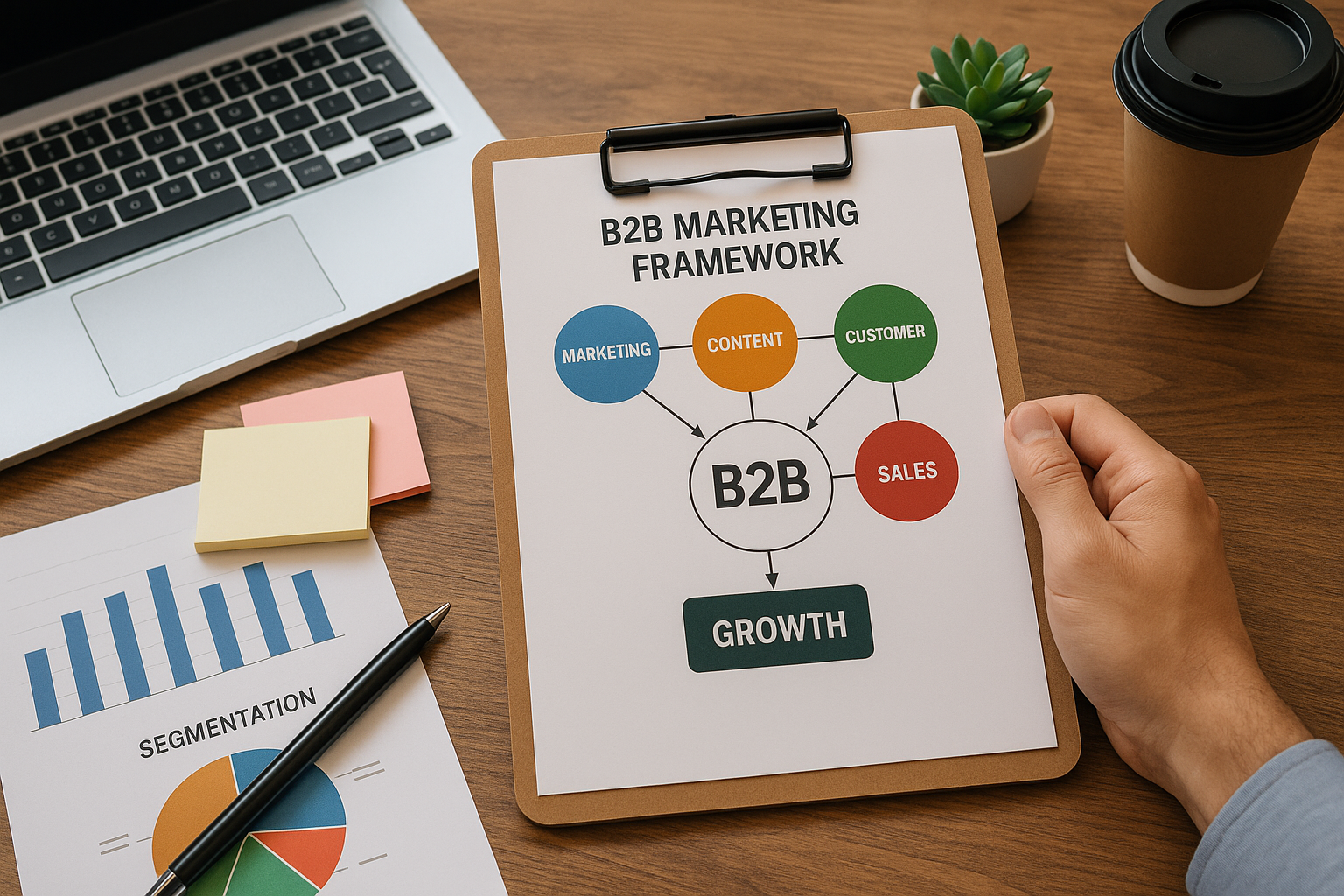
Discover how to build a B2B marketing framework that ensures sustainable growth. Learn key strategies for audience targeting, content creation, and measurement to foster lasting success in your business relationships.
📑 Table of Contents
- Understanding the B2BMarketingLandscape
- Segmentation and Targeting: The Cornerstones of B2B Engagement
- Utilizing Data Analytics for Enhanced Segmentation
- Content Marketing: Educating and Engaging Prospects
- Evergreen Content for Sustained Interest
- Personalized MarketingAutomation
- Integrating Sales and Marketing
- Feedback Loops for Continuous Improvement
- Measuring Success in B2B Marketing
- Practical Takeaways for Building a Sustainable B2B Marketing Framework
Understanding the B2B Marketing Landscape
In the business-to-business (B2B) sector, the marketing framework you adopt directly influences your ability to grow and sustain your market position. Unlike consumer marketing, B2B marketing involves longer sales cycles, multiple decision-makers, and higher transaction values, making it imperative to develop a robust, scalable strategy.
Effective B2B marketing frameworks are built on a comprehensive understanding of target industries, client needs, and the decision-making process. Companies must leverage both digital and traditional marketing channels to create touchpoints that guide potential clients through a nuanced buyer’s journey.
Segmentation and Targeting: The Cornerstones of B2B Engagement
Segmentation and targeting are crucial for crafting messages that resonate with a specific audience. Begin by segmenting your market based on firmographic data such as industry, company size, and geographic location. Advanced segmentation might include psychographics and customer behavior.
Once segments are defined, targeting involves a deep dive into understanding the needs and pain points of each segment. Tailored messaging that addresses these specific concerns is more likely to engage potential clients and lead to successful conversions.
Utilizing Data Analytics for Enhanced Segmentation
Data analytics tools can provide insights into customer behaviors and preferences, helping marketers refine their segmentation for better targeting. Regularly analyzing customer data helps in adapting strategies to meet changing market conditions and client expectations.
Content Marketing: Educating and Engaging Prospects
Content marketing is a powerful tool in the B2B arsenal. By providing valuable content, companies position themselves as thought leaders and trusted advisors in their industry. The key to successful content marketing is relevance and quality. High-quality, informative content not only attracts potential clients but also retains them by continually providing value.
Develop a content strategy that includes a variety of formats such as blogs, white papers, case studies, and videos. Each format should serve specific stages of the buyer's journey, from awareness through to decision-making.
Evergreen Content for Sustained Interest
Focus on creating evergreen content that remains relevant and useful over time. This type of content can continually attract traffic to your website, generating leads long after it is published.
Personalized Marketing Automation
Marketing automation is a key enabler in scaling B2B marketing efforts. It allows for the personalization of customer interactions at scale, improving both efficiency and effectiveness. Automation tools can help manage and nurture leads through email marketing, social media posts, and content delivery, ensuring that the right message reaches the right audience at the right time.
Implement automation in a way that feels personal and human. Despite the automated nature of these interactions, personal touches such as personalized email greetings can make a significant difference in customer perception and engagement.
Integrating Sales and Marketing
Alignment between sales and marketing teams is critical in a B2B context. This integration ensures that both teams work towards a common goal and share critical information that can lead to more closed deals and effective marketing campaigns.
Regular meetings and shared performance metrics are practical ways to maintain alignment. Utilize customer relationship management (CRM) systems to share insights and data between teams, ensuring that marketing leads are effectively converted into sales.
Feedback Loops for Continuous Improvement
Create feedback loops within your organization where sales teams can provide insights back to marketing about what works and what doesn’t. This ongoing feedback is invaluable for refining marketing strategies and tactics continuously.
Measuring Success in B2B Marketing
Key performance indicators (KPIs) should be established to measure the effectiveness of your B2B marketing framework. Common metrics include lead generation rates, conversion rates, customer acquisition costs, and customer lifetime value. These metrics not only assess current performance but also guide future marketing strategies.
Utilize analytics tools to monitor these KPIs in real-time, allowing for quick adjustments to campaigns and strategies to maximize ROI.
Practical Takeaways for Building a Sustainable B2B Marketing Framework
To build a B2B marketing framework that drives sustainable growth, focus on understanding your market deeply through effective segmentation and targeting. Invest in content marketing to engage and educate your prospects, and leverage marketing automation to personalize at scale. Ensure alignment between your marketing and sales teams to streamline the conversion process, and continuously measure and refine your strategy based on solid metrics and feedback.
By adhering to these principles, your B2B marketing efforts can not only meet the demands of today’s market but also adapt to future changes, ensuring long-term success and sustainability.
Frequently Asked Questions
What are the key components of a successful B2B marketing framework?
A successful B2B marketing framework typically includes clear segmentation of the target market, a well-articulated value proposition, strategic content creation tailored to each segment, consistent customer engagement strategies, and robust performance measurement systems. Integrating these components ensures that the marketing efforts are aligned with the business objectives and can adapt to changing market conditions.
How can segmentation improve B2B marketing efforts?
Segmentation enhances B2B marketing by allowing companies to tailor their strategies to specific groups of customers based on shared characteristics such as industry, company size, or buying behavior. This focus increases the relevance of marketing messages, improves resource allocation, and boosts engagement rates, leading to higher conversion rates and a more efficient sales process.
What role does content play in a B2B marketing framework?
In a B2B marketing framework, content plays a pivotal role in educating, engaging, and nurturing potential customers. Effective content addresses the specific needs and pain points of each customer segment, establishes the brand as a thought leader, and guides prospects through the sales funnel. Strategic content creation aligned with customer journey stages helps build trust and encourages informed decision-making among B2B buyers.
Sources and References
- A Road Map for B2B Marketing in the Digital Economy - This McKinsey report provides a detailed framework for understanding the B2B marketing landscape in the context of digital transformation. It supports the article's discussion on how businesses can adapt to evolving market conditions for sustainable growth.
- The State of Marketing Report - HubSpot's annual marketing report offers comprehensive data on segmentation and targeting practices among B2B companies. This source validates the article's emphasis on segmentation and targeting as foundational elements of effective B2B engagement.
- Utilizing Machine Learning in B2B Segmentation - This research paper from arXiv provides insights into how advanced data analytics, including machine learning, are used in B2B segmentation. It substantiates the article's section on leveraging data analytics for enhanced segmentation strategies.
- Content Strategy for B2B Marketers - From the Content Marketing Institute, this resource explains the role of content marketing in educating and engaging prospects. It aligns with the article's discussion on the strategic use of content to build relationships in B2B markets.
- Creating Content That Drives Sales - Harvard Business Review article that explores how evergreen content can generate sustained interest and ongoing engagement in B2B markets. This supports the article's point on the importance of evergreen content for maintaining long-term customer interest.