How to Build a B2B Content Strategy That Boosts Engagement and Generates
In the realm of B2B marketing, content plays a pivotal role in attracting and converting business customers. It's essential to grasp the unique challenges and...

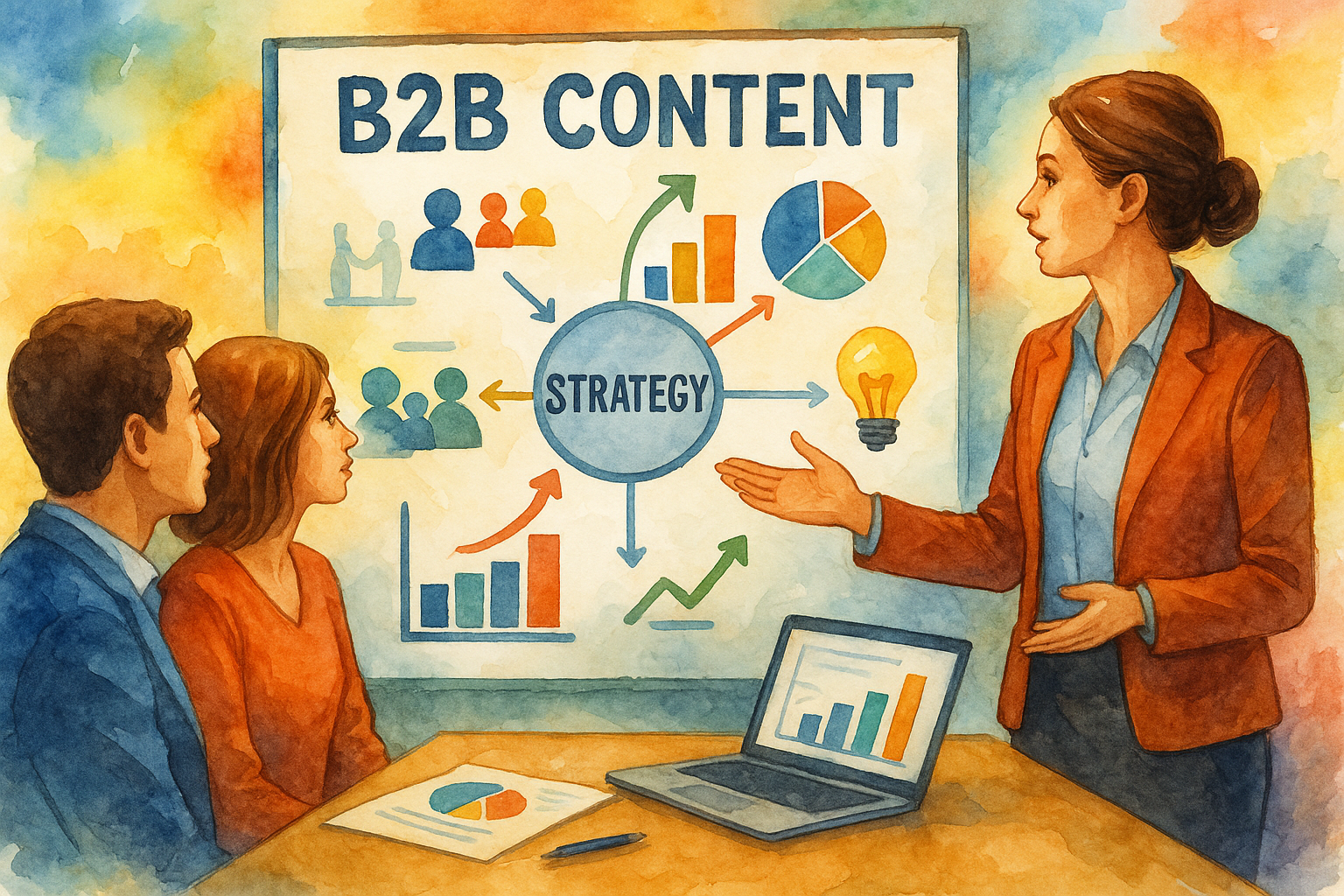
Discover how to craft a B2B content strategy that boosts engagement and generates leads. Learn essential tips on understanding your audience, creating compelling content, and leveraging analytics for continuous improvement.
📑 Table of Contents
- Understanding the B2B Content Landscape
- Setting Clear Objectives for Your ContentStrategy
- Aligning Content with Business Goals
- Identifying and Understanding Your Audience
- Segmentation for Personalized Content
- Choosing the Right Types of Content
- Utilizing Thought Leadership
- Creating a Content Calendar
- Balance Evergreen and Time-sensitive Content
- Optimizing Content for Search and User Experience
- Mobile Optimization
- Measuring Success and Optimizing Strategy
- Leveraging Analytics for Continuous Improvement
- Actionable Takeaway: Implementing a Robust B2B Content Strategy
Understanding the B2B Content Landscape
In the realm of B2B marketing, content plays a pivotal role in attracting and converting business customers. It's essential to grasp the unique challenges and opportunities within this landscape, where decision cycles are longer, and multiple stakeholders often influence purchase decisions. Content here must not only attract attention but nurture prospects through a multi-stage journey from awareness to decision.
Setting Clear Objectives for Your Content Strategy
Effective B2B content strategies begin with clear, measurable objectives. These typically include lead generation, brand awareness, customer education, and support for sales enablement. Each goal necessitates a different approach and type of content. For instance, lead generation focuses on capturing contact details through gated content like whitepapers, while brand awareness might leverage thought leadership pieces published on various platforms.
Aligning Content with Business Goals
Content should directly support the broader business objectives. If the goal is market expansion, content that highlights expertise in new geographical areas or industries can be beneficial. Aligning content with business goals ensures that marketing efforts contribute directly to the company’s bottom line. Learn more at huggingface.co AI research
Identifying and Understanding Your Audience
Knowing your audience is crucial in B2B scenarios. Detailed buyer personas should guide content creation, tailored to address the specific needs, pain points, and decision-making processes of each segment. Research tools and analytics can provide insights into the preferences and behaviors of your target audience, allowing for more targeted and effective content.
Segmentation for Personalized Content
Segmentation allows for more personalized content strategies. By categorizing your audience based on industry, company size, or role within the company, you can tailor your messaging to resonate deeply and drive engagement more effectively.
Choosing the Right Types of Content
The choice of content type should align with both the objectives set and the preferences of the target audience. Common B2B content types include blog posts, whitepapers, case studies, videos, and webinars. Each serves different stages of the buyer's journey and plays a distinct role in educating, engaging, and converting prospects.
Utilizing Thought Leadership
Thought leadership content, such as in-depth articles and expert insights, positions your brand as a leader and builds trust with your audience. This type of content is crucial for influencing decision-makers and shaping industry conversations.
Creating a Content Calendar
A well-structured content calendar helps in organizing and scheduling content production and distribution across different channels. This ensures a consistent and coherent message that nurtures leads throughout the buyer’s journey. It also helps in managing resources more efficiently and aligning content release with key industry events or product launches.
Balance Evergreen and Time-sensitive Content
Your content mix should include both evergreen content that remains relevant and useful over time and time-sensitive content that addresses current trends or news. This balance keeps your content strategy dynamic and pertinent.
Optimizing Content for Search and User Experience
Search engine optimization (SEO) is essential for ensuring your content reaches its intended audience. Use relevant keywords, optimize meta tags and descriptions, and ensure your content is accessible and easy to navigate. Additionally, the user experience should never be compromised for SEO; content must be engaging, informative, and easy to consume.
Mobile Optimization
With an increasing number of business professionals accessing content on-the-go, mobile optimization is critical. Ensure that all content is responsive and renders well on various devices to maintain engagement and effectiveness.
Measuring Success and Optimizing Strategy
Finally, the effectiveness of a B2B content strategy is only as good as its measurable outcomes. Key performance indicators (KPIs) such as lead generation rates, website traffic, engagement metrics, and conversion rates provide valuable insights into what’s working and what isn’t. Regularly review these metrics and use the insights to refine and optimize your strategy over time.
Leveraging Analytics for Continuous Improvement
Advanced analytics tools can help decipher the data collected through content interactions. Use this data to understand audience behavior better and to tailor future content more precisely to their needs.
Actionable Takeaway: Implementing a Robust B2B Content Strategy
To ensure the success of your B2B content strategy, start with a clear understanding of your business goals and audience. Choose the right mix of content types and distribute them through appropriate channels. Continuously measure the impact of your efforts and be ready to adapt based on performance data and shifting market conditions. With a well-planned approach, your content strategy can significantly improve engagement and lead generation, driving sustained business growth.
Frequently Asked Questions
What are the key elements of a successful B2B content strategy?
A successful B2B content strategy should include a clear understanding of the target audience, the creation of high-value and relevant content, consistent content distribution across appropriate channels, and regular analysis of content performance to refine strategies. It's crucial to align content with business goals and customer needs, ensuring that each piece of content moves potential clients along the sales funnel towards making a decision.
How can I identify the right audience for my B2B content?
Identifying the right audience involves conducting market research to understand who your buyers are, what challenges they face, and what solutions they are seeking. Utilize data analytics to analyze customer behavior and feedback. Creating buyer personas can be a useful strategy to segment your audience and tailor your content effectively. Engaging directly with your audience through surveys or interviews can also provide deep insights into their preferences and needs.
What types of content are most effective for B2B marketing?
The most effective types of content for B2B marketing typically include whitepapers, case studies, blogs, and webinars. These formats help demonstrate industry expertise, provide valuable insights, and address specific business challenges faced by your audience. Video content and infographics can also be highly effective if they convey complex information in an accessible and engaging way. The key is to choose formats that best convey your message to your specific audience and align with your strategic objectives.
Sources and References
- Defining B2B Content Marketing - This source from the Content Marketing Institute provides an in-depth look at the unique aspects of the B2B content landscape, supporting the article's discussion on understanding the specific needs and strategies in B2B marketing.
- What Makes a B2B Content Strategy Successful - Harvard Business Review explores successful B2B content strategies, offering insights and real-world examples that align with our article's emphasis on setting clear objectives and aligning content with business goals.
- The Forrester Wave: B2B Content Platforms Q2 2021 - This Forrester report provides data and analysis on leading B2B content platforms, which is crucial for understanding how technology supports personalized content segmentation as discussed in the article.
- Artificial Intelligence and Content Marketing - This research paper from arXiv offers insights into how AI is transforming content marketing, supporting the article's discussion on the use of AI in developing a B2B content strategy.
- A Technology Road Map for the B2B Sales Revolution - McKinsey & Company's report discusses the integration of technology in B2B sales, which complements our article's section on aligning content with technological advancements and business goals.
- How to Create Personalized Content for Your Customers - This blog post from Salesforce provides practical tips on creating personalized content, directly supporting the article's segment on audience segmentation and personalized content strategies in B2B settings.
- Google Search Central: Webmaster Guidelines - Google's official documentation on SEO best practices offers foundational SEO guidelines that help in crafting an SEO-friendly B2B content strategy, as discussed in the article.