How Data Analytics Elevates B2B Marketing Strategies
Data analytics has become an indispensable tool in the arsenal of B2B marketers. By leveraging vast amounts of data, businesses can uncover invaluable insights...

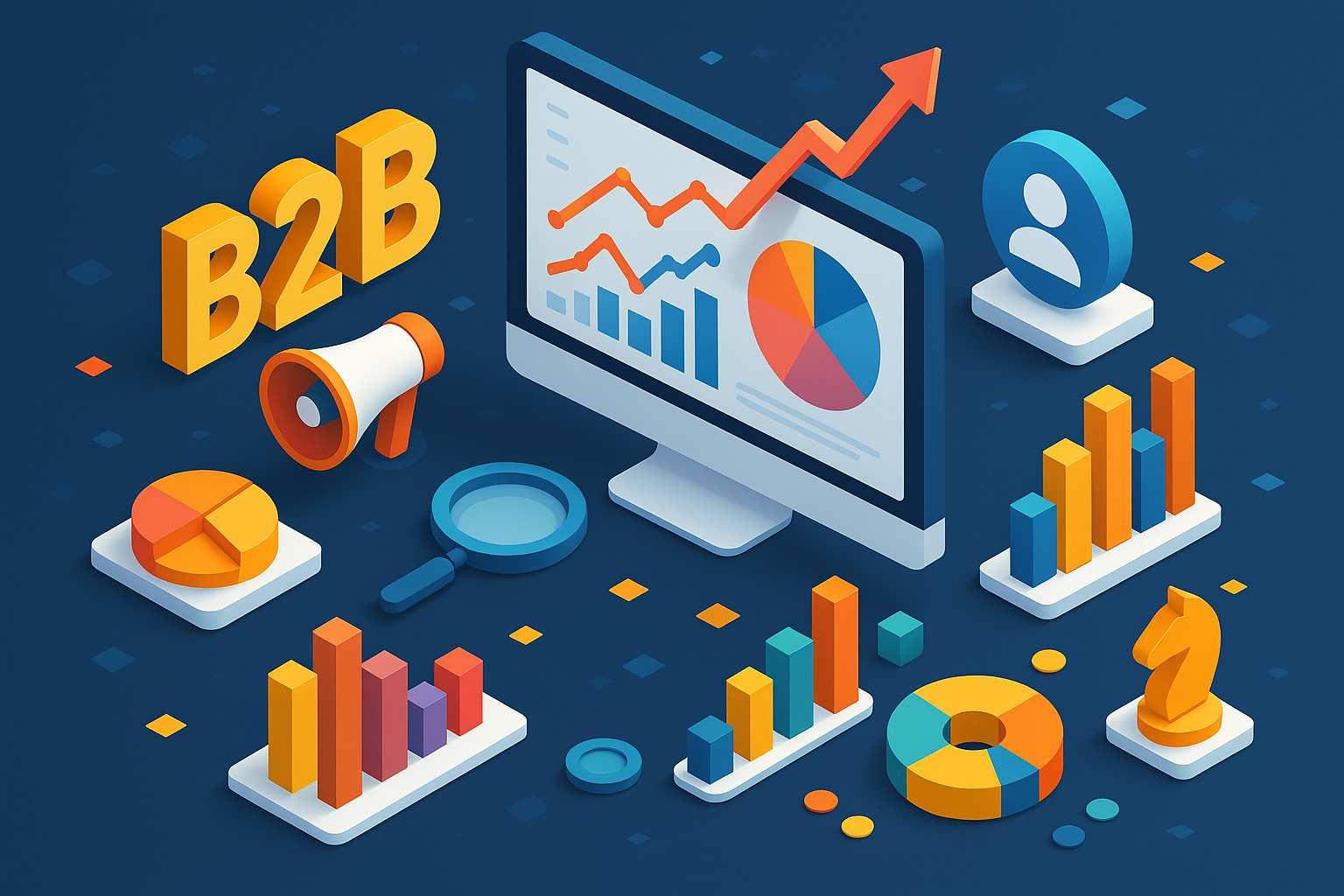
Discover how data analytics revolutionizes B2B marketing, enhancing targeting and ROI. This article explores essential strategies for leveraging big data, predictive analytics, and customer insights to drive your marketing decisions.
📑 Table of Contents
- Understanding the Role of Data Analytics in B2BMarketing
- Setting Up Data Collection Systems
- Integrating CRM with Analytics Tools
- Utilizing MarketingAutomationPlatforms
- Segmenting Your Audience for Targeted Marketing
- Developing Buyer Personas
- Optimizing Marketing Campaigns Through Predictive Analytics
- Enhancing Lead Scoring Models
- Adjusting Campaign Strategies in Real-Time
- Leveraging Competitive Intelligence
- Monitoring Competitor Activities
- Identifying Market Trends
- Measuring ROI and Refining Strategies
- Establishing Key Performance Indicators (KPIs)
- Utilizing Dashboards for Real-Time Monitoring
- Practical Takeaways for Implementing Data Analytics in B2B Marketing
Understanding the Role of Data Analytics in B2B Marketing
Data analytics has become an indispensable tool in the arsenal of B2B marketers. By leveraging vast amounts of data, businesses can uncover invaluable insights about their markets, customers, and campaign performance. This data-driven approach allows for informed decision-making and strategic planning, leading to more effective marketing efforts.
Data analytics in B2B marketing involves collecting, processing, and analyzing data to understand market trends, customer behavior, and the effectiveness of marketing strategies. This process helps in identifying potential leads, optimizing marketing campaigns, and ultimately driving sales and improving ROI.
Setting Up Data Collection Systems
Effective data analytics begins with robust data collection systems. B2B marketers must ensure that they are capturing a wide range of data points from various sources such as website traffic, social media interactions, email campaigns, and customer relationship management (CRM) systems.
Integrating CRM with Analytics Tools
Integrating your CRM system with analytics tools is crucial. This integration allows for the seamless flow of information and provides a comprehensive view of customer interactions. By analyzing this data, marketers can identify patterns and trends in customer behavior, which are critical for tailoring marketing strategies.
Utilizing Marketing Automation Platforms
Marketing automation platforms can significantly enhance data collection and analysis. These platforms automate repetitive tasks and gather data at each stage of the marketing funnel, providing deeper insights into customer engagement and campaign performance.
Segmenting Your Audience for Targeted Marketing
One of the primary advantages of data analytics in B2B marketing is the ability to segment audiences accurately. By categorizing your audience based on specific criteria such as industry, company size, decision-making role, and behavior, you can tailor your marketing messages to resonate more effectively with each segment.
Developing Buyer Personas
Creating detailed buyer personas is a critical step in audience segmentation. These personas should be based on real data and refined over time as you gather more insights. They help in understanding the needs, challenges, and behaviors of your target audience, enabling you to craft messages that address their specific concerns.
Optimizing Marketing Campaigns Through Predictive Analytics
Predictive analytics uses historical data to forecast future outcomes. In B2B marketing, this can predict customer behaviors, identify sales opportunities, and optimize marketing campaigns for better performance.
Enhancing Lead Scoring Models
With predictive analytics, marketers can refine their lead scoring models. By predicting which leads are most likely to convert, sales teams can prioritize their efforts, thereby increasing efficiency and conversion rates.
Adjusting Campaign Strategies in Real-Time
Predictive analytics also enables real-time campaign adjustments. Marketers can use ongoing data to tweak their campaigns, adapting to changes in customer behavior or market conditions instantly. This agility can significantly improve campaign effectiveness and ROI.
Leveraging Competitive Intelligence
Data analytics not only helps in understanding your customers but also provides insights into your competitors’ strategies. Analyzing competitive data allows you to benchmark your performance and identify areas for improvement.
Monitoring Competitor Activities
Keeping an eye on your competitors' marketing activities can provide critical insights. For instance, changes in their advertising spends, content publication rates, and customer engagement strategies can signal shifts in market dynamics or new opportunities.
Identifying Market Trends
By analyzing industry-wide data, B2B marketers can spot emerging trends before they become mainstream. This foresight can be crucial in gaining a first-mover advantage in new markets or technologies.
Measuring ROI and Refining Strategies
The ultimate goal of any marketing strategy is to achieve a positive ROI. Data analytics plays a critical role in measuring the effectiveness of marketing campaigns and strategies.
Establishing Key Performance Indicators (KPIs)
Identifying the right KPIs is essential for measuring success. These should align with your overall business objectives and provide clear metrics for evaluating marketing performance. Common KPIs include lead conversion rates, customer acquisition costs, and customer lifetime value.
Utilizing Dashboards for Real-Time Monitoring
Dashboards provide a real-time overview of how marketing campaigns are performing against set KPIs. They help marketers quickly identify successes or areas needing improvement, allowing for agile decision-making and strategy adjustments.
Practical Takeaways for Implementing Data Analytics in B2B Marketing
To effectively harness data analytics for B2B marketing, start by ensuring robust data collection and integration systems. Focus on building detailed buyer personas and segmenting your audience for more targeted marketing. Employ predictive analytics to not just react to market conditions but to anticipate them. Keep a close eye on competitive movements and industry trends to stay ahead. Finally, continuously measure your efforts against relevant KPIs and utilize insights to refine your strategies.
By applying these strategies, B2B marketers can transform vast amounts of data into actionable insights, driving more informed decisions and more successful campaigns.
Frequently Asked Questions
What is the role of data analytics in B2B marketing?
Data analytics plays a crucial role in B2B marketing by providing insights that help businesses understand market trends, customer behavior, and the effectiveness of their marketing strategies. By analyzing data, companies can identify the most valuable customers, predict market changes, and tailor their marketing efforts to meet specific business needs and objectives, ultimately leading to more informed decision-making and increased ROI.
How can B2B marketers effectively use analytics to improve customer engagement?
B2B marketers can improve customer engagement by leveraging analytics to segment their audience, personalize communications, and optimize customer journeys. Utilizing data to understand customer preferences and behaviors allows marketers to create targeted campaigns that speak directly to the needs and challenges of different segments. Additionally, continuous analysis of engagement metrics helps in refining strategies and improving interactions across various touchpoints.
What are some key data-driven strategies for B2B marketing?
Key data-driven strategies for B2B marketing include lead scoring, content personalization, customer segmentation, and predictive analytics. Lead scoring helps prioritize leads based on their likelihood to convert, while content personalization and segmentation ensure that marketing messages are tailored to meet the specific needs of different audience groups. Predictive analytics can be used to forecast customer behaviors, enabling proactive marketing actions that can lead to better outcomes and customer satisfaction.
Sources and References
- The Power of Analytics for B2B Sales - McKinsey & Company - This source provides an in-depth analysis of how data analytics enhances decision-making in B2B marketing. It supports the article's discussion on the role of data analytics in identifying market trends and customer needs, thereby shaping strategic marketing decisions.
- Using Advanced Analytics to Improve B2B Marketing - Harvard Business Review - This article explains the integration of CRM systems with analytics tools, offering real-world examples of companies that have successfully leveraged this integration to optimize marketing strategies and customer engagement.
- What is Marketing Automation? - Salesforce - Provides a detailed overview of marketing automation platforms, explaining their importance in streamlining marketing processes and personalizing customer interactions, which is crucial for segmenting and targeting in B2B marketing as discussed in the article.
- Segmentation in B2B Marketing - Forrester - This report offers a comprehensive look at audience segmentation strategies in B2B marketing, supporting the article's section on how to effectively segment audiences to tailor marketing messages and campaigns.
- Leveraging Machine Learning and AI in B2B Marketing - arXiv - This academic paper discusses the application of AI and machine learning in data analytics for B2B marketing, providing a theoretical foundation and practical insights that align with the article's exploration of AI's role in enhancing marketing strategies.
- Data-Driven Strategies in B2B Marketing - Content Marketing Institute - This source elaborates on how data-driven strategies can be implemented in B2B settings, offering guidance that complements the article's discussion on setting up data collection systems and using analytics to inform marketing tactics.