How B2B Marketing Teams Can Optimize Customer Journeys with Content Maps
Understanding the Importance of Customer Journey Content Maps in B2B Marketing Customer journey content mapping is a strategic approach in B2B marketing that...

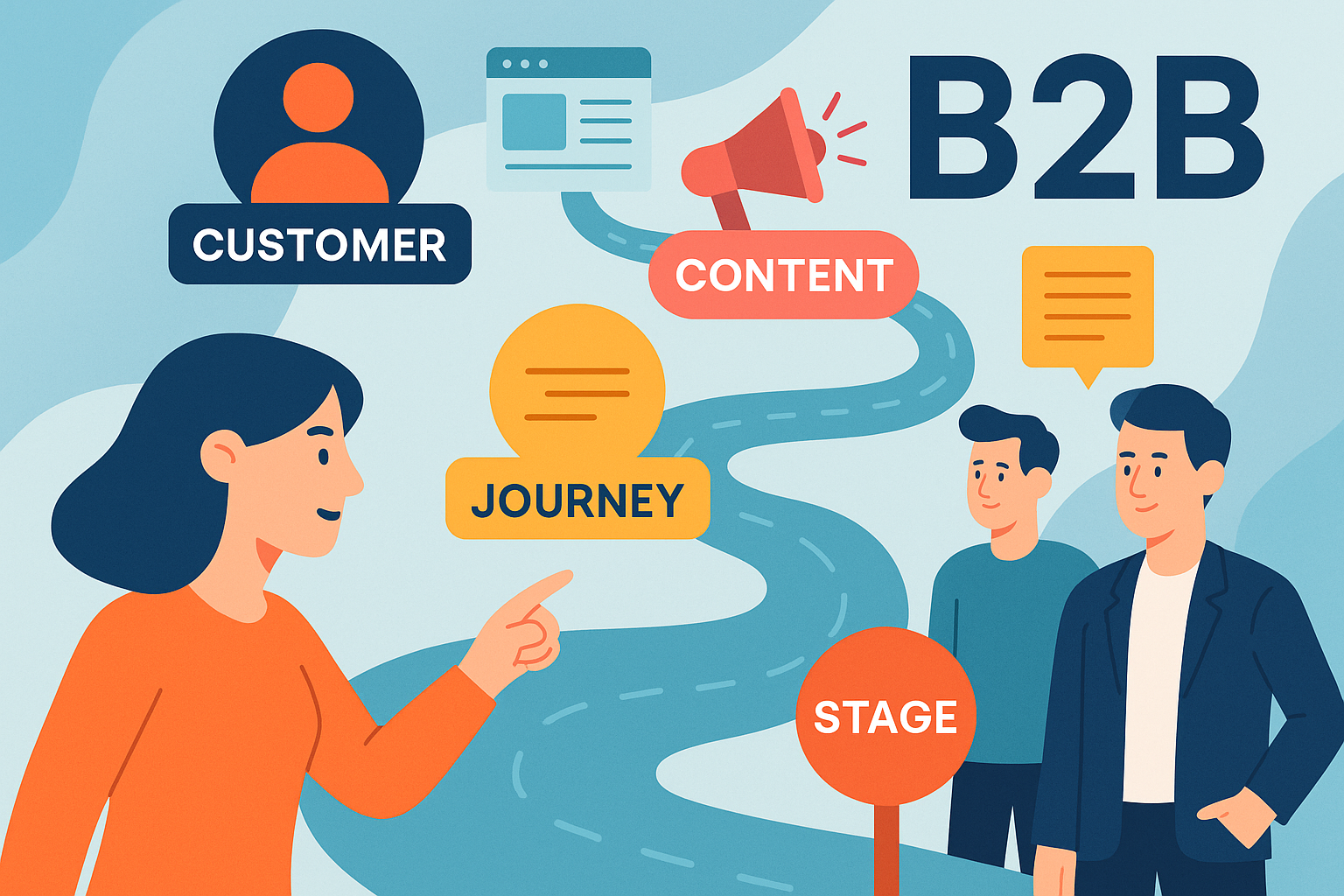
Discover how B2B marketing teams can enhance customer engagement and conversion through effective customer journey content mapping. Learn to tailor content at each stage, from awareness to decision, and boost ROI with strategic insights.
📑 Table of Contents
- Understanding the Importance of Customer Journey Content Maps in B2BMarketing
- Developing a Framework for Your Customer Journey Content Map
- Identifying Key Touchpoints
- Creating Content That Resonates Across the Buyer's Journey
- Content for the Awareness Stage
- Content for the Consideration Stage
- Content for the Decision Stage
- Integrating Technology and Tools for Effective Content Mapping
- Using Analytics to Refine Content Strategies
- Aligning Sales and Marketing Efforts Through Content Mapping
- Feedback Loops and Continuous Improvement
- Measuring Success and ROI of Content Mapping in B2B Marketing
- Setting Benchmarks and Goals
- Practical Takeaway: Implementing a Dynamic Content Mapping Strategy
Understanding the Importance of Customer Journey Content Maps in B2B Marketing
Customer journey content mapping is a strategic approach in B2B marketing that involves plotting out the specific content types and channels that best connect with potential customers at various stages of their buying process. This method ensures that marketing efforts are not only aligned with the customer's needs and preferences but are also effective in guiding them through the sales funnel. The essence of this strategy lies in its focus on creating a seamless, personalized experience that fosters deeper engagement and ultimately drives conversions and loyalty.
Developing a Framework for Your Customer Journey Content Map
To begin developing a customer journey content map, it's essential to first understand your audience deeply. This involves segmenting your market and creating detailed buyer personas. These personas should include demographic information, job roles, pain points, motivations, and preferred communication channels. With this information, you can outline the typical buyer’s journey stages, which generally include awareness, consideration, decision, and post-purchase.
Identifying Key Touchpoints
Each stage of the buyer's journey has specific touchpoints where customers interact with your content. For instance, during the awareness stage, a potential customer might come across a blog post or an industry report that addresses a particular pain point or challenge they are experiencing. Mapping these touchpoints accurately ensures that you deliver the right content at the right time.
Creating Content That Resonates Across the Buyer's Journey
With a clear understanding of the journey stages and touchpoints, the next step is to curate content that addresses the needs and interests of potential customers at each stage.
Content for the Awareness Stage
At this stage, the goal is to educate and inform. Content should be aimed at solving problems or answering questions that are relevant to the audience. Typical formats include blog posts, eBooks, infographics, and educational videos. The content should be easily accessible and designed to establish your brand’s credibility and authority in the industry.
Content for the Consideration Stage
Here, the potential customers are evaluating their options. The content should help them make informed decisions by highlighting features, benefits, and competitive differentiators. Case studies, product comparison guides, and expert webinars are effective formats for this stage.
Content for the Decision Stage
At this point, the buyer is ready to make a purchase decision. Content should be targeted and persuasive, such as personalized email campaigns, detailed product demonstrations, or trial offers that aim to seal the deal.
Integrating Technology and Tools for Effective Content Mapping
Leveraging the right technology and tools can greatly enhance the effectiveness of your content mapping strategy. Customer Relationship Management (CRM) systems and Content Management Systems (CMS) are essential for storing detailed customer data and managing content respectively. Additionally, analytics tools can track engagement and conversion metrics, helping you to refine and optimize your content strategy over time.
Using Analytics to Refine Content Strategies
Analytics play a crucial role in understanding how well your content performs and how effectively it moves potential customers along the buyer's journey. Metrics such as page views, time on page, click-through rates, and conversion rates provide valuable insights that can help you fine-tune your content map to better meet the needs of your audience.
Aligning Sales and Marketing Efforts Through Content Mapping
A well-integrated approach between sales and marketing teams is crucial for the success of any B2B marketing strategy. Content mapping offers an excellent platform for these teams to collaborate and align their efforts. By sharing insights, feedback, and data, both teams can ensure that the content being created is not only relevant but also effectively supports the sales process.
Feedback Loops and Continuous Improvement
Establish regular feedback loops where sales teams can provide insights into the questions, objections, and interests of leads they interact with. This information can be incredibly valuable for refining the content map to better serve both sales goals and customer needs.
Measuring Success and ROI of Content Mapping in B2B Marketing
To truly understand the impact of your customer journey content map, it’s important to measure both the qualitative and quantitative results. This includes tracking engagement metrics, sales conversion rates, and overall return on investment (ROI). Additionally, qualitative feedback from customers through surveys or interviews can provide deeper insights into how well your content is meeting their needs.
Setting Benchmarks and Goals
Establish clear benchmarks and goals for each piece of content within the map. This not only helps in measuring success but also in making necessary adjustments to improve performance.
Practical Takeaway: Implementing a Dynamic Content Mapping Strategy
To effectively implement a customer journey content map in your B2B marketing strategy, start by deeply understanding your audience and their buying journey. Develop tailored content that addresses each stage of this journey and utilize the right tools to deliver and measure this content effectively. Continuously refine your strategy based on feedback and analytics to keep your content relevant and engaging. Remember, a successful content map is dynamic and evolves with your audience and market conditions, ensuring sustained engagement and improved sales outcomes.
Frequently Asked Questions
What is a customer journey content map?
A customer journey content map is a strategic framework used by B2B marketing teams to visualize and plan the types of content they will deliver at each stage of the customer's journey. This map helps in aligning the content with the specific needs, questions, and behaviors of potential customers as they progress from awareness to decision-making stages. The goal is to engage effectively with the customer by providing relevant and timely content that aids in nurturing leads and driving conversions.
Why is mapping the customer journey important for B2B marketers?
Mapping the customer journey is crucial for B2B marketers as it provides a clear understanding of how potential customers move through the buying process. It identifies key interactions and touchpoints where content can be most influential. By understanding these stages, marketers can create more targeted, relevant, and persuasive content that addresses the specific needs and pain points at each stage. This strategic approach leads to better engagement, improved customer experiences, and ultimately, higher conversion rates.
How do you create an effective customer journey content map?
Creating an effective customer journey content map involves several key steps: 1. Define your buyer personas to understand who your customers are and what their needs, challenges, and goals are. 2. Identify the stages of the customer journey specific to your business, typically including awareness, consideration, decision, and loyalty. 3. Conduct a content audit to assess existing materials and identify gaps. 4. Map out content types and strategies that align with each stage of the journey and address the needs of your buyer personas. 5. Continuously analyze the performance of your content and optimize the strategy based on insights and feedback. This process ensures that your content strategy is aligned with customer expectations and business objectives, making it more effective in driving engagement and conversions.
What are some common types of content used at different stages of the B2B customer journey?
Common types of content used in B2B marketing at different stages of the customer journey include: - Awareness Stage: Educational blog posts, infographics, and explainer videos that help to introduce your brand and solutions. - Consideration Stage: Case studies, webinars, and white papers that provide deeper insights into how your solutions can solve specific problems. - Decision Stage: Product demos, comparison sheets, and detailed testimonials that assist in making a purchase decision. - Loyalty Stage: Email newsletters, exclusive offers, and customer success stories that encourage repeat business and
Sources and References
- The B2B Customer Journey Mapping Basics - Forrester Research - This Forrester report provides a foundational understanding of customer journey mapping in B2B contexts, emphasizing the importance of aligning marketing strategies with customer touchpoints. It supports the article's section on developing a framework for customer journey content maps.
- Effective Content Strategies for the B2B Customer Journey - Content Marketing Institute - This article discusses specific content strategies that resonate at various stages of the B2B buyer's journey, particularly focusing on the awareness stage. It provides practical examples that complement the theoretical framework discussed in the main article.
- Making Journey Maps Useful for Different Types of B2B Customers - Harvard Business Review - This HBR article explores the nuances of creating customer journey maps for diverse B2B customer segments, supporting the article's discussion on identifying key touchpoints and tailoring content accordingly.
- The Consumer Decision Journey - McKinsey & Company - Although focused on consumers, this McKinsey report provides valuable insights into the decision-making process that can be extrapolated to B2B marketing. It supports the article's exploration of how content impacts the buyer's journey at different stages.
- Analyzing the Impact of Content Marketing on B2B Engagement - arXiv - This academic paper presents research findings on the effectiveness of content marketing in B2B settings, offering empirical evidence that supports the article's claims about the importance of content in the customer journey.
- Ultimate Guide to B2B Marketing - Salesforce - This comprehensive guide from Salesforce delves into various aspects of B2B marketing, including detailed sections on content creation and journey mapping. It serves as a practical resource complementing the theoretical discussions in the article.