Harness AI to Boost Predictive Analytics in B2B Marketing
Predictive analytics in B2B marketing leverages artificial intelligence (AI) to process vast amounts of data and forecast future marketing trends, customer...

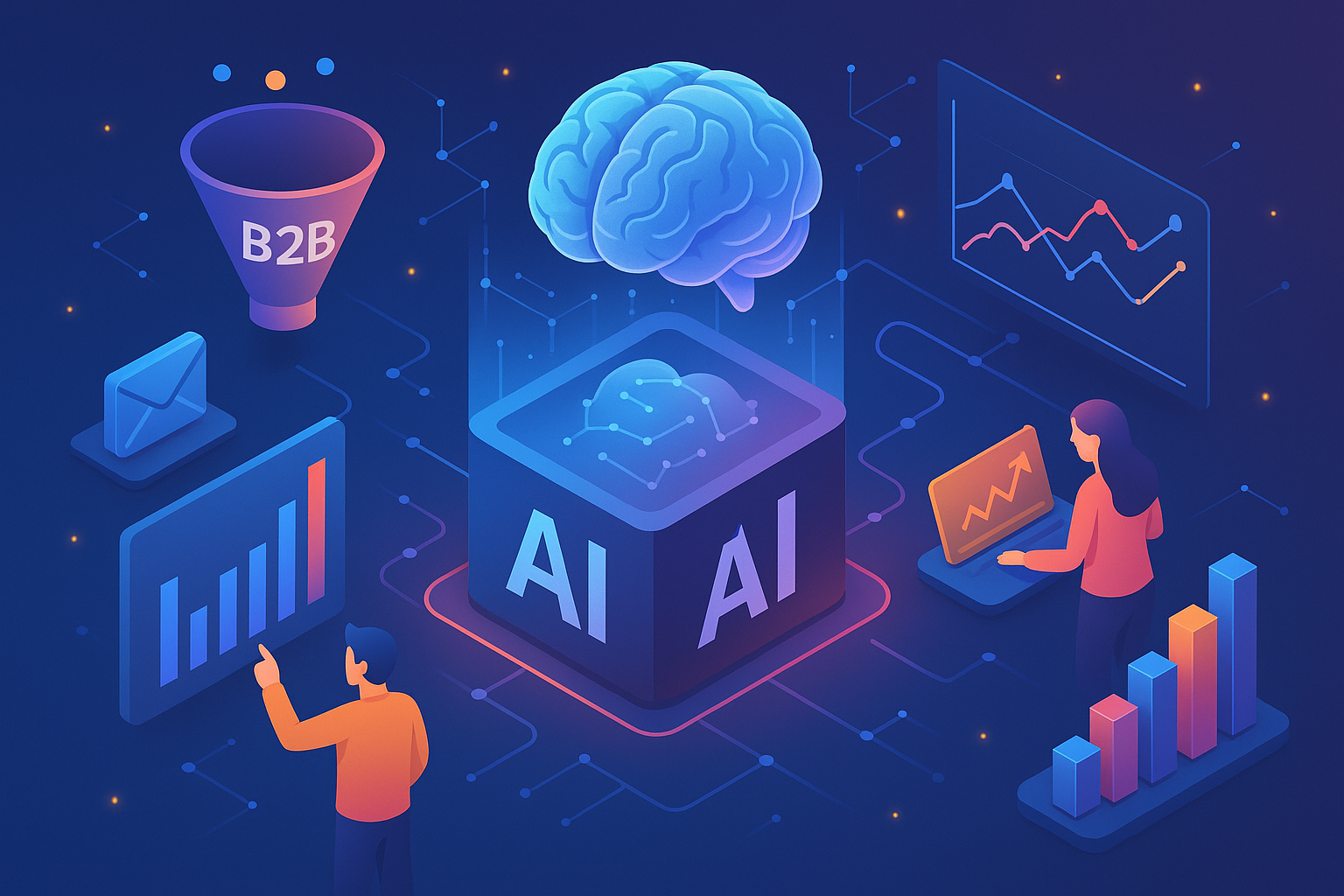
Discover how AI enhances predictive analytics in B2B marketing, boosting lead generation and customer insights. Learn key strategies for data integration, model development, and actionable output for smarter decision-making.
📑 Table of Contents
- Understanding the Role ofAIin B2B Marketing Predictive Analytics
- Selecting the Right AI Tools for Predictive Analytics
- Integration with Current Systems
- Evaluation of Analytical Capabilities
- Setting Up Your AI-Driven Predictive Analytics Framework
- Data Preparation and Cleaning
- Choosing and Training Models
- Implementing AI Predictions in Marketing Strategies
- Personalization of Marketing Communications
- Dynamic Resource Allocation
- Monitoring and Optimizing AI-Driven Processes
- Performance Metrics
- Model Retraining and Updating
- Addressing Challenges in AI Predictive Analytics
- Data Privacy and Security
- Managing Bias in AI Models
- Future-Proofing Your AI Predictive Analytics Capabilities
- Professional Development and Training
- Exploring Advanced AI Features
Understanding the Role of AI in B2B Marketing Predictive Analytics
Predictive analytics in B2B marketing leverages artificial intelligence (AI) to process vast amounts of data and forecast future marketing trends, customer behaviors, and business outcomes. By utilizing AI, marketers can identify potential leads, personalize marketing efforts, optimize resource allocation, and enhance customer relationships.
Selecting the Right AI Tools for Predictive Analytics
Choosing the correct AI tools is crucial for effective predictive analytics. It's important to evaluate tools based on their ability to integrate with existing systems, the sophistication of their analytics capabilities, and their scalability. Some popular AI technologies for predictive analytics include machine learning models, deep learning algorithms, and natural language processing (NLP). Each tool has its strengths, and the choice often depends on the specific needs of your marketing strategy and the nature of the data you work with.
Integration with Current Systems
Ensure that the AI tool you select can seamlessly integrate with your current CRM and DMP systems. This integration allows for smoother data flow and more accurate predictions.
Evaluation of Analytical Capabilities
Assess tools for their ability to perform regression analysis, classification, and clustering, as these are fundamental in predicting customer behavior and segmenting audiences effectively.
Setting Up Your AI-Driven Predictive Analytics Framework
Setting up an AI-driven predictive analytics framework involves data collection, model building, and integration into marketing processes. Begin by collecting historical data from various touchpoints such as email interactions, website visits, and social media engagement. This data serves as the training set for your AI models.
Data Preparation and Cleaning
Prepare and clean your data to ensure accuracy in the AI’s predictions. This step involves handling missing values, removing duplicates, and normalizing data.
Choosing and Training Models
Select an AI model that fits your data and prediction needs. Common models in predictive analytics include decision trees, neural networks, and support vector machines. Train your model with a subset of your data to learn patterns and behaviors.
Implementing AI Predictions in Marketing Strategies
Once your AI model is trained, integrate its predictions into your marketing strategies. Use AI-driven insights to tailor marketing messages, optimize campaign timings, and target the right audiences. For instance, AI can predict the best times to send emails when customers are most likely to engage, or it can identify which prospects are most likely to convert and prioritize them for direct outreach.
Personalization of Marketing Communications
Leverage AI to personalize marketing communications at scale. AI can analyze individual customer data and deliver customized messages that resonate with each segment of your audience, increasing engagement and conversion rates.
Dynamic Resource Allocation
Use predictive analytics to dynamically allocate marketing resources where they are most likely to generate returns. AI can forecast campaign performance and suggest reallocation of budgets to the most effective channels.
Monitoring and Optimizing AI-Driven Processes
Continuous monitoring and optimization are key to maintaining the effectiveness of AI-driven predictive analytics. Regularly evaluate the performance of your AI models and refine them as necessary to adapt to new data and changing market conditions.
Performance Metrics
Track key performance indicators (KPIs) such as conversion rates, click-through rates, and ROI. These metrics will help gauge the effectiveness of AI-driven initiatives and identify areas for improvement.
Model Retraining and Updating
Periodically retrain your AI models with new data to keep them current and effective. Updating models helps accommodate changes in customer behavior and market dynamics.
Addressing Challenges in AI Predictive Analytics
While AI in predictive analytics offers numerous benefits, it also presents challenges such as data privacy concerns, model bias, and the need for continuous learning. It is vital to address these issues head-on to build trust and ensure the ethical use of AI.
Data Privacy and Security
Adhere to data protection regulations and implement robust security measures to safeguard customer data. Transparent data usage policies help build customer trust.
Managing Bias in AI Models
Monitor AI models for bias and take corrective measures to ensure fairness in predictions. Regular audits can help identify and mitigate any unintended biases.
Future-Proofing Your AI Predictive Analytics Capabilities
To ensure the longevity and relevance of your AI-driven predictive analytics, stay informed about advancements in AI technology and continuously refine your strategies. Engage in ongoing training for your team, explore emerging AI functionalities, and always be ready to adapt to new insights and technologies.
Professional Development and Training
Encourage continuous learning and professional development among your marketing team. Understanding the latest AI tools and techniques can significantly enhance your marketing efforts.
Exploring Advanced AI Features
Stay ahead of the curve by exploring advanced AI features such as predictive lead scoring, sentiment analysis, and automated content generation. These features can provide deeper insights and automate complex tasks, further enhancing your marketing strategies.
By adhering to these principles and adapting to technological advancements, your use of AI for predictive analytics in B2B marketing can not only keep pace with the current landscape but also set the stage for future growth and innovation.
Frequently Asked Questions
What is predictive analytics in B2B marketing?
Predictive analytics in B2B marketing refers to the use of data, statistical algorithms, and machine learning techniques to identify the likelihood of future outcomes based on historical data. The goal is to go beyond knowing what has happened to provide a best assessment of what will happen in the future. This approach helps in making more informed business decisions, enhancing marketing strategies, and improving customer relationships.
How can AI enhance predictive analytics in B2B marketing?
AI enhances predictive analytics in B2B marketing by processing large amounts of data more efficiently and accurately than traditional methods. AI algorithms can detect complex patterns and trends that are not easily visible. This capability allows businesses to forecast market trends, customer behavior, and business outcomes with a higher degree of precision. AI-driven predictive analytics also enables real-time data analysis, leading to quicker and more proactive decision-making.
What types of data are essential for predictive analytics in B2B marketing?
Essential types of data for predictive analytics in B2B marketing include customer data (purchase history, interaction data, and feedback), sales data, market trends, and competitor analysis. Additionally, integrating external data such as economic indicators, industry trends, and technological advancements can provide a more comprehensive view and improve the accuracy of the predictions.
How do you build predictive models for B2B marketing?
Building predictive models for B2B marketing involves several steps: defining the business problem, collecting and preparing the right data, choosing appropriate modeling techniques, and training the models using historical data. Common techniques include regression analysis, decision trees, and neural networks. It’s crucial to continuously evaluate and refine the models based on their performance and changing data patterns to ensure accuracy and relevance.
What are the common challenges in using AI for predictive analytics in B2B marketing?
Common challenges include data quality and availability, integrating AI into existing systems, ensuring data privacy and security, and the need for specialized skills to develop and manage AI models. Addressing these challenges involves investing in quality data management practices, training or hiring skilled personnel, adopting robust cybersecurity measures, and ensuring transparent and ethical use of AI technologies.
Sources and References
- The Future of B2B Marketing: Using AI for Predictive Analytics - This Forrester report provides a detailed analysis of how AI technologies are transforming predictive analytics in B2B marketing. It supports the article's discussion on the role of AI in enhancing data-driven decision-making and improving marketing strategies.
- How Companies Are Using Big Data and Analytics - This Harvard Business Review article explores various case studies of companies implementing big data and AI tools for predictive analytics. It validates the article's points on selecting the right AI tools and integrating them with current systems to optimize B2B marketing strategies.
- Recent Advances in Predictive (Machine) Learning - This research paper from arXiv provides foundational knowledge and recent advancements in machine learning models for predictive analytics. It supports the article's section on evaluating analytical capabilities of AI tools in the context of B2B marketing.
- How AI is Transforming Customer Engagement in B2B - This blog post from Salesforce delves into practical applications of AI in enhancing customer engagement in B2B sectors, supporting the article's discussion on setting up an AI-driven predictive analytics framework.
- How B2B Companies Can Leverage Data and Analytics for Optimal Results - McKinsey's detailed analysis provides insights into how B2B companies can effectively use data and analytics, underpinned by AI, to drive business outcomes. This source is particularly relevant to the article's focus on integrating AI tools with existing data systems.
- Artificial Intelligence and Predictive Analytics in Business - PwC’s comprehensive guide on AI and predictive analytics offers a deep dive into how these technologies can be applied in various business contexts, including B2B marketing. It provides a solid foundation for the article’s sections on understanding AI’s role and setting up frameworks.