Discover Five Proven Methods to Streamline Your Marketing with AI
One of the most transformative powers of artificial intelligence in marketing is its ability to personalize communication at a massive scale. AI can analyze...

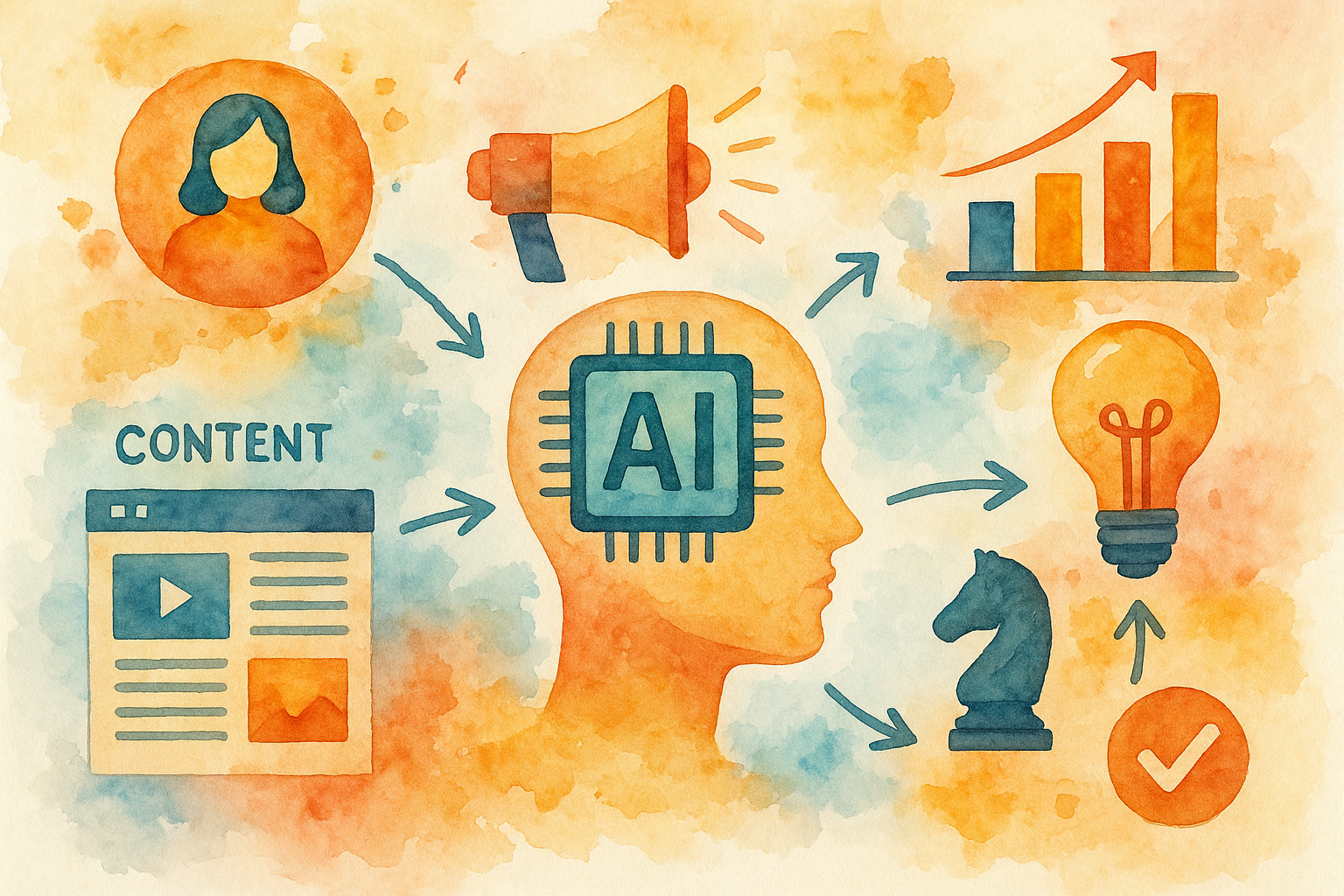
Explore five effective AI-driven strategies to enhance your marketing efficiency. This article covers automation, personalization, analytics, content generation, and customer interactions, helping you leverage AI for better results.
📑 Table of Contents
- Empowering Personalization at Scale withAI
- Optimizing Customer Journey with Predictive Analytics
- EnhancingContent Creationwith AI Tools
- Improving Ad Targeting and Spend Efficiency
- Streamlining Customer Service with AI Chatbots
- Practical Takeaways for Marketing Professionals
Empowering Personalization at Scale with AI
One of the most transformative powers of artificial intelligence in marketing is its ability to personalize communication at a massive scale. AI can analyze vast datasets to understand consumer behavior and preferences, enabling marketers to tailor their messages to individual needs and interests. This personalization extends beyond email marketing to include personalized website experiences, targeted ads, and even product recommendations.
Actionable Strategy: Implement AI-driven tools that collect and analyze customer data from various touchpoints. Use these insights to create dynamic content that adapts to user interactions. For example, if a user frequently checks certain types of products, your AI system can highlight similar items in future communications.
Optimizing Customer Journey with Predictive Analytics
Predictive analytics use AI to predict future behaviors based on past data. This can be particularly useful in forecasting trends, customer churn, and the likelihood of conversion. By understanding these patterns, marketers can proactively adjust their strategies to enhance the customer journey, improve retention, and increase engagement.
Actionable Strategy: Integrate predictive analytics into your CRM system to score leads based on their likelihood to convert. Focus your efforts on high-score leads to optimize resource allocation and campaign effectiveness.
Enhancing Content Creation with AI Tools
Content is a critical component of digital marketing, and AI can significantly streamline the content creation process. AI-driven tools can help generate ideas, create drafts, and even optimize content for search engines. By automating the more routine aspects of content creation, marketers can focus on strategy and creative elements that require a human touch.
Actionable Strategy: Use AI tools to generate content ideas and outlines based on trending topics and keywords. Employ AI-driven writing assistants for initial drafts and use human creativity to add unique insights and personal touches.
Improving Ad Targeting and Spend Efficiency
AI algorithms excel in optimizing advertising campaigns by analyzing which ads perform best and adjusting accordingly. This not only improves targeting but also enhances ROI by reallocating budgets dynamically to high-performing ads. AI can also identify new and niche target audiences that may have been overlooked by traditional methods.
Actionable Strategy: Deploy AI-powered advertising platforms that automatically test different ad variations and scale up the most effective ones. Use AI to uncover unexplored customer segments by analyzing hidden patterns in user data.
Streamlining Customer Service with AI Chatbots
AI chatbots can handle a large volume of customer inquiries without human intervention, providing instant responses that are crucial for maintaining customer satisfaction. These bots can learn from interactions to improve their accuracy and help in collecting valuable insights about customer concerns and preferences.
Actionable Strategy: Implement an AI chatbot on your website and key customer touchpoints. Train the bot with FAQs and use machine learning to improve its responses over time. Regularly review chat logs to identify common issues or areas for improvement in products or services.
Practical Takeaways for Marketing Professionals
Embracing AI in marketing is not just about adopting new technologies but also about evolving with consumer expectations and industry standards. By leveraging AI for personalization, predictive analytics, content creation, ad optimization, and customer service, marketers can not only streamline their operations but also provide enhanced customer experiences. Start small by integrating AI into one aspect of your marketing strategy and gradually expand as you see the benefits and learn from the data generated. Remember, the goal is to use AI not to replace the human element in marketing but to augment it, making marketing efforts more effective and efficient.
As AI technology continues to advance, staying updated with the latest tools and techniques will be crucial. However, the core objective remains constant: to deliver the right message to the right person at the right time. By focusing on these strategies, you can ensure that your marketing efforts remain relevant and impactful, regardless of how technology evolves.
Frequently Asked Questions
How can AI improve the efficiency of marketing strategies?
AI can significantly enhance marketing efficiency by automating routine tasks, personalizing customer interactions, and providing actionable insights through data analysis. By leveraging AI, marketers can focus on strategic planning and creative tasks, while AI handles data-driven decision making, targeting, and optimization processes. This integration leads to higher productivity and more effective marketing campaigns.
What are some key ways AI can help in content creation for marketing?
AI can assist in content creation by generating initial drafts, suggesting content improvements based on audience engagement data, and optimizing headlines for increased click-through rates. Additionally, AI tools can help identify trending topics and keywords, ensuring that the content is both relevant and SEO-friendly. This not only speeds up the content creation process but also enhances the relevance and effectiveness of the content produced.
How does AI contribute to personalized marketing experiences?
AI contributes to personalized marketing by analyzing vast amounts of data to understand individual customer preferences and behaviors. This enables marketers to tailor messages, offers, and content to each customer's unique needs and interests. AI-driven personalization can occur in real-time across various channels, significantly improving engagement rates and customer satisfaction.
Sources and References
- Marketing in the digital age: Personalization at scale - This McKinsey report provides insights into how AI can empower personalization in marketing, supporting the article’s discussion on using AI to tailor marketing efforts to individual customer preferences and behaviors at scale.
- The Predictive Analytics Playbook currently - Forrester’s playbook details methodologies and case studies on the use of predictive analytics in optimizing customer journeys, aligning with the article’s section on enhancing customer experience through predictive insights.
- Enhancing Content Creation with AI Tools: A Comprehensive Study - This research paper from Arxiv.org explores various AI tools for content creation, providing academic validation for the article’s claims about the efficiency and creativity AI brings to content marketing strategies.
- The State of Marketing Report - HubSpot’s annual marketing report includes data and trends on AI’s role in improving ad targeting and spend efficiency, offering empirical evidence and expert analysis that supports the article’s discussion on this topic.
- State of Service Report - Salesforce provides a detailed report on how AI-powered chatbots are revolutionizing customer service, corroborating the article’s section on streamlining customer service through automation and AI technologies.