Craft Engaging B2B Marketing Content for Each Buyer Stage
In B2B marketing, understanding the buyer's journey is crucial for creating content that resonates and converts. The buyer's journey typically consists of...

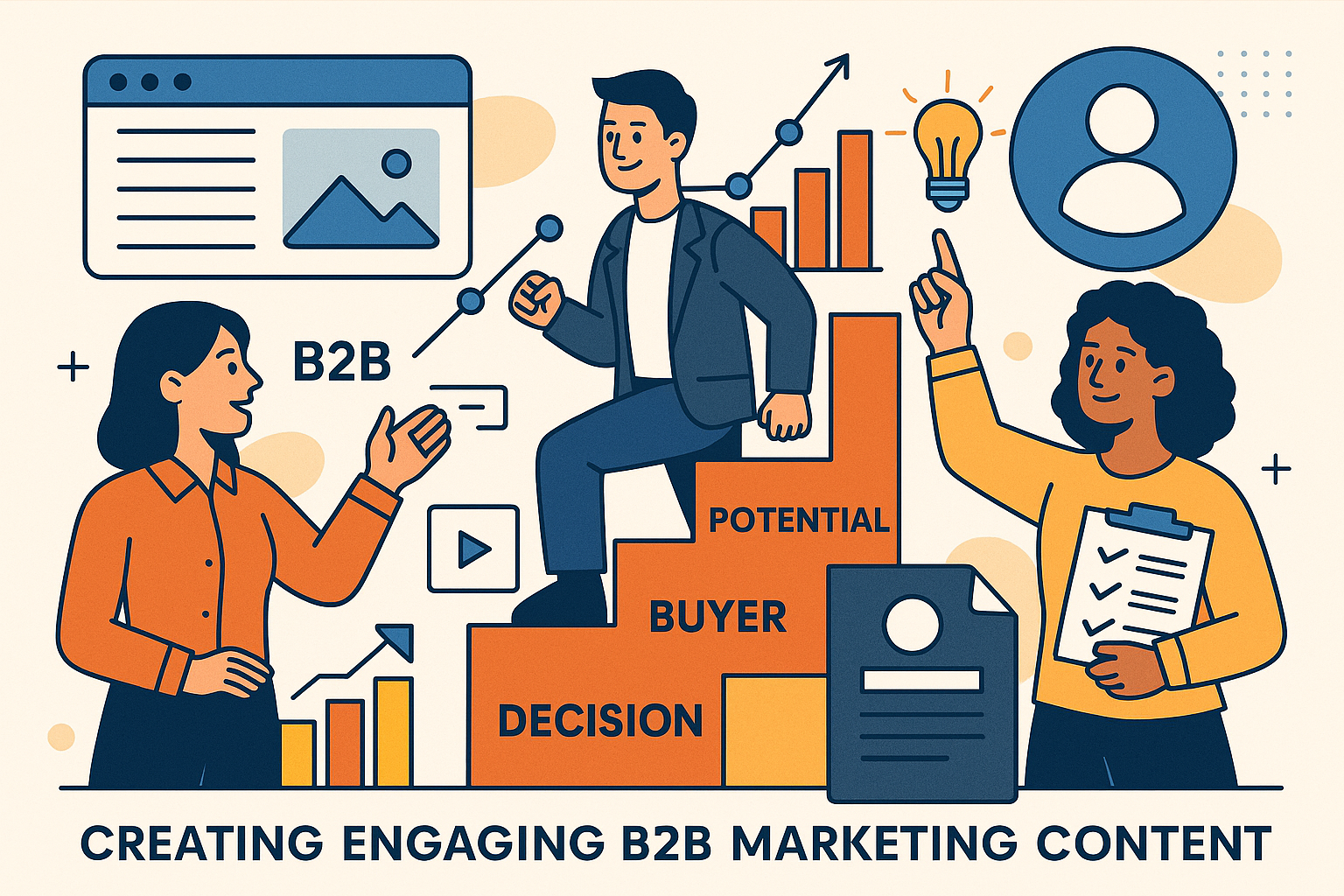
Learn how to craft captivating B2B marketing content that resonates with buyers at each stage of their journey. This article guides you through strategies for awareness, consideration, and decision phases, ensuring your message hits the mark every time.
📑 Table of Contents
- Understanding Buyer Stages in B2BMarketing
- Content Strategies for the Awareness Stage
- Types of Effective Awareness Content
- Best Practices for Awareness Content
- Engaging Content for the Consideration Stage
- Key Types of Consideration Content
- Consideration Content Best Practices
- Decision Stage Content that Converts
- Effective Decision Stage Content
- Decision Stage Content Practices
- Integrating Content Across All Stages
- Strategies for Content Integration
- Measuring the Impact of Your Content
- Key Metrics to Monitor
- Takeaways for Creating Engaging B2B Marketing Content
Understanding Buyer Stages in B2B Marketing
In B2B marketing, understanding the buyer's journey is crucial for creating content that resonates and converts. The buyer's journey typically consists of three main stages: Awareness, Consideration, and Decision. Each stage represents a unique mindset of the buyer, which necessitates tailored content strategies to effectively engage and guide them towards a purchase.
Content Strategies for the Awareness Stage
During the Awareness stage, potential clients are just beginning to recognize a problem or need. The goal here is to educate and inform, rather than sell. Content should focus on addressing common pain points, introducing new ideas, or shedding light on emerging trends that could impact the industry.
Types of Effective Awareness Content
- Educational Blog Posts: These should provide valuable insights and data that help potential customers understand their challenges better.
- Industry Reports: Sharing industry trends and data can position your brand as a thought leader.
- Infographics: These help in visualizing complex data or processes in a digestible format, ideal for sharing on social media.
Best Practices for Awareness Content
- Focus on keywords that potential clients might use when they are just starting to research their problems.
- Offer content that can be easily shared, enhancing your reach and brand visibility.
Engaging Content for the Consideration Stage
At the Consideration stage, buyers are evaluating different approaches or methods to solve the problem they have identified. Here, your content should help them compare different solutions and understand why your solution might be the best fit. Learn more at business.twitter.com social media platform
Key Types of Consideration Content
- Comparison Guides: Help your prospects compare different solutions with comprehensive, unbiased guides.
- Case Studies: Showcase your product or service in action, focusing on how it addresses specific pain points.
- Webinars: Interactive sessions where potential clients can ask questions and delve deeper into technical aspects.
Consideration Content Best Practices
- Use more specific, solution-oriented keywords that target users comparing options.
- Ensure your content is detailed and backed by data to build credibility and trust.
Decision Stage Content that Converts
Content at the Decision stage needs to be compelling and persuasive. At this point, potential clients are ready to make a purchase decision, and your content should reinforce that your solution is the optimal choice.
Effective Decision Stage Content
- Product Demos: Offer a detailed look at how your product works and its benefits.
- Customer Testimonials: Leverage the power of social proof to build trust and influence purchase decisions.
- Detailed Product Guides: Provide all the specifications and benefits your product offers to clear any last-minute doubts.
Decision Stage Content Practices
- Focus on conversion-oriented keywords that indicate purchase intent.
- Include clear calls-to-action (CTAs) that guide users on the next steps to take.
Integrating Content Across All Stages
To ensure a seamless transition from one stage to another, your content should be interconnected and build upon the knowledge and engagement developed in previous stages.
Strategies for Content Integration
- Content Mapping: Plan out how each piece of content leads to another, guiding potential clients through the funnel.
- Retargeting Campaigns: Use retargeting to deliver stage-specific content based on the user's past interactions with your brand.
Measuring the Impact of Your Content
Without measuring the effectiveness of your content at each buyer stage, you can't optimize or understand its impact. Employ analytics tools to track engagement metrics such as page views, time spent on page, and conversion rates.
Key Metrics to Monitor
- Engagement Metrics: These include likes, shares, comments, and page views.
- Conversion Rates: The percentage of visitors who complete a desired action.
- Lead Quality: Assess how the leads generated match your target audience.
Takeaways for Creating Engaging B2B Marketing Content
To create engaging B2B marketing content, start by thoroughly understanding the buyer stages and tailor your content accordingly. Use a mix of educational, comparative, and decision-driving content types to guide potential clients through their purchasing journey. Finally, consistently measure and refine your strategies based on performance data to enhance the effectiveness of your marketing efforts.
Frequently Asked Questions
What are the key stages of a buyer's journey in B2B marketing?
The key stages of a buyer's journey in B2B marketing typically include the Awareness Stage, where potential buyers recognize a need or problem; the Consideration Stage, where they evaluate different solutions to their problem; and the Decision Stage, where they choose a solution and proceed to purchase. Understanding these stages helps in creating targeted content that addresses the specific needs and questions of buyers at each point in their journey.
How can content be optimized for the Decision Stage of the buyer's journey?
Content optimized for the Decision Stage should focus on providing comprehensive information that confirms the buyer's choice and mitigates any lingering concerns. This can include detailed product comparisons, case studies, user testimonials, and data-driven ROI calculations. The aim is to reassure the buyer that their decision is well-founded and to facilitate the final steps of the purchasing process.
What types of content are most effective at the Awareness Stage of the B2B buyer's journey?
At the Awareness Stage, effective content types include educational blog posts, infographics, and explainer videos that help potential buyers understand their challenges and identify possible solutions. The content should be informative and easily digestible, aiming to educate rather than sell, setting the stage for deeper engagement in subsequent phases of the buyer’s journey.
Sources and References
- The B2B Buyer's Journey - Forrester - This Forrester report provides a detailed analysis of the B2B buyer stages, which is crucial for understanding how to tailor marketing content for each phase. It offers insights into the behaviors and decision-making processes at each stage, supporting the section on understanding buyer stages in B2B marketing.
- Content Ideas for the Awareness Stage - Content Marketing Institute - This article outlines various effective content types for the awareness stage of the B2B buying process. It supports the article sections dealing with strategies and best practices for creating awareness content, providing practical examples and expert recommendations.
- Making Emotional Connections in B2B Marketing - Harvard Business Review - This HBR article discusses the importance of engaging content in B2B marketing and supports the article's focus on creating engaging content for different buyer stages, especially for the consideration stage.
- The Role of AI in Content Personalization and Performance - Google Research - This research paper from Google explores how AI technologies can enhance content personalization in marketing. It provides a scientific foundation for the discussion on using AI to tailor B2B marketing content to buyer stages.
- How to Create an SEO Strategy - Salesforce - This blog post from Salesforce offers a comprehensive guide on developing SEO strategies for marketing content. It supports the SEO aspects discussed in the article, particularly in relation to optimizing content for different buyer stages in a B2B context.
- The State of Marketing Report - HubSpot - HubSpot's annual marketing report provides data and trends in the marketing industry, including the effectiveness of different content types across various stages of the buyer's journey. This supports the article's discussion on best practices and types of effective awareness content.