Craft a Winning B2B Marketing Funnel for Higher Conversions
Building a B2B marketing funnel that drives conversions is a strategic process that involves understanding your audience, crafting targeted content, and...

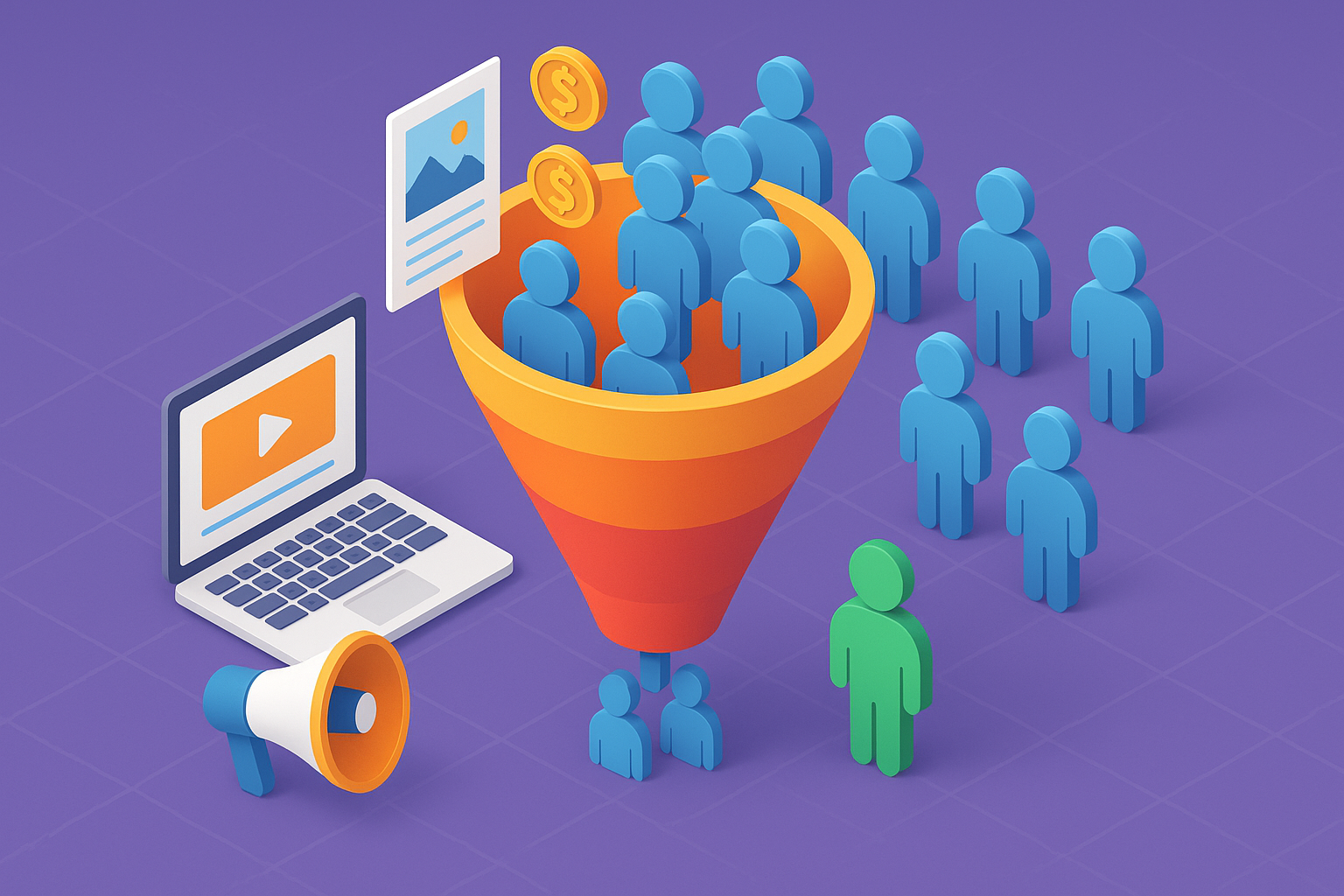
Discover the secrets to crafting a B2B marketing funnel that boosts conversions. Learn key strategies for attracting leads, nurturing prospects, and closing sales to transform your business growth.
📑 Table of Contents
- Understanding the B2B Buyer's Journey
- Segmenting Your Audience
- Creating Engaging and Relevant Content
- LeveragingAutomationand CRM Tools
- Optimizing the Conversion Process
- Measuring and Analyzing Funnel Performance
- Addressing Common Challenges
Building a B2B marketing funnel that drives conversions is a strategic process that involves understanding your audience, crafting targeted content, and efficiently guiding leads through each stage of the funnel. A well-structured marketing funnel not only helps in attracting the right prospects but also in nurturing these prospects into loyal customers. This tutorial will guide you through the essential steps to construct a robust B2B marketing funnel, focusing on timeless strategies that ensure sustained success.
Understanding the B2B Buyer's Journey
The foundation of any effective marketing funnel is a deep understanding of the buyer's journey. This journey typically includes several stages: awareness, consideration, decision, and loyalty. At each stage, the prospective customer has different needs and questions. - Awareness: Prospects realize they have a problem and begin looking for solutions. - Consideration: Prospects evaluate different products or services that can solve their problem. - Decision: Prospects choose a solution and are ready to make a purchase. - Loyalty: Customers experience the product or service and decide whether to continue the business relationship. Understanding these stages helps in crafting messages and content that are relevant to the customers at each specific point in their journey.
Segmenting Your Audience
Effective segmentation is critical in targeting the right group of prospects. Segment your audience based on industry, company size, role in the company, and their stage in the buying process. This segmentation allows for more personalized and effective marketing strategies. - Industry and Company Size: Tailor your messaging to address specific industry challenges or scalability concerns. - Role in the Company: Understand whether you’re speaking to a decision-maker or an influencer within the company. - Buying Stage: Customize communications according to the prospect's stage in the buyer's journey.
Creating Engaging and Relevant Content
Content is the fuel for your marketing funnel. It attracts prospects and nurtures them through to the decision-making stage. Develop content that educates, informs, and entertains your target audience while addressing their specific needs and pain points. - Blog Posts and Articles: Provide in-depth analysis and thought leadership. - Ebooks and Whitepapers: Offer detailed guides and reports to generate leads. - Case Studies and Testimonials: Build trust by showcasing success stories and customer testimonials. - Videos and Webinars: Engage your audience visually and provide interactive content. Ensure that your content is optimized for search engines to improve visibility and attract organic traffic.
Leveraging Automation and CRM Tools
Automation tools and Customer Relationship Management (CRM) systems play a crucial role in efficiently managing and nurturing leads through the funnel. Automation can help in scheduling email campaigns, segmenting lists, and triggering specific actions based on customer behavior. - Email Marketing Automation: Send personalized emails based on user behavior or time triggers. - Lead Scoring: Use CRM to score leads based on their interaction with your content and website, helping prioritize the leads that are most likely to convert. - Lead Nurturing Campaigns: Develop drip campaigns that provide timely and relevant information to leads at each stage of the funnel.
Optimizing the Conversion Process
Conversion optimization involves creating a seamless path for prospects to become customers. This includes optimizing your landing pages, simplifying the sign-up or purchase process, and clearly communicating value. - Landing Page Optimization: Ensure that landing pages are clear, concise, and include a strong call-to-action (CTA). - Form Optimization: Keep forms short and straightforward to increase conversion rates. - A/B Testing: Regularly test different elements of your pages and emails to determine the most effective versions.
Measuring and Analyzing Funnel Performance
To continuously improve your B2B marketing funnel, it’s essential to measure its performance and make data-driven decisions. Key performance indicators (KPIs) to monitor include: - Traffic to Lead Ratio: Measures the effectiveness of your lead generation strategies. - Lead to Customer Ratio: Helps understand the efficiency of your conversion tactics. - Customer Lifetime Value (CLV): Estimates the total revenue a business can reasonably expect from a single customer account. Utilize analytics tools to track these KPIs and gather insights on what’s working and what needs adjustment.
Addressing Common Challenges
Several challenges can arise when building a B2B marketing funnel. These include lead quality issues, low conversion rates, and alignment between marketing and sales teams. To overcome these challenges: - Enhance Lead Quality: Refine your content and targeting strategies to attract the right audience. - Boost Conversion Rates: Continuously test and optimize your landing pages and CTAs. - Improve Sales Alignment: Ensure that both sales and marketing teams have unified goals and regular communication to manage leads more effectively. By focusing on these fundamental aspects and continuously optimizing your strategies based on performance data, you can build a B2B marketing funnel that not only drives conversions but also fosters long-term customer relationships.
Frequently Asked Questions
What is a B2B marketing funnel?
A B2B marketing funnel is a structured model representing the journey that potential customers go through, from first becoming aware of your business to eventually making a purchase and beyond. It typically includes stages such as awareness, consideration, decision, and retention, helping marketers better tailor their strategies and content to guide prospects through each phase effectively.
How can content influence a B2B marketing funnel?
Content plays a crucial role in each stage of the B2B marketing funnel by educating, engaging, and persuading prospects. In the awareness stage, informative content like blogs and videos can attract potential customers. Detailed whitepapers and case studies in the consideration stage help establish credibility and showcase expertise. For the decision stage, targeted content such as testimonials and product demos can help seal the deal by demonstrating value and differentiating from competitors.
What are the best practices for converting prospects into customers in a B2B funnel?
Best practices for converting prospects into customers in a B2B funnel include understanding your audience deeply, creating personalized content and interactions, nurturing leads with ongoing communication, and utilizing strong calls-to-action (CTAs). Additionally, leveraging marketing automation tools can help streamline the process, ensure no prospects are overlooked, and maintain a consistent message throughout all stages of the funnel.
How do you measure the effectiveness of a B2B marketing funnel?
Measuring the effectiveness of a B2B marketing funnel involves tracking key performance indicators (KPIs) such as lead generation rates, conversion rates at each stage of the funnel, overall customer acquisition costs, and customer lifetime value. Analytics tools can provide insights into where prospects drop off and what strategies are most effective at moving them through the funnel, allowing for continuous optimization.
Sources and References
- The B2B Revenue Waterfall - This Forrester report provides a detailed analysis of the B2B buyer's journey, aligning closely with the discussion on understanding and mapping the B2B buyer's journey in the article. It offers insights into how B2B marketers can effectively nurture leads at each stage to maximize conversions.
- The Elements of Good Judgment - Harvard Business Review article that explores decision-making in business contexts, supporting the article's segment on segmenting your audience. It provides a framework for understanding how B2B buyers make purchasing decisions, which is crucial for effective audience segmentation.
- Content Strategy for Different Audiences - This piece from Content Marketing Institute discusses strategies for creating engaging and relevant content tailored to various audience segments in B2B marketing. It complements the article's section on content creation by offering practical tips and examples.
- Machine Learning in B2B Sales and Marketing - A research paper hosted on Google Research that delves into the application of machine learning in automating CRM tools. This source is pertinent to the article's discussion on leveraging automation and CRM tools to enhance the marketing funnel.
- B2B Marketing Automation Best Practices - Salesforce provides a comprehensive guide on using marketing automation tools to optimize the conversion process in B2B marketing. This supports the article's section on optimizing conversions by detailing techniques to streamline lead nurturing and increase efficiency.
- The B2B Digital Inflection Point: How Sales Have Changed During COVID-19 - McKinsey & Company's analysis on recent shifts in B2B sales strategies, particularly relevant to understanding changes in the B2B marketing funnel and buyer's journey due to external factors like the pandemic. This source adds depth to the discussion on adapting B2B marketing strategies in changing environments.