Boost Your Sales: Streamlining B2B Marketing Automation Workflows
Understanding the Role of Marketing Automation in B2B Sectors Marketing automation in B2B contexts primarily focuses on streamlining, automating, and measuring...

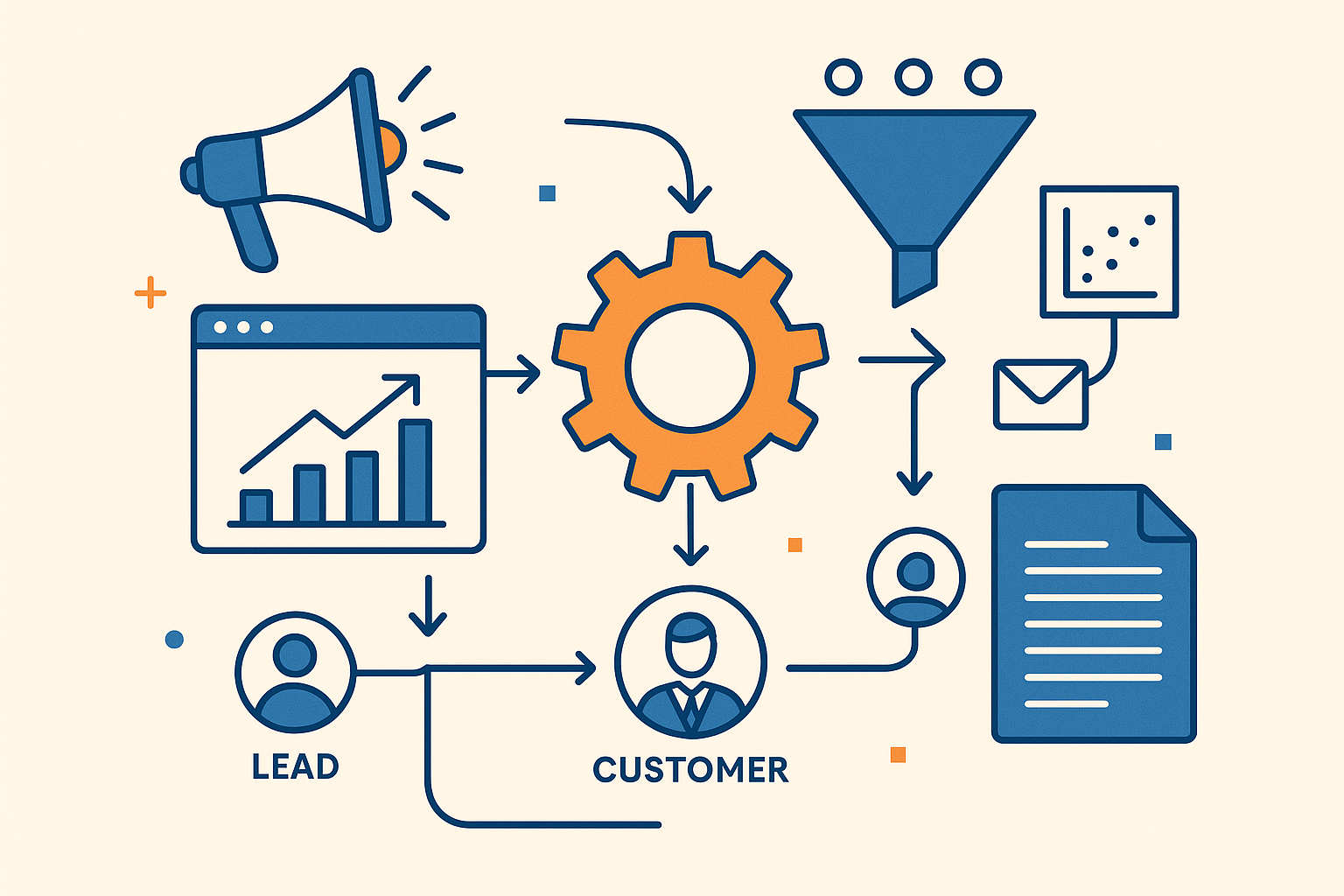
Discover how to boost your B2B marketing efficiency with automation workflows. This article covers essential strategies, tools, and best practices to streamline your campaigns and enhance lead generation and customer engagement.
📑 Table of Contents
- Understanding the Role ofMarketingAutomation in B2B Sectors
- Setting the Stage: Identifying Goals and Target Audiences
- Designing Effective B2B Marketing Automation Workflows
- Lead Capture and Management
- Email Drip Campaigns
- Segmentation and Personalization
- Integrating CRM with Marketing Automation
- Utilizing Data Analytics to Enhance Automation Efforts
- Risks and Challenges in Marketing Automation
- Measuring Success and ROI in Marketing Automation
- Practical Takeaways
Understanding the Role of Marketing Automation in B2B Sectors
Marketing automation in B2B contexts primarily focuses on streamlining, automating, and measuring marketing tasks and workflows to increase operational efficiency and grow revenue faster. This technology helps manage lead nurturing, segmentation, lead scoring, customer lifecycle marketing, cross-sell and up-sell, customer retention, and marketing ROI measurement.
Setting the Stage: Identifying Goals and Target Audiences
Before diving into the technical aspects of automation, it’s crucial to clearly define what you aim to achieve. Whether it’s increasing lead generation, enhancing lead nurturing, or improving sales-marketing alignment, each goal will dictate different aspects of your marketing automation strategy. Equally important is understanding your audience. Detailed buyer personas should guide the customization of your content and communication workflows to address the specific needs, behaviors, and pain points of your potential clients.
Designing Effective B2B Marketing Automation Workflows
Lead Capture and Management
Start with optimizing how you capture and enter leads into your automation system. Use forms on your website integrated with your marketing automation platform to automatically input data into your system. This step should be closely aligned with lead scoring models that evaluate lead readiness based on predetermined criteria such as job position, industry, interaction with your site, and more.
Email Drip Campaigns
Email drip campaigns are essential for keeping your leads engaged. Design sequences that trigger based on specific actions like downloading a white paper or attending a webinar. Each email should provide value, pushing the lead further down the sales funnel, and should reflect their stage in the buying cycle.
Segmentation and Personalization
Segment your leads based on shared characteristics to tailor your messaging. Personalization goes beyond just inserting a name in an email. It involves tailoring the communication based on the industry, problems, and interests of the lead, providing relevant content that resonates with them.
Integrating CRM with Marketing Automation
Integration of your Customer Relationship Management (CRM) system with your marketing automation platform is vital for a seamless flow of information between marketing and sales teams. This integration ensures that both teams have access to the same data, allowing for more coherent strategies and a unified approach to customer engagement. It also helps in tracking the customer journey from initial contact through to post-sale support, providing valuable insights into customer behaviors and preferences.
Utilizing Data Analytics to Enhance Automation Efforts
Data is a cornerstone of any marketing automation strategy. Regular analysis of campaign performance, lead behavior, and conversion metrics should inform ongoing adjustments to your workflows. Utilize A/B testing to compare different approaches in your emails, landing pages, and call-to-actions to see what resonates best with your audience. Furthermore, predictive analytics can help forecast future customer behaviors based on historical data, allowing for more proactive adjustments.
Risks and Challenges in Marketing Automation
While automation can significantly enhance efficiency, it’s not without its risks. One of the primary challenges is ensuring the quality of data. Poor data quality can lead to misinformed decisions and ineffective campaigns. Additionally, over-reliance on automation can lead to impersonal customer experiences. It’s crucial to maintain a balance where automation supports enhanced personal interactions rather than replacing them.
Measuring Success and ROI in Marketing Automation
The success of marketing automation should be measured against the initial goals set during the planning phase. Key Performance Indicators (KPIs) like conversion rates, engagement rates, pipeline contribution, and overall ROI are essential metrics. Tools integrated within marketing automation platforms can track these metrics, providing dashboards that offer insights into campaign performance and areas for improvement.
Practical Takeaways
Effective B2B marketing automation requires a well-thought-out strategy that starts with clear goals and a deep understanding of your target audience. Design workflows that cater to different segments and personalize communications to enhance engagement. Ensure your marketing automation tools are seamlessly integrated with your CRM systems to provide a unified view of the customer. Continuously analyze data and adapt strategies based on performance metrics to optimize your marketing efforts. Finally, remain vigilant about maintaining the human touch in your automated processes to ensure that your marketing remains relatable and effective.
Frequently Asked Questions
What is marketing automation in the context of B2B?
Marketing automation in B2B refers to the use of software and technologies designed to help businesses streamline, automate, and measure marketing tasks and workflows. This enables companies to increase operational efficiency and grow revenue faster by automating repetitive tasks such as emails, social media posting, and other website actions, tailored to the needs and behaviors of business customers.
How can B2B companies effectively implement marketing automation workflows?
Effective implementation of marketing automation workflows in B2B companies involves several key steps: identifying specific marketing goals, segmenting the audience based on relevant criteria, designing personalized communication strategies, and continuously analyzing data to refine approaches. It is crucial to choose the right automation tools that integrate seamlessly with existing CRM systems and to train marketing teams to effectively utilize these technologies.
What are the benefits of using marketing automation for lead generation in B2B environments?
Marketing automation offers numerous benefits for lead generation in B2B settings, including increased efficiency by automating routine tasks, improved lead nurturing through timely and personalized communications, and enhanced ability to scale marketing efforts without proportionally increasing staffing. Additionally, automation tools provide detailed analytics that help in better understanding customer behavior and optimizing marketing strategies for higher conversion rates.
How does data integration impact the success of marketing automation?
Data integration is critical for the success of marketing automation as it ensures that all customer interactions and behaviors are captured across various touchpoints and platforms. This holistic view enables marketers to create more accurate and dynamic customer segments, tailor communications more effectively, and predict future behaviors with greater accuracy. Seamless data integration leads to more effective campaigns, improved customer experiences, and ultimately, higher ROI on marketing investments.
Sources and References
- The Forrester Wave: B2B Marketing Automation Platforms, Q4 2020 - This Forrester report evaluates the top B2B marketing automation platforms, providing insights into how these systems can enhance lead management and customer engagement in a B2B context. It supports the article's discussion on designing effective marketing automation workflows.
- The Evolution of Marketing Automation - An article from Harvard Business Review that discusses the progression and strategic implementation of marketing automation in business, reinforcing the article's section on understanding the role of marketing automation in B2B sectors.
- How to Use Email Marketing Automation to Boost B2B Sales - This guide from the Content Marketing Institute explains the strategic application of email drip campaigns within B2B marketing, directly supporting the article's segment on email drip campaigns.
- Artificial Intelligence and Its Role in Near Future - A research paper hosted on arXiv providing an in-depth analysis of how AI is influencing various sectors including marketing, which aligns with the article's integration of AI in marketing automation workflows.
- Best Practices for B2B Marketing Automation - Salesforce offers a detailed exploration of best practices in B2B marketing automation, including goal setting and audience targeting, which supports the article's sections on setting the stage for automation.
- How B2Bs Win the Digital Marketing Game - McKinsey & Company provides expert analysis on digital marketing strategies for B2B companies, emphasizing the importance of data-driven decision making and customer lead management discussed in the article.