Boost Your Conversion Rates with AI Personalization for Email and Onsite
AI personalization is a game-changing strategy in the field of marketing, enabling businesses to tailor their communications based on individual user data. By...

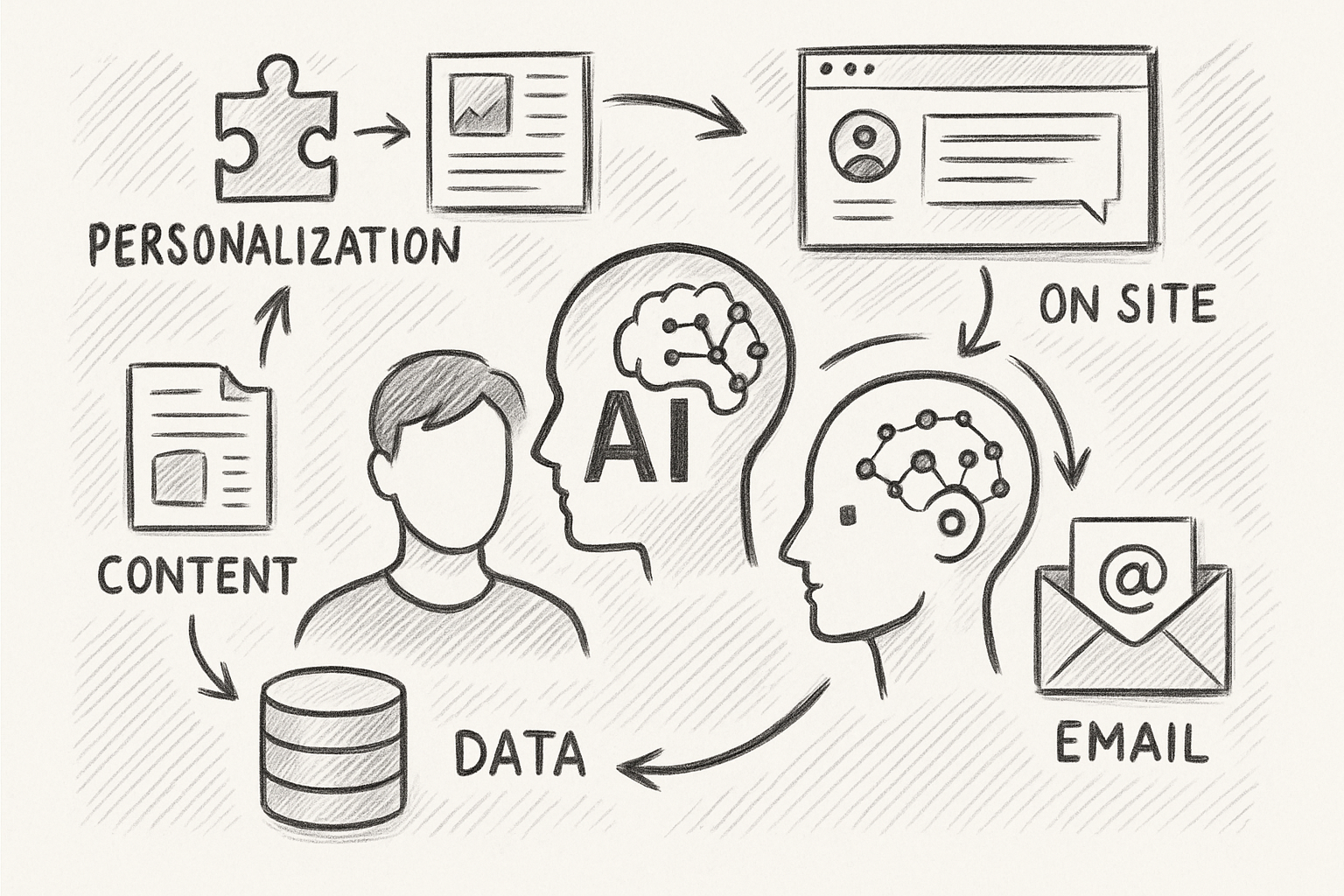
Discover the power of AI in crafting personalized email and onsite messaging strategies. This article explores innovative techniques to enhance user engagement and conversion rates, focusing on data-driven customization and automation.
📑 Table of Contents
- UnderstandingAIPersonalization in Marketing
- The Role of AI in Crafting Personalized Content
- Segmentation and Targeting
- Content Customization
- Integrating AI Personalization into Email Marketing
- Behavior-based Email Triggers
- Optimization of Sending Times
- Enhancing Onsite Messaging with AI
- Dynamic Content Display
- Real-time Personalization
- Measuring the Impact of AI-Driven Personalization
- Data-Driven Insights for Refinement
- Mitigating Risks in AI Personalization
- Ensuring Data Privacy
- Avoiding Over-Personalization
- Practical Takeaway: Implementing AI Personalization Effectively
Understanding AI Personalization in Marketing
AI personalization is a game-changing strategy in the field of marketing, enabling businesses to tailor their communications based on individual user data. By leveraging artificial intelligence, companies can enhance email and onsite messaging to create more engaging and effective campaigns. This approach not only improves user experience but also boosts conversion rates and customer loyalty.
The Role of AI in Crafting Personalized Content
AI technologies are adept at analyzing large datasets to identify patterns and preferences among users. This capability allows marketers to deliver content that resonates on a personal level. For instance, AI can suggest products, services, or content based on previous interactions or predict future needs through behavioral analysis. This dynamic approach ensures that each message is relevant to the recipient's current context and preferences.
Segmentation and Targeting
Effective personalization begins with precise segmentation. AI helps in dividing the customer base into distinct groups based on demographics, behavior, and purchase history. This nuanced segmentation underpins targeted messaging strategies, ensuring that each group receives content tailored to its characteristics and needs.
Content Customization
AI tools can also assist in crafting message variations suited for different segments. This involves not only tweaking the message content but also adjusting the tone, style, and call-to-action to better align with the preferences of each segment.
Integrating AI Personalization into Email Marketing
Email remains a powerful tool for direct communication with customers. AI personalization can transform generic email blasts into highly personalized messages that recipients are more likely to engage with.
Behavior-based Email Triggers
Using AI to set up behavior-triggered emails can dramatically increase engagement. For example, sending a discount offer for a product that a customer has added to their cart but not purchased. Such timely and relevant triggers cater directly to the individual's immediate needs and can significantly boost conversion rates.
Optimization of Sending Times
AI can predict the optimal times to send emails to each recipient, increasing the likelihood that the email will be opened and read. This prediction is based on historical data of when users are most active and responsive to emails.
Enhancing Onsite Messaging with AI
Onsite messaging, when personalized effectively, can guide and enhance the user's journey on your website. AI personalization here focuses on displaying the right message at the right time, based on the user's interaction with the site.
Dynamic Content Display
AI algorithms can dynamically alter the content displayed to users as they navigate your site. For instance, if a user spends time on a specific product page, the system can automatically offer a related blog post or a special offer related to that product, enhancing engagement and providing a seamless experience.
Real-time Personalization
Incorporating real-time data into onsite messaging allows for adjustments based on immediate actions taken by the user. This might include altering messaging or offers in response to the length of time a user has been on a page or items they have interacted with during their visit.
Measuring the Impact of AI-Driven Personalization
Implementing AI personalization requires ongoing evaluation to measure effectiveness and optimize strategies. Key performance indicators (KPIs) such as open rates, click-through rates, conversion rates, and overall customer engagement levels are essential metrics.
Data-Driven Insights for Refinement
Continuous analysis of how personalized messages perform can provide insights that drive further refinement of content and segmentation strategies. AI tools can help identify which aspects of personalization are working well and which need adjustment.
Mitigating Risks in AI Personalization
While AI personalization offers significant benefits, it also comes with challenges and risks, primarily relating to data privacy and user perception.
Ensuring Data Privacy
It is crucial to handle customer data with care to maintain trust and comply with data protection regulations. Transparent communication about how data is used and securing consent for personalization practices are fundamental steps in mitigating privacy concerns.
Avoiding Over-Personalization
There's a fine line between useful personalization and invasiveness. Marketers must ensure that their efforts do not make customers feel uncomfortable or watched. Striking the right balance is key to leveraging the benefits of AI personalization without alienating users.
Practical Takeaway: Implementing AI Personalization Effectively
To effectively implement AI personalization, start by integrating AI capabilities with your current marketing tools and platforms. Focus on collecting clean, actionable data and setting clear objectives for what you wish to achieve with personalization. Test different strategies, measure the results, and continuously refine your approach based on data-driven insights. Remember, the ultimate goal is to enhance the customer experience, which in turn drives greater engagement and loyalty.
Frequently Asked Questions
What are the key benefits of using AI for personalization in email and onsite messaging?
AI-driven personalization offers several benefits, including improved user engagement, increased conversion rates, and enhanced customer satisfaction. By analyzing user data, AI can tailor messages specifically to individual preferences and behaviors, leading to more relevant and compelling communications. This targeted approach often results in a higher return on investment (ROI) as messages are more likely to resonate with recipients, driving them towards desired actions.
How does AI utilize user data to personalize content effectively?
AI personalization techniques involve collecting and analyzing various types of user data, such as browsing history, purchase patterns, and demographic information. Machine learning algorithms then identify patterns and preferences within this data, enabling the prediction of future behaviors and preferences. This information is used to create personalized content and messages that are more likely to appeal to each user. Crucially, AI can continuously learn and adapt from new data, enhancing its accuracy and effectiveness over time.
What are some best practices for implementing AI personalization in marketing strategies?
To effectively implement AI personalization, it is essential to start with a clear strategy and objectives. Collect high-quality, relevant data while ensuring privacy and compliance with data protection regulations. Use robust AI tools and platforms that can scale and adapt to your needs. Continuously test and optimize your AI models to ensure they remain effective and relevant. Lastly, maintain transparency with users about how their data is being used to foster trust and enhance the user experience.
Sources and References
- Marketing in the Digital Age: Personalization at Scale - This McKinsey report explores the importance of personalization in marketing and provides data on how AI-driven personalization strategies, including email and onsite messaging, enhance customer engagement and business outcomes. It supports the article's discussion on the role of AI in crafting personalized content.
- Advanced Machine Learning Techniques for Personalized Content Creation - This research paper from arxiv.org details the machine learning algorithms used in personalizing content. It provides a technical foundation for the article's sections on AI-driven content customization and segmentation.
- The State of Marketing Report - HubSpot's annual marketing report includes data and trends on the effectiveness of personalized email marketing campaigns and the use of AI in segmentation and targeting. This source is particularly relevant to the sections discussing integrating AI personalization into email marketing.
- The Future of Personalization - Forrester's analysis provides insights into how AI technologies are reshaping personalization tactics in marketing. This report supports the article's exploration of how AI is utilized in crafting personalized user experiences on websites and through email.
- Google Research: Personalization in Digital Marketing - This publication discusses the latest advancements in AI technologies for digital marketing personalization. It provides a deep dive into the methods and effectiveness of AI personalization, supporting the article's content on AI's role in marketing personalization.
- Salesforce Marketing Cloud: Personalization - Salesforce provides a practical guide and case studies on how AI-driven tools are implemented for personalizing content across different platforms, including email and web. This resource is useful for understanding real-world applications of AI personalization tactics discussed in the article.