Boost Your B2B Landing Page Conversions with Proven Strategies
Understanding the Role of B2B Landing Pages B2B landing pages serve as the pivotal touchpoint between a business and potential clients. They are crafted to...

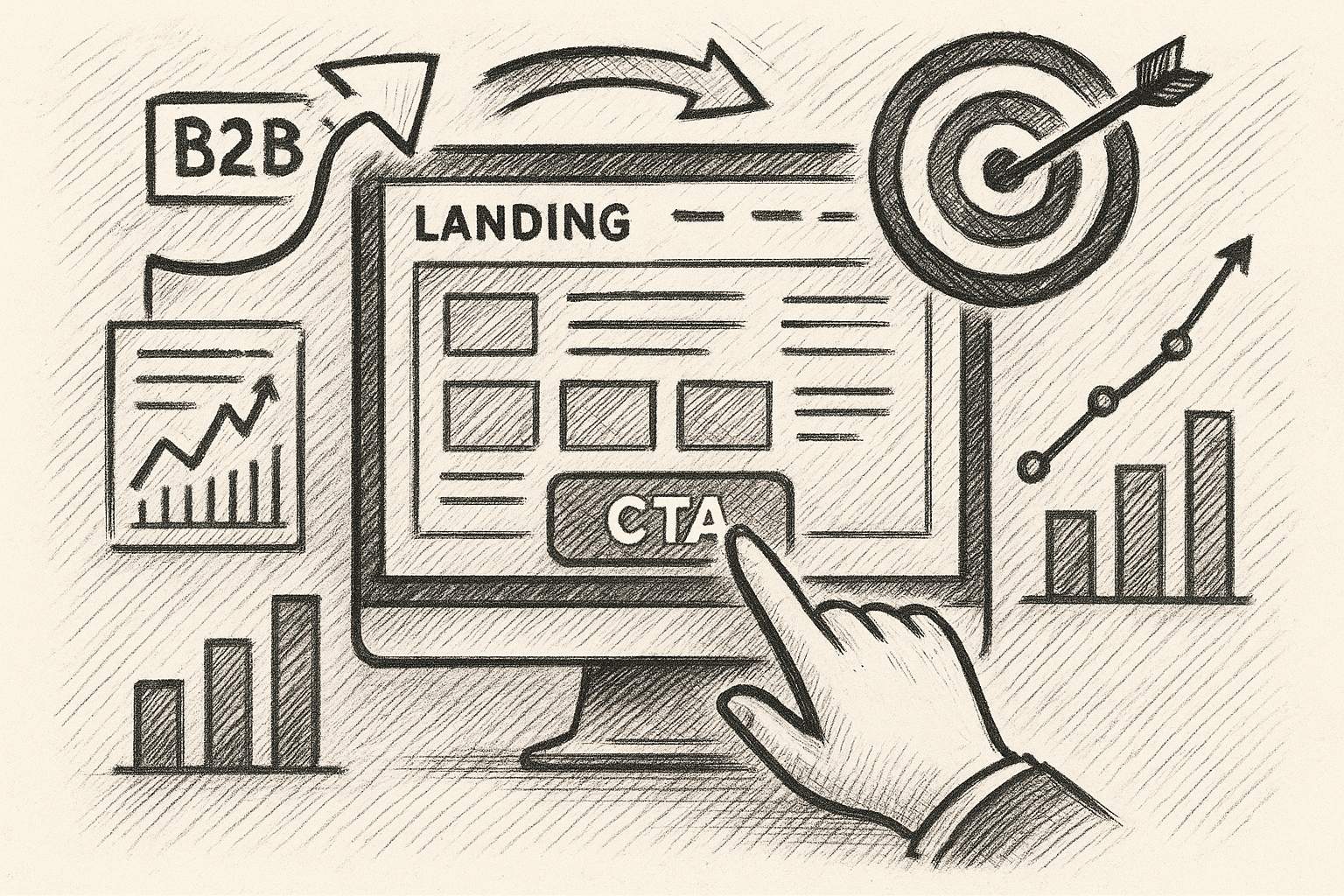
Discover essential strategies for crafting B2B landing pages that convert visitors into leads. Learn about effective design, compelling content, and strategic calls-to-action. Boost your conversion rates with these proven best practices.
📑 Table of Contents
- Understanding the Role of B2B Landing Pages
- Key Components of an Effective B2B Landing Page
- Optimizing Page Design for Conversion
- Leveraging A/B Testing to Refine Your Landing Page
- IntegratingSEOBest Practices
- Utilizing Analytics for Insight-Driven Optimization
- Ensuring Compliance and Privacy
- Conclusion
Understanding the Role of B2B Landing Pages
B2B landing pages serve as the pivotal touchpoint between a business and potential clients. They are crafted to convert visitors into leads by providing them with compelling reasons to engage further with your business. The effectiveness of a B2B landing page hinges on its ability to communicate value quickly and clearly, urging the visitor toward a specific action, such as filling out a contact form, signing up for a webinar, or downloading a white paper.
Key Components of an Effective B2B Landing Page
Clear Value Proposition: The headline and subheadings should succinctly convey the benefits of your offer. It’s crucial that these elements resonate with the target audience and clearly articulate what sets your solution apart from competitors. Engaging Content: Content should be relevant and focused on solving the visitors' problems or answering their questions. Use bullet points, short paragraphs, and engaging imagery to break up text and make the page easier to digest. Strong Call-to-Action (CTA): Your CTA must stand out and be compelling. It should be placed prominently on the page and repeated if the page is long. Ensure that the CTA is action-oriented, using verbs like 'Get', 'Start', or 'Join'. Trust Signals: Include testimonials, client logos, and certifications to build credibility. Statistics or data that validate your claims can also significantly enhance trust.
Optimizing Page Design for Conversion
Visual Hierarchy: Design elements should guide the visitor's eye towards the most important information and the CTA. Use color contrasts to make your CTA button stand out and directional cues like arrows or images where people are looking towards the CTA. Responsive Design: Ensure your landing page is optimized for various devices, especially mobiles, as a significant portion of B2B traffic now comes from mobile devices. A responsive design ensures that the user experience is seamless, irrespective of the device used. Minimal Distractions: Remove any elements that might distract the visitor from the conversion goal. This includes excessive links, unnecessary information, and even the main navigation bar in some cases.
Leveraging A/B Testing to Refine Your Landing Page
A/B testing involves comparing two versions of your landing page to see which one performs better in terms of conversions. Test elements like headlines, CTAs, images, and overall layout to understand what resonates best with your audience. Remember, the goal of A/B testing is continuous improvement. Even small tweaks can lead to significant enhancements in conversion rates.
Integrating SEO Best Practices
While the primary focus of a landing page is conversion, integrating SEO best practices can amplify its reach and effectiveness. Use targeted keywords naturally in your headlines, content, and meta tags to improve visibility in search engine results. However, ensure that SEO efforts do not compromise the user experience or the persuasiveness of your content.
Utilizing Analytics for Insight-Driven Optimization
Monitoring how visitors interact with your landing page provides invaluable insights. Utilize analytics tools to track metrics such as bounce rate, time on page, and conversion rate. These data points can help identify issues or potential improvements. For instance, a high bounce rate might indicate that your landing page is not immediately engaging or relevant to the audience. Analytics can also help track the performance of different traffic sources. This information is crucial in understanding which channels (e.g., email, social media, organic search) are delivering the most qualified leads and deserve more investment.
Ensuring Compliance and Privacy
In today’s digital landscape, compliance with data protection regulations (like GDPR) is crucial. Ensure your landing page includes a clear privacy policy and that any data collection methods, like forms, comply with these laws. Transparency about data usage builds trust with your audience and protects your business from legal issues.
Conclusion
Creating a B2B landing page that converts requires a blend of strategic content, compelling design, and continuous optimization. By focusing on clear communication, designing with the user in mind, leveraging data for insights, and ensuring compliance, businesses can significantly enhance their conversion rates. Remember, a successful B2B landing page is always evolving based on insights derived from real user interactions and industry best practices.
Frequently Asked Questions
What are the key elements of a high-converting B2B landing page?
A high-converting B2B landing page typically includes a clear and compelling headline, a succinct value proposition, engaging visuals that resonate with the target audience, and a strong call-to-action (CTA). It is also important to ensure the page has a user-friendly layout, minimal distractions, and is optimized for fast loading times. Including testimonials or case studies can further enhance credibility and encourage conversions.
How can I effectively use CTAs on a B2B landing page?
Effective CTAs on a B2B landing page should be visually striking and placed strategically to guide visitors towards taking action. The language should be action-oriented, clear, and concise, emphasizing the value that clicking the CTA will bring to the user. It's beneficial to test different versions of CTAs to see which performs best in terms of color, placement, and wording. Keeping the CTA above the fold to ensure it's visible without scrolling can also increase its effectiveness.
What role does data play in optimizing B2B landing pages for better conversion?
Data plays a crucial role in optimizing B2B landing pages by providing insights into user behavior, preferences, and interaction patterns. By analyzing metrics such as click-through rates, bounce rates, and conversion rates, marketers can identify areas where the landing page may be underperforming and test changes to improve its effectiveness. Additionally, A/B testing different elements of the page allows for data-driven decisions that can lead to significantly higher conversion rates.
How important is mobile optimization for B2B landing pages?
Mobile optimization is extremely important for B2B landing pages, as an increasing number of business decisions and searches are conducted on mobile devices. A mobile-optimized landing page ensures that the content is easily readable and accessible on smaller screens, with fast loading times and touch-friendly navigation. This not only improves the user experience but also contributes to better search engine rankings and higher conversion rates.
Sources and References
- The Anatomy Of A B2B Landing Page That Converts - Forrester Research - This Forrester report provides a deep dive into the elements that make up a highly effective B2B landing page. It supports the article's discussion on key components and design optimizations necessary for maximizing conversion rates.
- What Makes a Great Landing Page Design - Harvard Business Review - This article from Harvard Business Review explores various aspects of landing page design that are crucial for capturing and retaining the interest of B2B clients, reinforcing the section of the article that discusses optimizing page design for conversion.
- Using A/B Testing to Improve Customer Conversion - Google Research - This research paper from Google provides empirical data and analysis on the effectiveness of A/B testing in improving landing page conversion rates, directly supporting the article's section on leveraging A/B testing for landing page refinement.
- Google Webmaster Guidelines - These guidelines by Google offer insights into best practices for SEO, which is crucial for the discoverability of B2B landing pages. This source supports the article's integration of SEO best practices.
- How to Use Data to Drive Your Content Strategy - Content Marketing Institute - This article provides insights on how data can guide the design and content strategy of B2B landing pages, supporting the article's emphasis on data-driven decision making for optimizing conversion rates.
- The B2B Digital Inflection Point: How Sales Have Changed During COVID-19 - McKinsey & Company - This report discusses the shift in B2B sales strategies, including the increased importance of effective landing pages, providing a contextual backdrop for the article's discussion on the evolving role of B2B landing pages in the sales funnel.