Boost B2B Marketing Success Through Strategic A/B Testing
Understanding the Role of A/B Testing in B2B Marketing A/B testing, also known as split testing, is a method where two versions of a marketing element (such as...

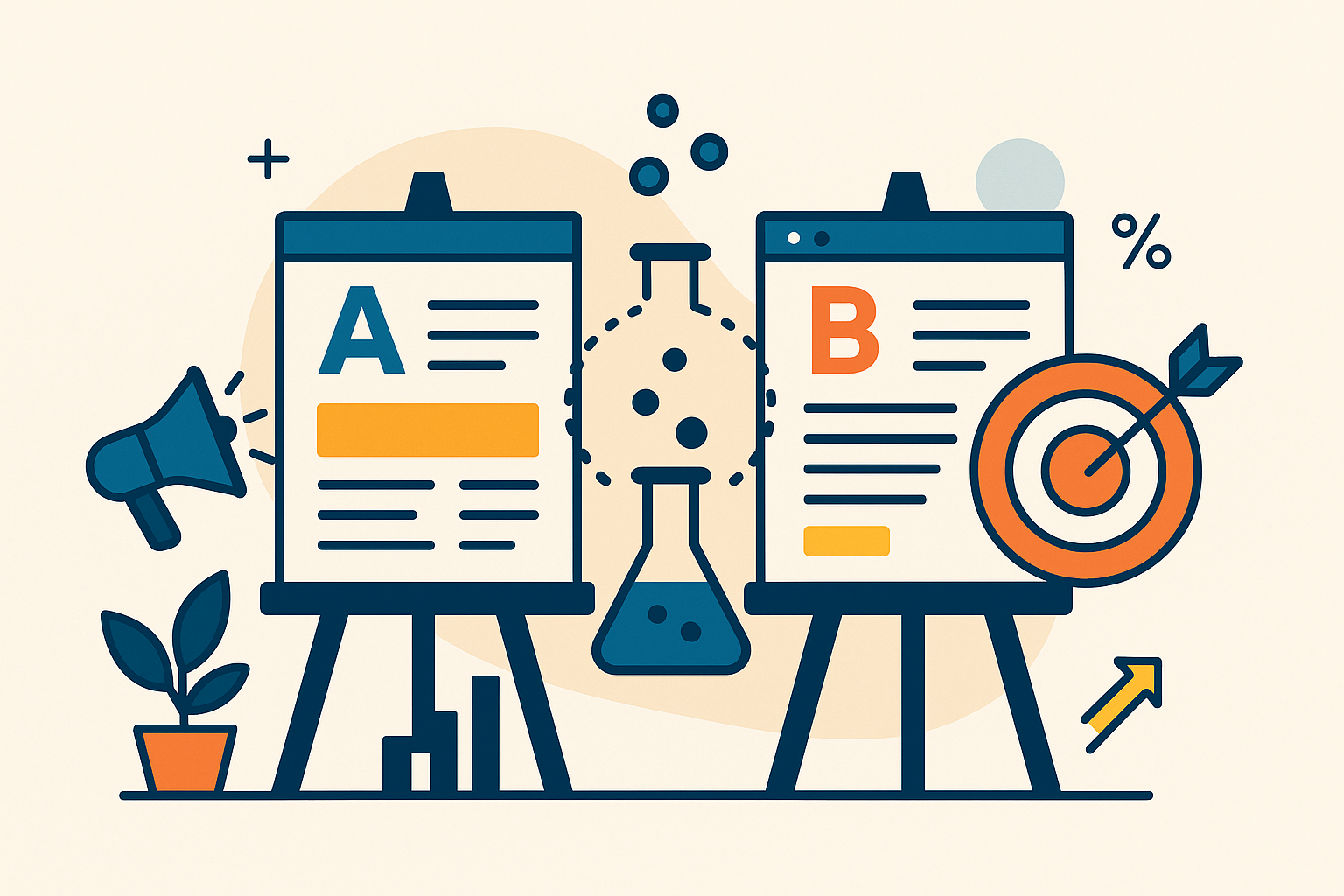
Discover how A/B testing can revolutionize your B2B marketing strategy. Learn to craft impactful tests, analyze results, and implement changes that boost your ROI. This guide covers key strategies and practical tips for effective testing.
📑 Table of Contents
- Understanding the Role of A/B Testing in B2BMarketing
- Setting Up Your A/B Testing Framework
- Defining Clear Objectives
- Selecting the Right Tools
- Developing Effective Test Hypotheses
- Creating Variations and Implementing Tests
- Designing Variants
- Segmenting Your Audience
- Running the Test
- Analyzing Test Results and Making Data-Driven Decisions
- Leveraging Learnings for Future Campaigns
- Applying Insights Across Marketing Channels
- Continuous Testing and Optimization
- Addressing Common Challenges in A/B Testing
- Dealing with Small Sample Sizes
- Avoiding Test Bias
- Measuring the Long-term Impact of A/B Testing
Understanding the Role of A/B Testing in B2B Marketing
A/B testing, also known as split testing, is a method where two versions of a marketing element (such as an email, landing page, or ad) are compared to determine which one performs better in terms of achieving a specified marketing outcome. This strategy is essential in B2B marketing as it allows marketers to make data-driven decisions and optimize their marketing efforts for better conversion rates and ROI.
Setting Up Your A/B Testing Framework
Defining Clear Objectives
Before launching an A/B test, it's crucial to define what you want to achieve. This could be increasing email open rates, improving click-through rates on a landing page, or boosting lead generation forms' completion rates. Clear objectives help in determining the kind of variations you might want to test.
Selecting the Right Tools
Choose an A/B testing tool that integrates seamlessly with your other marketing platforms (like your CRM or email marketing software) and offers robust analytics features. Tools like Optimizely, VWO, or Google Optimize provide comprehensive functionalities that cater to varied testing needs.
Developing Effective Test Hypotheses
Based on your objectives, develop hypotheses for what changes might improve performance. For instance, if your goal is to increase landing page conversions, you might hypothesize that a more prominent Call-To-Action (CTA) button will perform better than a smaller one. Each hypothesis should be actionable, measurable, and focused on influencing the desired outcome.
Creating Variations and Implementing Tests
Designing Variants
Create two versions (A and B) where version A serves as the control and version B incorporates the hypothesized change. Ensure that the variations are identical in all aspects except for the one element being tested to isolate the effect of that one change.
Segmenting Your Audience
In B2B marketing, audience segments can be quite specific. Segment your audience carefully to ensure that the results are relevant. You might choose to segment by industry, company size, or user behavior on your site.
Running the Test
Launch the test and monitor the performance of each variant closely. Ensure that the test runs long enough to achieve statistical significance, but not so long that market conditions change significantly during the test period.
Analyzing Test Results and Making Data-Driven Decisions
Once your test is complete, analyze the results to see which version met the objectives more effectively. Look beyond just the primary metrics (like clicks or conversions) and analyze secondary metrics as well (like time on page or bounce rate) to get a comprehensive view of how the changes affected user behavior.
Leveraging Learnings for Future Campaigns
Applying Insights Across Marketing Channels
The learnings from A/B tests are not just limited to the campaign at hand. Apply these insights across other marketing channels and elements. If a specific CTA placement worked well on a landing page, test it in your email campaigns to see if it yields similar results.
Continuous Testing and Optimization
A/B testing is not a one-off task but a continuous improvement process. Always look for elements to test and optimize, ensuring your B2B marketing strategy remains effective and competitive.
Addressing Common Challenges in A/B Testing
Dealing with Small Sample Sizes
B2B audiences are often smaller than B2C, which can make achieving statistical significance challenging. In such cases, consider extending the duration of your tests or using advanced statistical methods like Bayesian inference to draw meaningful conclusions despite smaller sample sizes.
Avoiding Test Bias
Ensure your test conditions are controlled and consistent. Randomize the exposure of variations to different segments to avoid any bias in how the variants are presented to your audience.
Measuring the Long-term Impact of A/B Testing
While immediate test results are important, the ultimate goal of A/B testing in B2B marketing is to improve long-term business metrics such as customer lifetime value and retention rates. Keep an eye on these broader impacts to fully understand the effectiveness of your optimizations. By incorporating A/B testing into your B2B marketing strategy systematically and focusing on continuous learning and improvement, you can significantly enhance your marketing effectiveness and achieve better alignment with your business goals.
Frequently Asked Questions
What is A/B testing in B2B marketing?
A/B testing in B2B marketing is a method used to compare two versions of a marketing asset (such as a webpage, email, or ad) against each other to determine which one performs better in terms of engaging and converting potential clients. This process involves showing the two variants (A and B) to similar audiences under similar conditions to see which variant leads to higher conversion rates or better overall performance.
How can A/B testing improve conversion rates in B2B marketing?
A/B testing can significantly improve conversion rates by allowing marketers to make data-driven decisions about their strategies. By testing different elements of marketing materials, companies can identify which features appeal most to their target audience. This can include variations in copy, design, call-to-actions, and overall messaging. Optimizing these elements based on test results leads to more effective marketing efforts and higher conversion rates.
What key elements should be tested in A/B testing for optimizing a B2B webpage?
Key elements to test in A/B testing for a B2B webpage include the headline, content layout, images, call-to-action buttons, forms, and overall navigational structure. Testing these elements can reveal insights into how users interact with the page and what drives them to convert. It is crucial to test one element at a time to accurately determine its impact on user behavior and conversion rates.
How long should an A/B test run in a B2B marketing context?
The duration of an A/B test in a B2B marketing context should be long enough to collect significant data and draw reliable conclusions, typically ranging from a few weeks to several months. The length of the test depends on factors such as the amount of traffic, the conversion cycles typical of the industry, and the statistical significance needed. It is essential to run the test until reaching a statistically significant result to ensure the data's reliability.
Sources and References
- The State of Marketing Report 2023 - HubSpot - This comprehensive report by HubSpot provides insights into the latest trends and practices in B2B marketing, including the effectiveness of A/B testing in improving conversion rates and personalizing marketing strategies. It supports the article's discussion on the importance and impact of A/B testing in B2B marketing.
- Empirical Study on the Effectiveness of A/B Testing in E-commerce - This academic paper from arxiv.org offers a detailed analysis of A/B testing's role in optimizing marketing strategies, specifically within the context of e-commerce, which parallels many B2B marketing scenarios. It provides empirical data that underscores the necessity of A/B testing in making data-driven marketing decisions.
- Google Optimize Developer Guide - Google's official documentation on its A/B testing tool, Google Optimize, offers technical guidance on setting up and implementing A/B tests. This resource is instrumental for the section of the article that discusses selecting the right tools for A/B testing in a B2B setting.
- The Definitive Guide to A/B Testing - Forrester - Forrester's guide provides an in-depth look at developing effective hypotheses for A/B testing, which is crucial for the article's section on developing test hypotheses. It includes methodologies and best practices that ensure the reliability and significance of test results.
- The Power of A/B Testing - Harvard Business Review - This article from HBR discusses the strategic implementation of A/B testing in business decision-making processes, supporting the article's content on setting up an A/B testing framework and defining clear objectives to maximize the impact of marketing efforts.
- A/B Testing for Email Marketing - Salesforce - Salesforce provides a focused look at applying A/B testing in email marketing, a key component of B2B marketing strategies. This source is particularly relevant to the article's discussion on practical applications of A/B testing to optimize specific marketing channels.